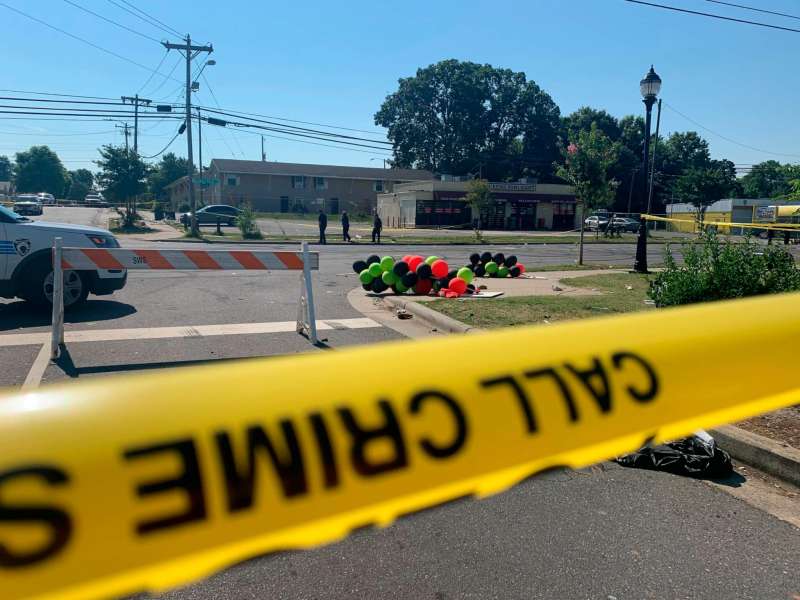
How a June shooting in NC’s largest city exposes deep fissures between Black neighborhoods and police.
One month after a mass shooting that left four people dead and at least ten wounded, Charlotte police say they are frustrated that no witnesses have come forward.
But the Black community of North Carolina’s largest city say the police only have themselves to blame. “People aren’t going to talk to someone they can’t trust,” community activist Gemini Boyd told The Charlotte Observer Wednesday. “It’s just that simple.”
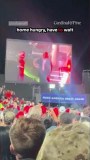
At midnight on the night of June 21, Boyd arrived on the last evening of a three-day Juneteenth block party on Beatties Ford Road and started live-streaming the event on Facebook. Within minutes, gunshots rang out amid a crowd of over 400 revelers.
“Bullets were coming from everywhere,” Boyd said. “It was just chaotic.”
As Cardinal & Pine reported, one witness believed there were 15 to 20 shooters responsible for gunfire coming from “left, right, front and back.”
“It was a war zone, “ another witness, Donnell Washington, told WFAE.
By the time gunfire ceased, over 181 rounds had been fired into the crowd. Four people were killed and another 11 injured, including some struck by vehicles as attendees attempted to flee.
CMPD identified those killed as 29-year-old Kelly Miller, 28-year-old Christopher Gleaton, 39-year-old Jamaa Keon Cassell and 31-year-old Dairyon Stevenson. No arrests have been made.
Meanwhile, in press conferences since the Beatties Ford Road shooting, CMPD have repeated that despite over 400 people being present on scene, the police have had difficulties getting witnesses to come forward.
Charlotte police have repeated that claim in press conferences since the shooting, although locals have refuted that in the weeks since. In early July, Donnell Washington refuted that.
“When I talked to a detective on Tuesday, they said they had gotten plenty of calls, people have been dropping names,” local resident Donnell Washington told WFAE. “You may not have useful information, but you have information. So, don’t put (out) that narrative that people in this community are not looking out for their community. Because we are already marginalized enough.”
Once the shooting stopped, Boyd, who works for the nonprofit The Bail Project, got up from behind two cars and ran into the crowd to help. He was still live-streaming.
Just after the 15-minute mark, Boyd’s video showed an incident that reinforced his skepticism that the Charlotte Mecklenburg Police Department was there to help Black victims and bystanders. A police officer can be seen in the video walking through the crowd, pointing a rifle at innocent and frightened people.
As the officer shouts, “Get the f— back!” many quickly thrust their hands in the air.
Boyd, who also posted photos of the police officer, can be heard on the video appealing to other officers for help.
“Y’all, talk to that man!” Boyd pleaded. He can be heard asking the officer to stop pointing the rifle at traumatized people.
“It didn’t matter that I was trying to help,” Boyd told The Observer. “It didn’t matter to that officer that he’s now put a strain or traumatized me from that.”
At a press conference three days after the mass shooting, CMPD Deputy Chief Gerald Smith defended the officer, who has not been identified.
“He is assessing things and he is seeing the carnage,” Smith said. “He gets out of his car, shots are fired and he assumes that this scene is still hot, that this is an active shooter scene. He goes, grabs his rifle and starts looking for threats,” WCNC reported.
On July 1, Smith left CMPD to become the police chief of Richmond, Virginia.
Police officers like the rifle-brandishing officer, and his superiors’ eagerness to defend his actions, have made Black Charlotteans distrustful of the police, says North Carolina ACLU campaign manager Kristie Puckett-Williams.
“The police often arrive after a tragedy has happened, they add more trauma to the situation when they arrive.” maintained Puckett-Williams.
Along with Charlotte City Council member Braxton Winston, Puckett-Williams was arrested by Charlotte police on May 29, the first night of the city’s Black Lives Matter protests sparked by George Floyd’s death at the hands of a Minneapolis police officer.
Puckett-Williams was also among the crowd of demonstrators in a controversial clash with Charlotte police on June 2, when protestors accused police of trapping them and bombarding them with tear gas and pepper balls.
The incident prompted Charlotte City Council members to ban police funding for chemical munitions, and is the subject of an ongoing lawsuit where attorneys for the protestors say police deliberately funneled demonstrators into an ambush.
“The community is not wrong for not trusting the police,” Puckett-Williams said.
Although city officials and CMPD discussed initiatives earlier this month to curb police brutality and over-policing in Black neighborhoods, activists are not convinced of CMPD’s goodwill and willingness to reform.
The actions of former CMPD Chief Kerr Putney have not helped the department’s reputation for untrustworthiness among the city’s Black community.
Meanwhile, three weeks after CMPD Chief Kerr Putney retired from his position with CMPD on June 30, Putney accepted a job as a consultant with CPI Security Tuesday, working directly with CPI CEO Ken Gill, WBTV reported.
Gill drew fire last month when he was asked about recent police brutality against Black people by equality-focused activist organization Queen City Unity.
In an email to the nonprofit, Gill told Queen City Unity leader Jorge Millares to “spend your time in a more productive way. … A better use of time, would be to focus on the Black on Black crime and senseless killing of our young men by other young men.”
As a result of Gill’s remarks, the Carolina Panthers cut all ties with CPI.