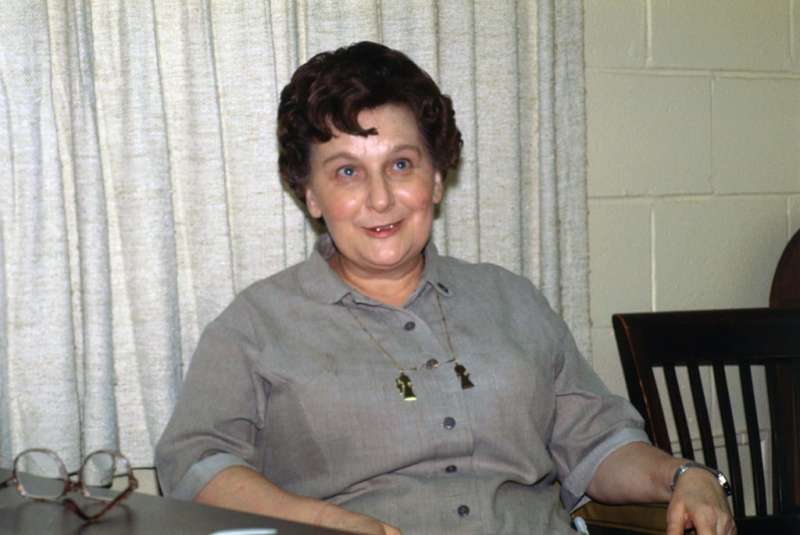
North Carolina has seen its fair share of notorious true crime cases. Here are some of the most well-known.
True crime has always been a popular genre, but it feels like now, more than ever, this area of interest has really taken off.
From podcasts and documentaries to infamous trials taking over the news cycle, it’s easy to understand how people have gotten swept up in the tide of true crime over the last few years, in particular. All across the country (and around the world, honestly), an obsession over real-life cases has taken root. Bearing this in mind, we wanted to dive into some of the biggest true crime cases in North Carolina history.
As research was being conducted for this piece, it became abundantly obvious that we wouldn’t be able to fully scratch the surface of all the crimes that have taken place here over the decades. We’ve decided to stick to seven of the most well-known cases in order to provide as much detail as possible in this one article. If we’ve missed something, or someone, who you have a keen interest in and would like us to take a deep dive into researching, let us know, and we’ll see what we can do.
1. Velma Barfield
Velma Barfield, who was raised in Robeson County, was convicted of poisoning and killing her fiancé, Rowland Stuart Taylor, in 1978. After her arrest, she confessed to killing three additional people, including her mother, and is believed to have killed others, though those have never been confirmed as of writing.
In 1974, Barfield had poisoned her mother, Lillian Bullard. In 1976, she killed an elderly woman, Dollie Edwards, for whom Barfield was a caretaker. Then, in 1977, she killed John Henry Lee, who was the husband of a different woman for who Barfield was a caretaker for. The News & Observer notes that Barfield had stolen money from each of these victims prior to killing them, as she had developed a substance abuse problem and was using the money to obtain pills.
Other individuals whom she is suspected of murdering include her two husbands. The first, Thomas Burke, died in 1969 in a house fire that Barfield reportedly said she started by accident. The second, Jennings Barfield, died in 1971. Following Velma’s arrest for Taylor’s murder, Jennings’s body was exhumed. It was then found that he had arsenic in his system. Velma was also believed to have killed Dollie Edwards’s husband, Montgomery, as he passed away after experiencing similar symptoms to those Dollie experienced at the time of her death.
This serial killing pattern and subsequent conviction earned Velma the nickname of “Death Row Granny.” She was executed on November 2, 1984. She was the first woman in the United States to be executed since 1962, and the first after capital punishment resumed in 1976.
2. Jeffrey MacDonald
Jeffery MacDonald is a former US Army captain and medical doctor who was accused and convicted of murdering his two daughters and his pregnant wife in 1970. At the time, MacDonald was an Army Special Forces physician, and the family was living in Fort Bragg. Despite his 1979 conviction, MacDonald maintains his innocence, instead claiming that four intruders entered the family’s home through an unlocked back door and attacked him before killing his wife and children. As of writing, he is still imprisoned at the Federal Correctional Institution located in Cumberland, Maryland.
MacDonald’s account of the events implies that the intruders were mimicking the notorious Manson family murders of Sharon Tate and other individuals who were with the pregnant actress when she was attacked on Cielo Drive in Los Angeles in 1969. Though MacDonald was wounded as well, his injuries were less severe than those inflicted upon his family. This was one detail out of many that led to his eventual arrest and conviction.
MacDonald’s version of events, as well as what investigators believe really happened, is extremely detailed and would require a separate article to discuss completely. To read more about what happened, click here.
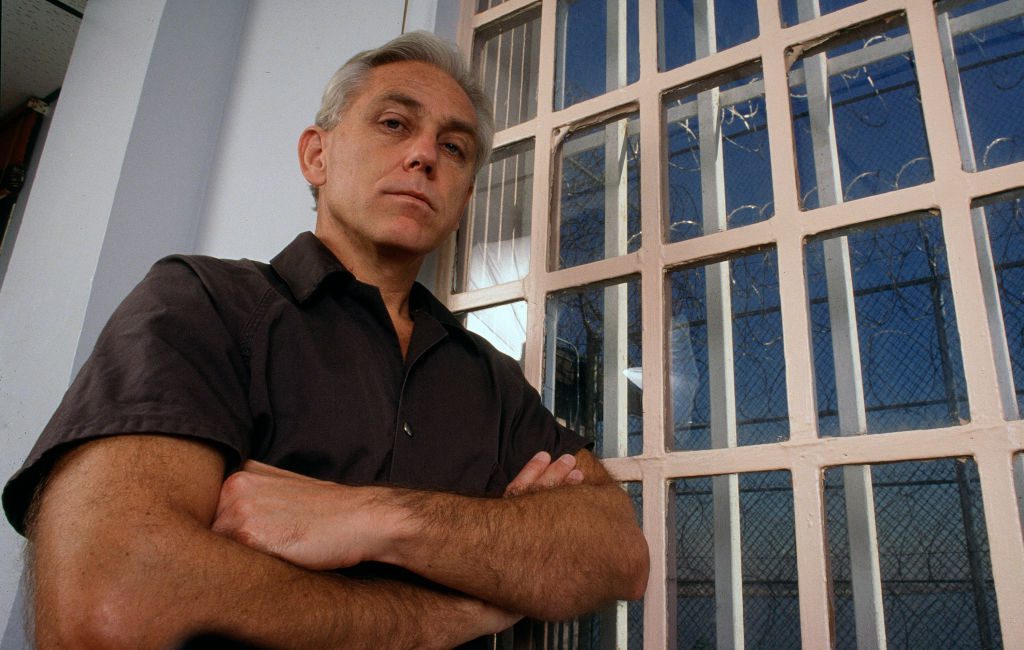
3. The Lawson Family
The Lawson family murders are considered one of the most brutal and notorious true crime cases in North Carolina history. On December 25, 1929, Charles Lawson murdered six of his seven children and his wife before dying by suicide shortly after the killing spree.
As of writing, a motive for the murders has never been found, though some believe that a head injury Lawson experienced in the years prior to the accident altered his personality. Other rumors exist as to why he may have been driven to such horrific violence, but on the surface, it appears as though Lawson, a tobacco farmer in Stokes County, simply snapped. His eldest son, Arthur, was spared from the attack as he had gone into town to buy ammunition for an upcoming hunting trip.
It’s unclear as to why Lawson chose to spare his eldest son by sending Arthur out on an errand before Lawson started killing the other members of their family. Arthur died in a car accident in 1945.

4. The Eastburn family murders and Timothy Hennis
In Fayetteville, NC, in 1985, Kathryn “Katie” Eastburn and her two daughters, Erin and Kara, were murdered. In 1986, Timothy Hennis, who was a US Army Sergeant at the time, was convicted of the three murders, though his conviction was overturned in 1988. He was acquitted of the crimes in 1989.
Then, in 2006, the Sheriff’s Office in Cumberland County acquired new DNA evidence linking Hennis to the crimes again. In 2010, he was tried and convicted again through an Army court-martial. He was then sentenced to death. As of writing, Hennis is still incarcerated at the US Disciplinary Barracks located at Fort Leavenworth in Kansas.
Hennis was connected to the Easburn family through a matter of pure happenstance. The family was due to move to England, and Katie was looking to rehome their dog, Dixie. She posted an ad in the Beeline Grab Bragg about Dixie, and Hennis responded. He visited the family’s home on May 7, 1985, and took their dog home that same day.
Katie, Erin, and Kara’s bodies were not found until May 12 after a neighbor, Bob Seefeldt, contacted police out of concern for the family’s well-being. Katie’s husband, Gary, was undergoing training in Alabama at the time. The couple’s youngest child, Jana, who was around two years old, survived the attack but was dehydrated when police officers arrived.
Like the Jeffrey MacDonald case, the Eastburn family murders, and the subsequent trials and acquittals of Hennis, are extremely detailed. You can read more about this case here.
5. Barbara Stager
In 1989, Barbara Stager, a native of Durham County, was convicted of killing her husband, Allison Russell Stager III, who went by Russell or Russ. The murder occurred the year prior in 1988. At the time, Barbara had reported her husband’s death as an accidental shooting. During an investigation into Russ’s death, law enforcement officials discovered that Barara’s first husband, Larry Ford, died in a similar manner years before. However, she was only tried for Russ’s death.
It was Russ’s first wife, Jo Lynn Snow, who tipped police off to marital problems between him and Barbara. Snow also revealed that Russ was fearful of his wife, and that he noted how Barbara would often give him sleeping pills. Barbara would then go on to re-enact the murder for officials prior to her conviction.
She was originally sentenced to death for Russell’s murder, though her sentence was reduced to life in prison with the possibility of parole.
6. Susie Newsom Lynch & Fritz Klenner
The crimes committed by Susie Newsom Lynch and her first cousin and lover, Fritz Klenner, are commonly referred to as the “Bitter Blood Murders.” The pair murdered nine people between 1984 and 1985, before dying themselves in 1985 during a car chase with the SBI and police. Lynch’s two young sons, Jim and John, were also killed when their car exploded.
Susie had separated from her husband and the father of her two children, Tom Lynch, in 1979 and had reconnected with Klenner in 1980, when their incestuous relationship is believed to have begun. In 1984, Tom’s sister, Janie Lynch, and mother, Delores Lynch, were murdered at their home in Kentucky. Then, in 1985, Klenner recruited a 21-year-old by the name of Ian Perkins to help him commit additional murders. Klenner told Perkins that he was in the CIA.
Perkins drove Klenner to carry out the next string of murders, which included Susie’s parents, Bob and Florence Newsom, as well as her grandmother, Hattie Newsom. At the time, the family was living across the street from famed author and poet Maya Angelou, who had been trying to help Tom gain visitation rights for his and Susie’s sons. After the killings, Perkins agreed to wear a wire for the police in an effort to arrest and convict Klenner.
On June 3, 1985, officers from the SBI, Greensboro Police, Kentucky State Police, and Forsyth County deputies trailed Klenner in unmarked cars to Susie’s apartment in Greensboro. The two brought camping supplies out to their vehicle before bringing John, Jim, and the family dog out. As they pulled onto the road, their car was surrounded by police officers who indicated for Klenner and Susie to pull over. Instead, Klenner took off. Witnesses reported hearing gunfire before the couple’s car exploded, and it’s believed that Susie and Klenner blew up the car intentionally.
Afterwards, law enforcement officials learned that both Jim and John were dead prior to the explosion. To learn more about the murders, click here.

7. Michael Peterson
In 2003, novelist Michael Peterson was convicted of murdering Kathleen Peterson, his second wife, in December 2001. The case gained additional notoriety after the release of a French docuseries, “The Staircase,” which detailed the events of Kathleen’s murder and Michael’s trial. That documentary was then turned into an HBO Max television series, also named “The Staircase,” in 2022. You can read more about the show here.
On December 9, 2001, Michael telephoned the Durham police to say that his wife had fallen down the back stairs of the couple’s mansion. During the call, Michael indicated that Kathleen was still breathing, but responding police officers declared her dead at the scene. According to The News & Observer, the case initially drew intense interest in North Carolina and beyond, “because of its many twists and turns, including but not limited to: The revelation of the death of family friend Elizabeth Ratliff, also found dead at the bottom of a staircase in Germany in 1985.”
Though Michael was found guilty of murder in the first degree in Kathleen’s case in 2003, he entered an Alford plea in 2017 to plead “guilty to manslaughter while not admitting actual guilt,” and was freed due to time served. He still resides in Durham.
The original documentary series remains the best source of information to delve into the many, many turns this case took throughout Michael’s trial. It’s currently streaming on Netflix.
This article first appeared on Good Info News Wire and is republished here under a Creative Commons license.
Related: Ghostly Getaways: Explore North Carolina’s 9 most haunted hotels