Reporting by Holly Kays, Special to the Asheville Citizen Times
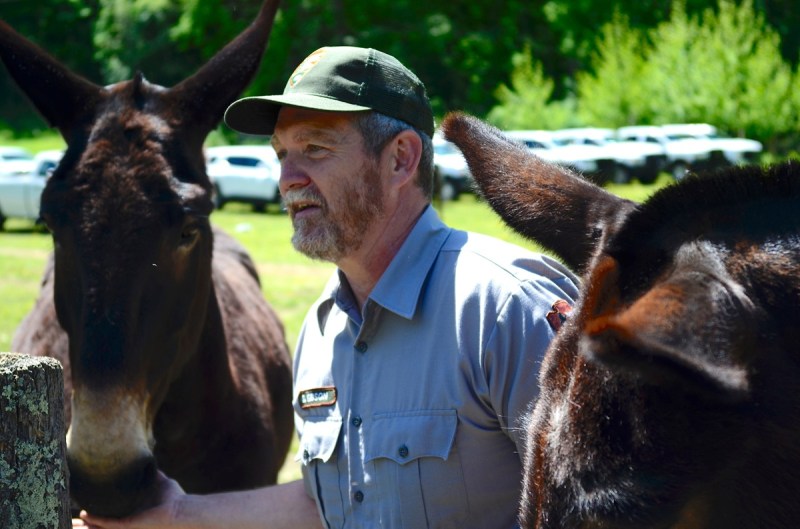
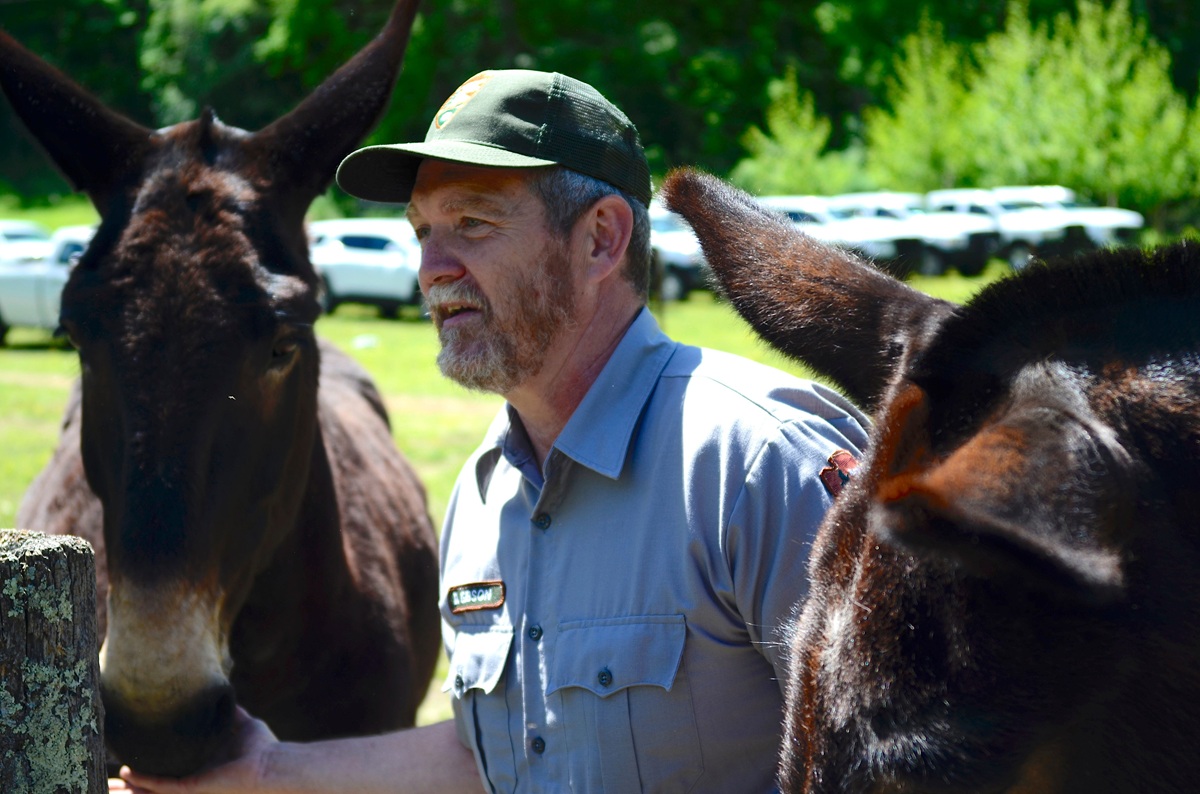
After years of long days spent together in the backcountry of Great Smoky Mountains National Park, Danny Gibson knows his coworkers inside and out. There’s Tug, the class clown who’s never met a stranger; Ron, the shy guy with a warm heart; Jeb, backbone of the team, and a whole cast of other quirky yet hardworking characters. Gibson makes it his business to know each one.
“That’s the first thing you do,” Gibson said. “Learn your mules.”
Gibson is the park’s animal caretaker, and his coworkers are mainly of the four-legged variety. Serving alongside the program’s three human employees are 12 mules and six horses, and they all work together to haul tens of thousands of pounds of materials and equipment through the 816-square-mile park’s extensive backcountry each year. In 2025 alone, the mule team removed 997 trees, packed 57,800 pounds, and worked nearly 687 hours pulling logs as long as 18 feet over distances stretching up to two miles.
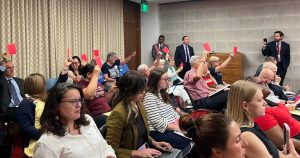
“Normally when somebody’s talking about a 50th, I guess it’s a wedding anniversary,” said Tobias Miller, addressing the 50-plus National Park Service employees and partners gathered to celebrate the mule team’s golden jubilee, held April 30 at Towstring Barn. Currently the park’s supervisory facility management specialist, Miller has been involved with the pack program across many years and positions, including more than two decades as a first- or second-line supervisor. “There’s no gold here today—sorry about that, everybody. But I think it gives us time to stop and reflect, to celebrate and connect memories and adventures from the past. The great thing about the mules is they also inspire and fuel the future for what is possible next.”
Mules and rules
The mule team was established as a direct result of the federal Wilderness Act of 1964, which created a system of protected lands to be “unimpaired for future use and enjoyment of wilderness.” In 1974, much of the Smokies backcountry was proposed for wilderness designation. The park now manages the land according to wilderness rules so as to preserve its wilderness characteristics. Among the stipulations are rules prohibiting the use of motor vehicles and motorized equipment in the backcountry.
In the early decades of the park’s existence, park employees “could get a Jeep and drive up Bradley Fork or Bote Mountain or Twentymile and go all the way to the top of the ridge where the Appalachian Trail runs,” said Gibson. Before the park was created in 1934, the land was owned mainly by timber companies and homesteading families: there were roads everywhere. But following the proposed wilderness designation, the park could no longer use motor vehicles in the backcountry.
Enter Frank Hyatt, the facility manager for the park’s south district at the time.
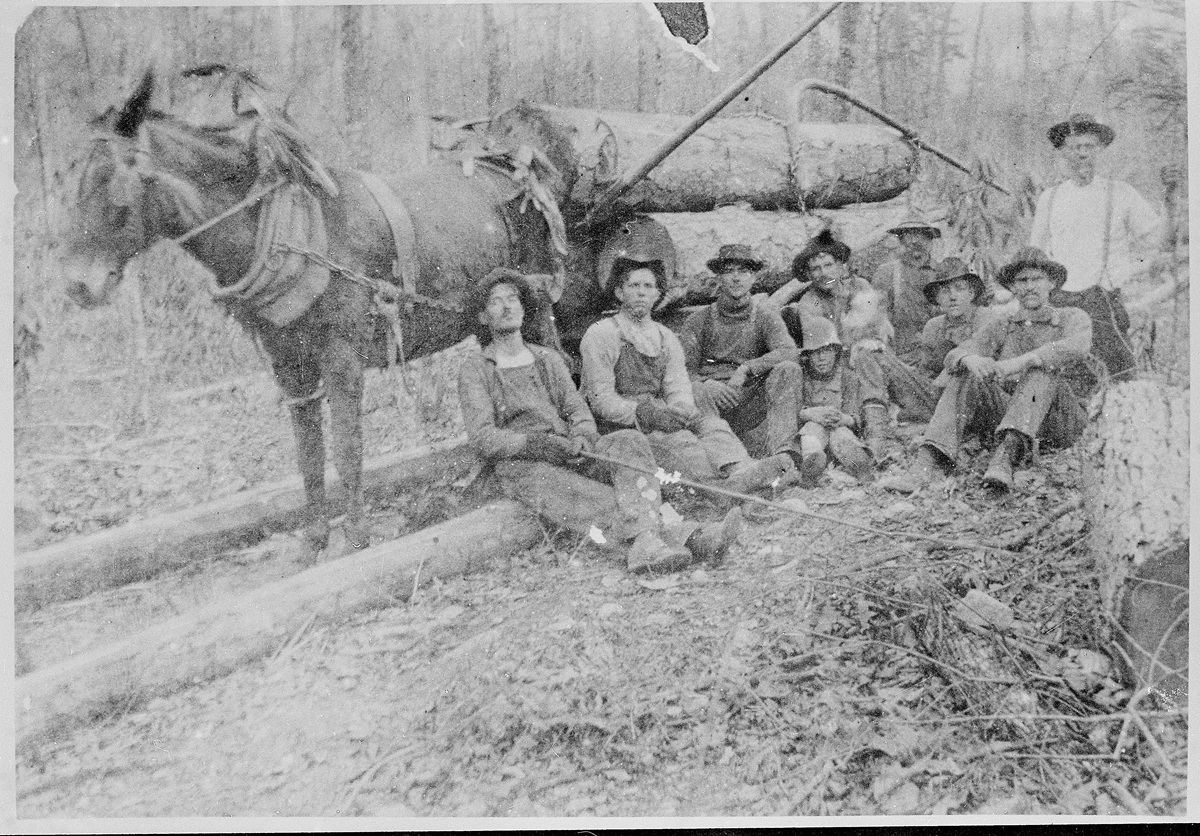
“Frank was raised here, close to Bryson City, and he grew up on a farm where they used horses and mules,” Gibson said at the April gathering. “He also had close relations with a lot of people that used to log this country with the lumber companies. They would take oxen, mules, and horses, and pull the logs down before they could be loaded on rail cars and trucked out of the Smokies. So he knew the mules were the answer.”
It took some time for Hyatt’s superiors to come around to the idea of relying on these donkey–horse hybrids, but eventually he got the go-ahead to hire someone to lead the program. And he knew just who to ask: a 25-year-old Swain County horse trader named Sonny Freshour. Freshour joined the park service in 1976 and remained at the helm of the pack program until his retirement in 2010. A larger-than-life figure known for his humor, storytelling, and relentless advocacy on behalf of his mules, Freshour quickly became the unquestioned leader of the pack.
“The animals definitely knew who was boss,” Gibson said. “He never met any strangers, but if you were derogatory toward his animals, he would let you know that’s not what you should say about his animals.”
Built on trust
Gibson started working for the park in 2003 as a trail crew member, but his affinity for animals quickly drew him to the pack mule program. He eHHEHEgrew up on a small farm that kept horses and cattle, and prior to his NPS career he spent ten years working for the NC Wildlife Resources Commission, four years of that as a K9 officer handling a German shepherd. When Freshour retired in 2010, Gibson stepped into the leadership role. During his tenure, the mule team has packed more than 700,000 pounds into the backcountry; Gibson says he’ll be ready to retire when the number hits one million.
“It’s all about trust—that’s how you get them to do what you need them to do,” he said. “They have to learn to trust you, and it’s amazing what they can do.”
Though the shift from motors to mules caused consternation at first, a 1976 Associated Press story on the change reported that things went better than some had expected. The AP quoted park employee Morris Woodard, whose job involved getting supplies to crews in remote areas, as saying, “Someone else will have to tell you how things are working out over-all, but, as far as I am concerned, the whole thing’s a complete success.”
In recent decades, support from park partner Friends of the Smokies has been an important part of that success. The nonprofit has purchased multiple mules for the program, raising even more money for the park by auctioning off naming rights for the animals it provides. The most recent such auction in 2024 resulted in the park’s newest mule being named Jake, in honor of Jake Ogle, vice chair of the Friends board.
Point A to point B
Great Smoky Mountains National Park is the only park on the East Coast with a mule team, and the only national park anywhere in the country that shoes its animals in-house. Its mules are also the largest of any pack program in the National Park Service, weighing in at about 1,250 pounds apiece. Each animal can carry 20 percent of its body weight—more than 200 pounds—over miles of rough and rugged terrain.
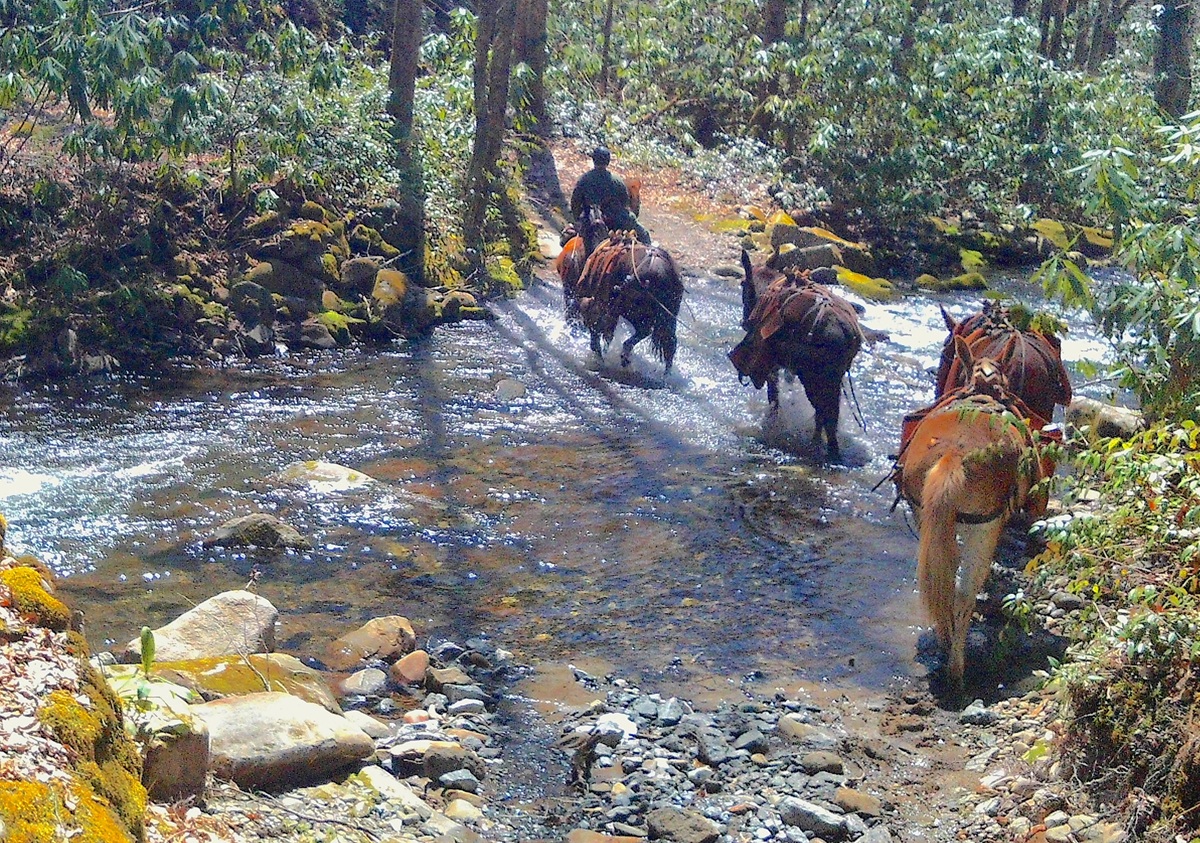
A mule’s tour of duty typically lasts about as long as its shoe—around six weeks. Once the shoes wear out, the team gets turned out to pasture for a month and a half of the easy life. Meanwhile, another string of six is rested and ready to work. The park typically acquires its mules around age five, working them for a 15-year career until retirement at age 20.
The mule team is most frequently called upon to help with trail construction. It would be next to impossible for humans to haul the required quantities of heavy materials like black locust logs, which are used to build steps and footbridges, into the remote areas where they’re needed. The mules can do it with no problem, typically moving up the trail at about three miles per hour. Most human hikers move at only about two miles per hour, even when unburdened by a heavy pack.
But the mules’ work extends far beyond trail building.
“Not only do they work on the almost 900 miles of trails here in the park, they also provide support for some of our historic structures that are in the backcountry,” Chief of Facilities Barbara Hatcher said during the celebration. “They take hazard trees out of the backcountry. They also provide service for the fisheries program, the vegetation management program, the backcountry office program with bear cables, and they also provide mulch for some of the privies that are in some of the shelters on the AT and in other areas of the park.”
Between the weight and the animals’ fur coats, avoiding the heat of the day is critical; animal packing is generally early-morning work.
“Usually by 4:30, 5 o’clock we’re here, saddling our guys,” Gibson said of Towstring Barn on the park’s North Carolina side.
Once the team arrives at the trailhead, Gibson works with one of his human colleagues to lead the mules from the trailer and distribute the load, making sure each animal’s burden is balanced and comfortable. The mules work in strings of six, moving single-file with horse-mounted humans at the front and rear.
“If you strap it on a mule,” Gibson said, “normally we can get it from point A to point B.”
For that, the mules deserve some recognition. And on their “golden jubilee,” that’s exactly what they got: a proper celebration, complete with an original song in their honor from Atlanta singer-songwriter Doug Peters and a horseshoe-shaped cake of apples, oats, carrots, and flaxseed.
“In 50 years, let’s celebrate again,” Gibson said. “If I’m alive, I’ll be here.”
Towstring Barn is not a public area of the park, and it is not open to visitors.
Holly Kays is the lead writer for the 29,000-member Smokies Life, a nonprofit dedicated to supporting the scientific, historical, and interpretive activities of Great Smoky Mountains National Park by providing educational products and services such as this column. Learn more at SmokiesLife.org or reach the author at hollyk@smokieslife.org.
This article originally appeared on Asheville Citizen Times.
Related: How NC State scientists solved a blueberry infestation mystery