Two North Carolina men shared their stories about accessing the state’s unemployment benefits system.
On Tuesday, March 17, John Shaughnessy’s income, business, and future ground to a halt.
In response to public health threats posed by COVID-19, North Carolina Gov. Roy Cooper issued an executive order barring sit-down service at restaurants and bars. In the weeks after the shutdown, as social distancing became imperative, Shaughnessy, a 52-year-old Charlotte-based professional musician and co-owner of entertainment management company Straight Fire Entertainment LLC, estimates he lost over $20,000 in income.
“I played two gigs the previous Sunday and one on Monday, and then, that was it,” he said.
Then, Shaughnessy’s business partner Dan Lawlor contacted him with good news. Unemployment benefits were being expanded to include North Carolina’s self-employed, small business owners and gig economy workers. Since COVID-19 related state unemployment claims jumped to over 320,000, Shaughnessy logged onto the state Division of Employment Security’s (DES) website at 2 a.m. to avoid excessive web traffic.
After navigating what he referred to as “too many paths, conflicting questions and rabbit holes to go down,” his claim was denied. Two weeks later, there is still no path for Shaughnessy to qualify for unemployment benefits.
Lawlor also logged onto the website. Though he applied for benefits as a small business owner—Shaughnessy applied as self-employed—the result was similar.
“The website is an absolute nightmare.”
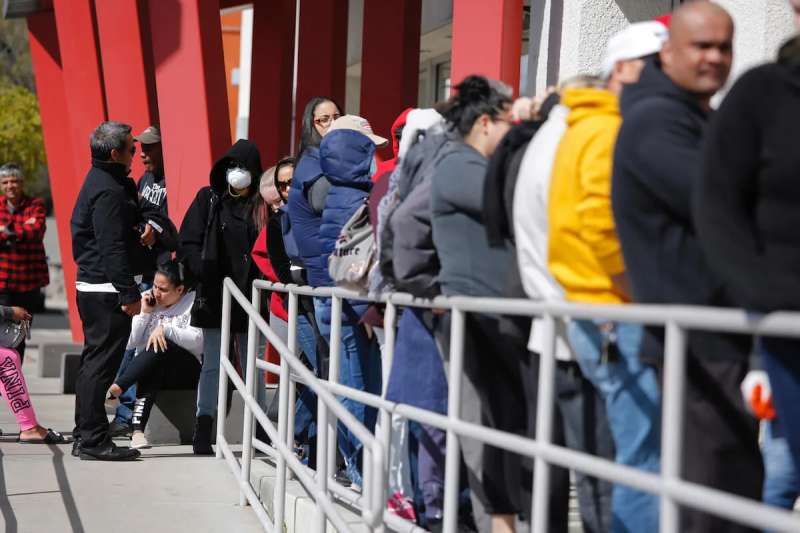
Despite the COVID-19 pandemic, some in North Carolina continue to report that they’re struggling to access the state’s unemployment benefits.
“Everyone I know who has entered their information on the website as self-employed or gig economy worker in the entertainment business has been denied,” Lawlor said. “You can’t get [the DES] on the phone,” he said. “The website is an absolute nightmare with reloading and having to resubmit forms four, six, eight times per page.”
As late as March 30, the DES website stated that: “Independent contractors and self-employed workers are typically not covered.” So why the disconnect between the state’s expounded coverage, and its initial denial of that coverage?
In addition to closing restaurants and bars, Cooper’s March 17 order lifts some restrictions on benefits to help workers unemployed due to Covid-19. It removes the one-week waiting period to apply plus the requirement that people must be actively looking for work, while extending benefits to employees who have had their hours reduced due to COVID-19, but it says nothing about extending benefits to the self-employed. Concurrent with Cooper’s actions, the U.S. Senate and House of Representatives were debating plans that included provisions to help the self-employed, independent contractors and gig economy workers. Amid crossed signals and pandemic-inspired confusion, Shaughnessy, Lawlor and many others applied too soon.
When President Trump signed the federal Coronavirus Aid, Relief, and Economic Security (CARES) Act into law on March 27, one of its provisions finally extended benefits to the self-employed and small business owners under Disaster Unemployment Assistance. Shaughnessy had already become familiar with DUA when he filed prematurely.
RELATED: Find Out What You Can Expect to Get from the $2 Trillion Coronavirus Relief Bill
“There’s a whole section about disaster relief that I filled out, and that seemed to be a little more geared towards my situation,” he said.
The DES website continues to compound the confusion. As of April 3, the site states that self-employed workers may qualify for federal Pandemic Unemployment Assistance as a result of COVID-19, but it’s unclear if that assistance is compatible with Disaster Unemployment Assistance. The site has also been modified to allow people to choose coronavirus as a reason for unemployment, but other promised changes, such as verbiage reflecting the eligibility of the self-employed for benefits, have not materialized.
When asked how soon benefits will be available for the self-employed in North Carolina, DES Government and Public Relations Officer Larry Parker replied: “We won’t know until we receive guidance from the US Department of Labor.”
Similarly, whatever measures are needed to enact benefits for the self-employed covered under the CARES Act are still pending. “The US Department of Labor will issue the guidance and we will work as quickly as possible to put the measures into place,” Parker offered.
Since the passage of the CARES Act, Shaughnessy has gone online to recertify for benefits. He saw no option to update or change his work history to qualify for Disaster Unemployment Assistance or Pandemic Unemployment Assistance, and there was nothing on the website about how to apply under the CARES Act, he maintained.
“I’d love to start over, but I don’t know if that’s allowed,” Shaughnessy said. “There is zero guidance on any of this.”