Experts say the new restrictions, which go into effect Friday at 11 pm, are a sign of ‘the new normal.’
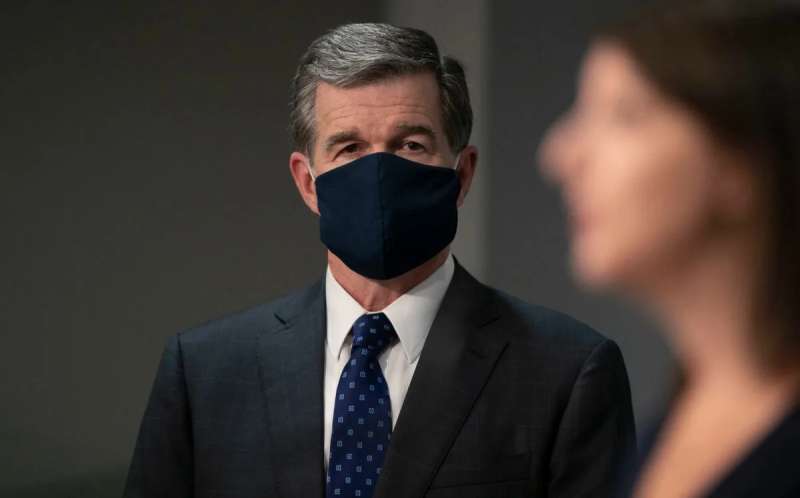
North Carolinians will no longer be able to purchase alcohol after 11 pm, after Gov. Roy Cooper issued a new executive order following similar restrictions in cities such as Raleigh and Charlotte.
Executive Order 153, which goes into effect Friday at 11 pm, stops the sale of alcoholic beverages in restaurants, breweries, wineries, and distilleries past curfew. These establishments are then banned from resuming alcohol sales until 7 am, WBTV reported.
Grocery stores, convenience stores or other businesses permitted to sell alcohol for off-premises consumption will not be affected by the measure.
Bars, which have stayed shuttered under Phase 2 of Cooper’s plan to gradually reopen North Carolina’s economy, will remain closed.
Don’t miss a story. Subscribe to the Cardinal & Pine newsletter.
When North Carolina reopened its restaurants at 50% capacity in May, the North Carolina Bar and Tavern Association, a collection of nearly 200 bars across the state, sued Cooper in an effort to force their reopening. The association’s legal challenge proved unsuccessful.
Cooper’s order, designed to stem the spread of COVID-19, will continue to send the state’s numbers and trends in the right direction, the governor maintained. As WCNC reported, North Carolina’s overall positive test trend has remained mostly stable since the governor passed his face mask mandate in June, although hospitalizations have continued to creep up.
The NC Department of Health and Human Services (DHHS) reported Tuesday that 1,244 people were hospitalized by the virus. That’s a new record high for the state during the pandemic.
As of Wednesday, North Carolina had confirmed 117,850 cases with 1,865 deaths.
RELATED: ‘Shut It Down’: Public Health Experts Call for a Do-Over to Contain Coronavirus
Public health officials point to bars as potential coronavirus hot spots, The Raleigh News & Observer reported.
“We’re preventing restaurants from turning into bars at night,” Cooper said. “We know the bar scene has been a place where we’ve seen increased transmission.”
Cases Surging Among Young People
“Slowing the spread of this virus requires targeted strategies that help lower the risk of transmission,” Cooper said. “We have seen case numbers increase among younger people, and prevention is critical to slowing the spread of the virus.”
At a news conference this week, NC DHHS Secretary Mandy Cohen said the state is concerned about the growing number of COVID-19 cases in younger people.
NC DHHS currently reports that 58% of the state’s COVID-19 cases occur among people 18 to 49, although that brackets accounts for just 5% of its deaths. The virus is significantly more dangerous to older people, with nearly 80% of deaths in NC reported among people who are 65 or older.
Earlier this month, Raleigh, Charlotte and Orange County passed their own alcohol curfews. Raleigh and Charlotte stopped sales at 11 pm while Orange County’s cut-off is 10 pm.
Raleigh Mayor Mary-Ann Baldwin cited unmasked crowds ignoring social distancing in Glenwood South and other parts of the city in June as the rationale for her city’s alcohol curfew. Raleigh’s order also includes grocery-store alcohol sales in the ban.
After video and pictures of unmasked and tightly packed crowds at local restaurants and bars circulated last month, Charlotte Mayor Vi Lyles came out in support of a late-night alcohol restriction as well.
Under Cooper’s order, local authorities are allowed to follow previous guidelines provided their restrictions are more severe than the state’s.
‘It’s Opening into a New World.’
Will the state’s policy prove effective in stemming the tide of COVID-19?
Pamela Trangenstein, a professor of health behavior in the UNC Gillings School of Public Health told The News & Observer that Cooper’s order can only help.
“When it comes to COVID, bars are acting as superspreaders,” Trangenstein said.
“Every additional two hours of late-night alcohol sales are associated with increased harms.” Trangenstein said.
Pia MacDonald is an epidemiologist at RTI International, a Research Triangle Park firm that recently published a survey showing that people are drinking more during the pandemic.
There is no COVID-19 specific data pertaining to alcohol sale hours, but a recent National Institute of Health review reported that longer alcohol sales hours led to increased injuries, violent crime and drunk driving.
MacDonald suggested that current alcohol restrictions were only the beginning of adjustments people will need to make for the new normal, which is life with the coronavirus. People will need to accept new social norms, she said.
As bars, restaurants and other venues reopen, MacDonald said patrons will have to let go of “reopening into how it was before.”
“It’s opening into a new world,” she said.