Disinformation about vaccines is everywhere online, making it hard for people to know what is real and what is fake. But local doctors have a far easier time addressing patient concerns in person. And it starts, they say, by listening.
The best place to counter online falsehoods is the local doctor’s office, where many physicians have treated patients from infancy through adulthood.
The measles virus evades your body’s defenses by initially disguising itself as part of the immune system, kind of like when Robert DeNiro dressed as an EMT to steal an ambulance in the movie Heat.
The virus first enters an immune cell around your nose or mouth, then hides in the cell as it travels deeper into the body, where it can really get to work and do the most damage.
It’s sneaky, effective, and part of what makes measles one of the most contagious diseases humans have ever known.
Disinformation about the vaccines that prevent measles and other serious diseases works the same way.
False information invades an X or Facebook post, adopts the characteristics and language of a truthful post, then, share by share, travels deeper into the cultural narrative where it can really get to work.
Vaccine disinformation is one of the main drivers of vaccine hesitancy, and vaccine hesitancy is the main driver of the recent resurgence of measles in the United States. While the US Health and Human Services Department under Secretary Robert F. Kennedy is now the most prominent source of vaccine disinformation, social media remains the most prolific, offering so much misleading, fallacious or outright false information about vaccines that it can be very difficult for the public to know what is real and what is fake.
It’s true that all vaccines have some potential side effects, but they are usually rare, mild, and temporary. Serious side effects are incredibly rare, and deaths are even more rare. But incredibly rare is not the same thing as never. And when there is a confirmed death connected to a vaccine, even if the death is in one of a million cases, the story of the one can be more compelling than the statistic—especially online.
This landscape is not new, but the volume and intensity of vaccine disinformation is getting worse at the same time it is doing the most damage. In several interviews over the last two months, North Carolina doctors and nurses said they are doing their best to adapt their responses to any patients expressing hesitancy about getting vaccines for themselves or their children.
‘The worst thing you can do is to criticize’
While vaccine disinformation might start as a lie, it is usually spread in good faith by those who believe it’s real. Just because a parent is wrong doesn’t make them a liar.
So what is the most important thing a doctor can do when faced with a patient worried about vaccines?
Listen.
The North Carolina Department of Health and Human Services (NCDHHS) has a robust toolkit for parents filled with factual information about vaccines, but doctors should still take the time to talk to their patients,
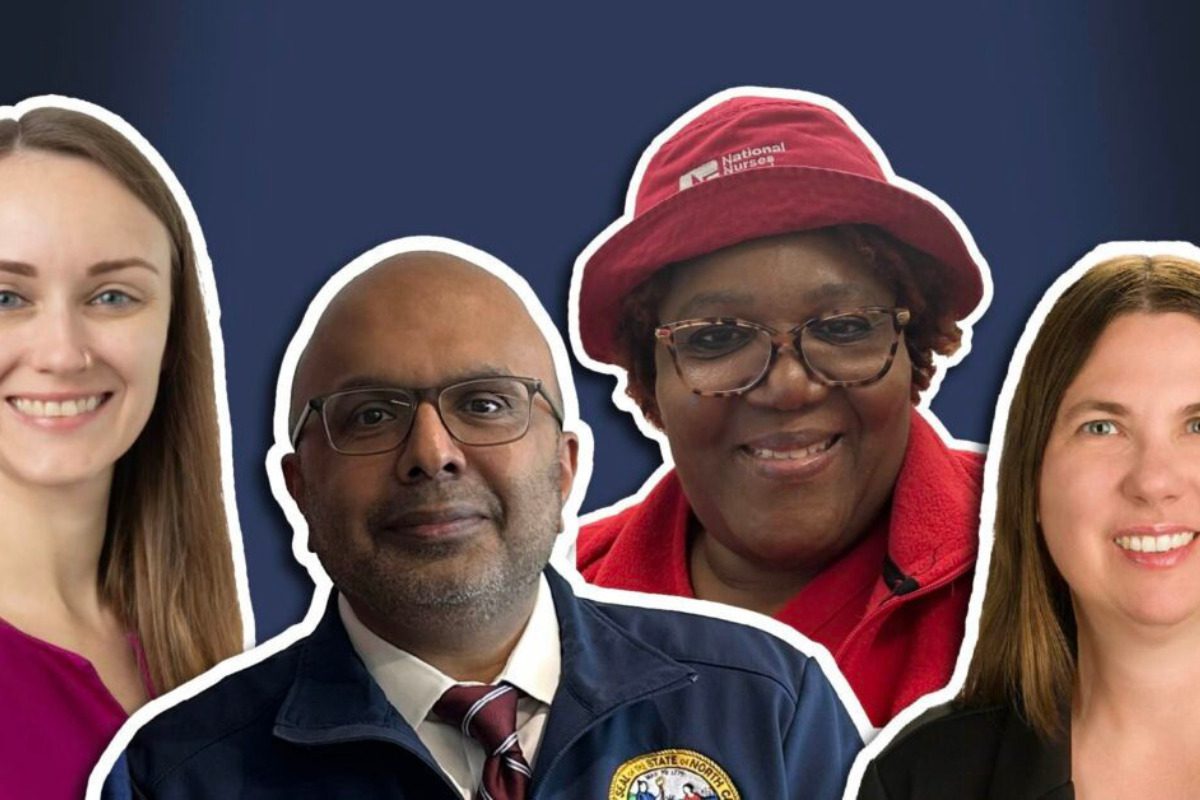
Dr. Devdutta Sangvai, the NCDHHS secretary, told Cardinal & Pine.
“My process as a provider has always been when a patient would come to me with certain information that wasn’t consistent with best science, I would engage into a dialogue,” Sangvai said.
“The worst thing you can do is to criticize somebody for having a difference of opinion,” he said. “The best thing you can do is … figure out how you can resolve it.”
‘We want them to thrive’
Kennedy has framed his vaccine resistance as simply a means to give parents more control over their children’s care.
And doctors should discuss all care with all their patients, but many parents may see a choice when it comes to vaccines when there really isn’t any scientific doubt about what the best course of treatment is, Dr. Erica Pettigrew, a family physician in Orange County, said.
“When someone brings their kid to us and the kiddo’s sick and we hear some pneumonia in their lungs and we say they need these antibiotics, it’s not generally offered as a menu of ‘Well which one do you want?’” she said.
“We have, in the past, sometimes presented vaccines as this bizarre menu, when really it’s up to [doctors] to offer our best medical advice and then to understand from the parent’s perspective what their concerns are and talk through it and come to a place where we all can feel good about what we’re gonna do.’”
It’s important to do three things at once, Dr. Pettigrew said: Be clear about what is the best practice, explain the evidence behind it, and leave “space for answering any concerns or questions.”
This is especially important when speaking with first-time parents, she said.
“They wanna do the right thing,” Pettigrew, said, but if a doctor treats vaccines as a could instead of a should, then “they’re like, ‘well, maybe I’m not supposed to choose all of these if I’m being asked in this way.’”
Vaccine disinformation has made things difficult for doctors, Pettigrew said.
“It’s hard to know where to approach it on an individual basis,” she said. “All we can do is say, ‘tell me what your concerns are. I would love to understand them.’”
By listening, a doctor can tailor her response to their concerns. And sometimes that involves something doctors don’t always do: Telling the patients that they too trust the vaccine for themselves.
“Sometimes after I explain the science, I will say truthfully that my parents get this vaccine too, or I get my COVID booster,” Pettigrew said.
It’s an effective way, she said, to communicate that she trusts the vaccines so much that she has her family get it too. That, she added, “can help them realize that I am an expert and I’m also a human who has made these decisions.”
“We love the relationships, we value the continuity of care to build that trust so that people know that we are coming at this because this is the right thing to do, and we want them to thrive, we want them to be healthy,” Pettigrew said.
‘People want to sow doubt’
Charlotte Moser, co-director of the Vaccine Education Center (VEC) at the Children’s Hospital of Philadelphia, said in an interview that people who are worried about vaccines often don’t fully understand how vaccines are meant to work.
Vaccines don’t just protect the individual, they protect the community. Areas with high vaccination rates protect the people who want the vaccine, but can’t get it because they are immunocompromised or not yet eligible.
And some people who choose not to get a vaccine still try to “hide in the herd,” Moser said, taking advantage of the vaccines other people got.
“They were taking advantage of the fact that the rest of us were vaccinating our kids,” she said, and “felt they didn’t need the vaccine [because] they’re protected by all the people around them.”
Doctors and medical experts can do their best to explain these things to patients, but many parents are looking for guarantees in a world without guarantees. There are reams and reams of evidence, backed by careful study, that show vaccines are safe and effective. There is no evidence for many of the claims made in anti-vaccine circles.
But “the inherent nature of science” complicates the online pursuit for answers, Moser said. And it is a nature that can make the general public uncomfortable.
“A large share of people truly believe what they’re saying, even if it’s not correct,” she said. “And that’s why science has to be separate from opinions.”
True science, she said, “is a way we understand the world around us. What we know today could change tomorrow, and people are very uncomfortable with not knowing.”
Disinformation artists feed on that discomfort, she said.
“People who want to sow doubt leverage that.”
The sowing of doubt, especially from the Trump administration, has had a direct effect on flu season, too. The last two flu seasons saw an increase in cases, hospitalizations, and deaths, and a decline in vaccinations. And though this year’s vaccine was less effective at preventing flu, it remained effective at preventing deaths and serious illness, especially in children.
Even as cases were up across the country, serious illness did not significantly increase in communities or areas where folks got their vaccines in large numbers.
Take veterans, for example.
Ann Marie Patterson Powell, a VA nurse in Durham, said vaccine hesitancy is not normally a problem for veterans.
”We don’t have a lot of issues with veterans not being vaccinated,” she said. “They’re really good about that. There are very few veterans who would say that they don’t want a flu vaccine or they don’t want a COVID vaccine.”
Veterans got the flu like the rest of us, but it was not an abnormally bad season among the demographic, she said.
“Even though we had a large amount of veterans with the flu. I don’t think they were as bad as you can see in the private sector, because most of them do get vaccinated,” she said.
“Thank goodness for that.”
Trust and football
The internet might be lawless and the distrust of medical institutions may be on the rise, but for the most part, people still say they trust their local doctor.
Dr. Bert Fields is a sports medicine doctor in Greensboro, but he spent most of his early career as a family medicine physician.
That trust, he said, is the best tool doctors have to fight vaccine disinformation.
“I’ve been practicing so long I’ve known some of my patients from the time they were babies,” he said. “I get asked quite a bit about vaccines. If they trust you, they’re more likely to listen to you.”
When a patient comes to him with bad information, he can counter with good, and then explain the source.
“I can quickly pick out some of the best references going and say, ‘look, these weren’t written in political magazines, these weren’t written on the internet, this is out of the European Journal of Sports Medicine, or the British Journal of General Medicine, or JAMA, or New England Journal.
The other dangerous aspect of the internet though, is it skews perspective. If you live only online, you might get the sense that most people doubt vaccines. The opposite is true. The vast majority of people want unfettered access to vaccines and most parents vaccinate their children.
“I don’t think the world is as skeptical of science as the current administration seems to be,” Fields said. “And that’s true of my patients. If I disagree with them about getting a vaccine or whatever else, they want to know, ‘why do you think that way?’”
He often has to push back against something they read online, but he does so in a way that maintains the trust.
“A lot of times my patients will say they knew of someone who had this shot and something terrible happened to them within a week. And so they’ll ask me, ‘well, Dr. Fields, what have you seen?’ And I can tell them I will see hundreds of patients each year who got the shot and had either one case or two cases or zero cases of that sort of reaction,” he said.
“But I don’t talk down to my patients.”
And if that fails with his student athlete patients, he said, he just cuts right to the issues they love the most: Vaccines are the best way to avoid missing games.
“This was particularly true with the COVID vaccine. And we were really pushing very hard for this,” he said.
Because you don’t have to believe in vaccines to know “that a COVID outbreak could devastate your team fairly quickly,” Fields said.
That, he said, usually does the trick.
This story is part of Cardinal & Pine’s “Bad Medicine” series, a wide-ranging look at how new federal healthcare policies threaten to overwhelm already overwhelmed doctors and nurses, widen health disparities in rural areas, and make North Carolinians sicker. For more of Bad Medicine, tap here.
Author
Support Our Cause
Thank you for taking the time to read our work. Before you go, we hope you'll consider supporting our values-driven journalism, which has always strived to make clear what's really at stake for North Carolinians and our future.
Since day one, our goal here at Cardinal & Pine has always been to empower people across the state with fact-based news and information. We believe that when people are armed with knowledge about what's happening in their local, state, and federal governments—including who is working on their behalf and who is actively trying to block efforts aimed at improving the daily lives of North Carolina families—they will be inspired to become civically engaged.

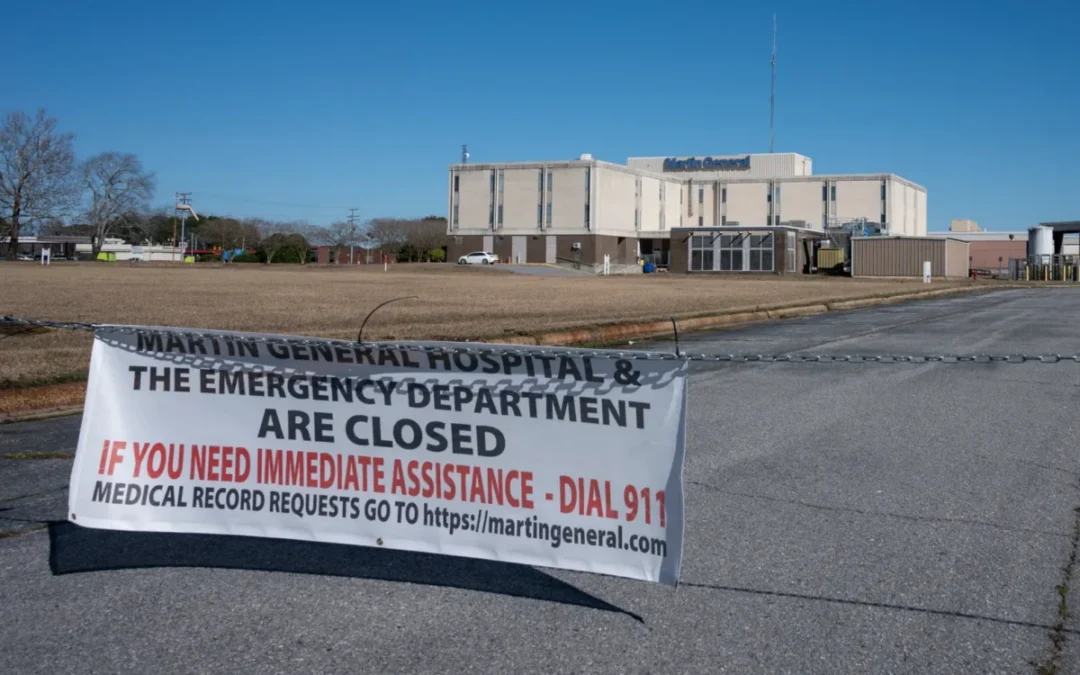
ECU Health’s plan to reopen rural NC hospital offers hope to Martin County
A rural NC community in Martin County has been without a local hospital for three years now. But ECU Health has a plan to reopen it as a "Rural...
Life-saving medications rescued a Halifax County man from fentanyl addiction
The opioid crisis has claimed the lives of tens of thousands of North Carolinians. While some patients are able to access medication to treat...
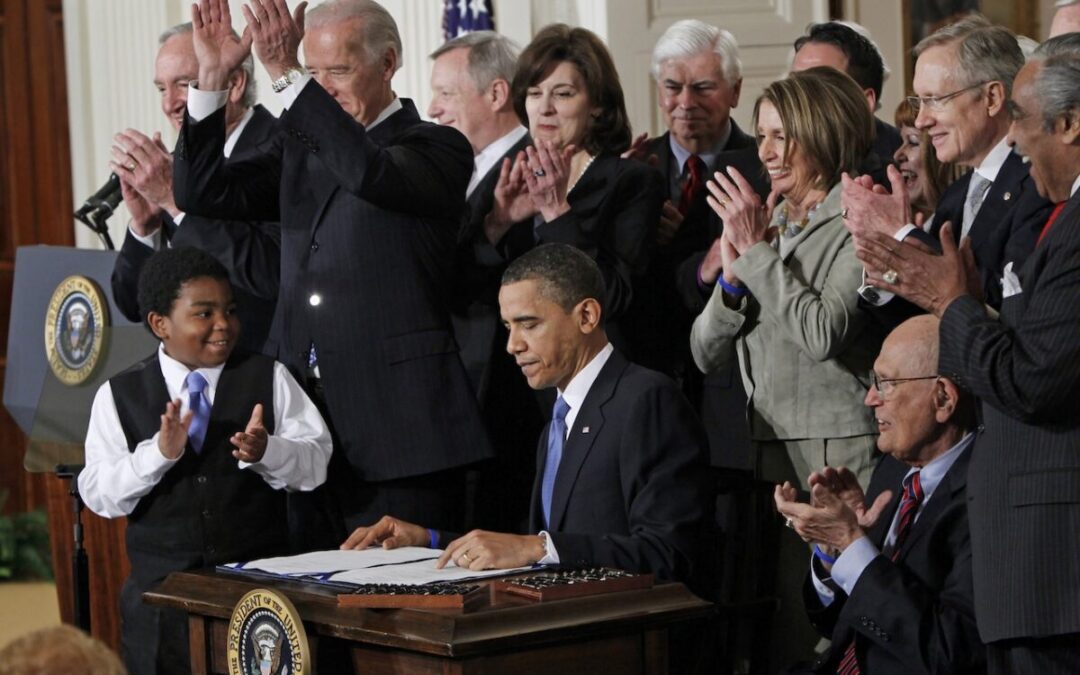
The Affordable Care Act turns 16, but the fight for affordable health care is far from over in NC
The ACA helped North Carolina expand Medicaid to more than 720,000 people, and prevented insurers from refusing to cover people with pre-existing...
The Affordable Care Act turns 16, but the fight for affordable health care is far from over in NC
The ACA helped North Carolina expand Medicaid to more than 720,000 people, and prevented insurers from refusing to cover people with pre-existing...

Federal judge blocks HHS vaccine changes, citing a lack of scientific rigor
A US District Court sided with major medical institutions that the changes pushed by US Health Secretary Robert F. Kennedy Jr. were unlawful partly...