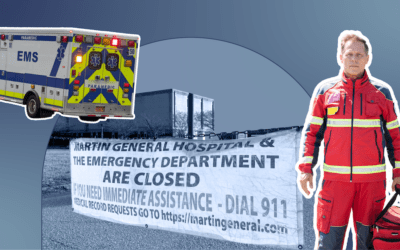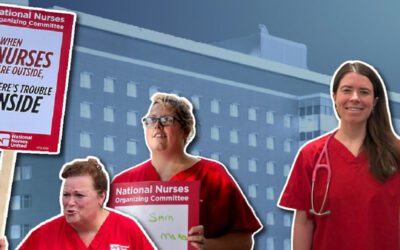
Welcome to Cardinal & Pine's new weekly health care series, Bad Medicine. (Cardinal & Pine)
Cardinal & Pine taps its award-winning reporting to highlight the dangers federal policy changes pose to the state’s health care and what can be done about them.
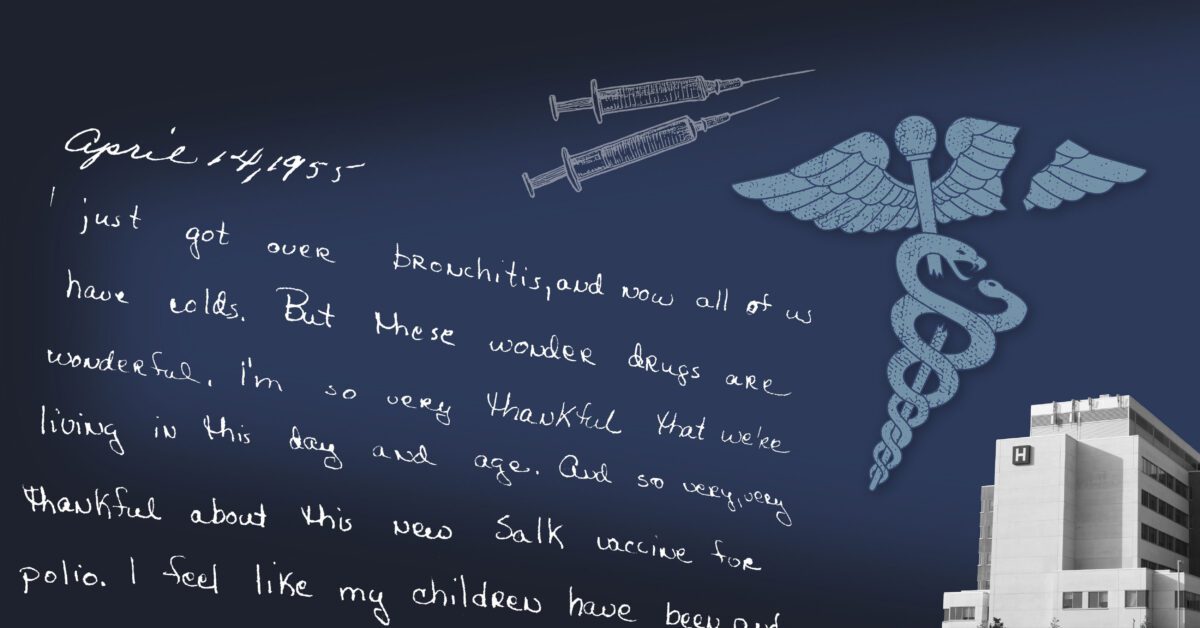
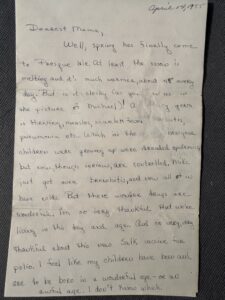
On April 14, 1955, two days after a new polio vaccine was declared safe and effective, a young woman in Maine wrote to her grandmother that “spring has finally come.”
The woman, the mother of a toddler and a baby on the way, was thankful the snow was melting, felt blessed that the baby was healthy, and expressed hope that she might soon be born into a world transformed.
It had been a rough few winters.
“A nasty germ is thriving,” the woman wrote.
“Measles, scarlet fever, bronchitis, pneumonia,” were all over town, she wrote, and polio, a dangerous virus that mostly targets children, continued to strike fear in parents across the country.
Over the previous three years alone, polio had sickened more than 160,000 children, killed more than 7,000, and destined hundreds of survivors to lifelong complications, including paralysis.
Still, the woman wrote, brighter days seemed on the horizon. Scientific breakthroughs had supplied doctors with better weaponry in the war against these nasty diseases, and there may be no bigger weapon, she suggested, than the one announced on April 12, 1955.
“I’m so very thankful that we’re living in this day and age. And so very, very thankful about this new Salk vaccine for polio,” she wrote.
 Her optimism was well-founded. Over the next decade, the Salk vaccine and two others released in the early 60s kicked polio’s butt. In 1965 there were only 61 cases across the country, and 16 deaths.
“I feel like my children have been and are to be born in a wonderful age,” the woman wrote. But she seems to have stopped herself here, adding a dash instead of a period as if a darker thought occurred to her in the middle of expressing the hope every parent dreams for their children.
“…- or an awful age,” she added. “I don’t know which.”
My wife recently found this letter from a distant relative while helping her father sort through family photos and keepsakes. The worry and optimism it expresses are more than 70 years old, and from a young parent now long dead. But they also capture the ageless battle between hope and fear that every generation faces.
Are we in a wonderful age for health care, or an awful age?
That is the question at the heart of Cardinal & Pine’s new series “Bad Medicine,” a weekly series exploring the state of health care in North Carolina and the effect that recent changes to federal policies will have on the health of North Carolinians of all ages.
What you’ll see
Every week over the next few months, my colleague Dylan Rhoney and I will bring you feature articles, helpful explainers, videos, graphics, maps, and other content, each piece trying to shed light on the state’s healthcare system, both the crises and the triumphs.
We will dive deep into the multi-front attack the Trump administration is waging on North Carolina, from looming cuts to Medicaid, to soaring Affordable Care Act (ACA) premiums, to the dismantling of federal health infrastructure and research funding, to the widespread disinformation about vaccines and other medical treatments.
We’ll cover a lot of ground, bringing you clear, evidence-based information that helps add context to complex stories that can often feel overwhelming and hard to understand.
We will certainly tell these stories from 30,000 feet, but we won’t stay there. You’ll hear directly from the communities most at risk; from rural doctors and overworked nurses; from North Carolinians worried about losing their healthcare; from healthcare providers on the front lines of chronic disease and novel pathogens.
You’ll also learn about the dangerous measles resurgence in the United States, and why the virus is like a trojan horse.
You’ll hear from North Carolinians living in healthcare deserts; from families worried about losing Medicaid; from ACA recipients struggling to pay soaring healthcare premiums; from patients, from doctors, from parents just trying to protect their children from a peril that seems closer than ever.
We’ll also explore how we got here, tracing the political failures and policy decisions that led to one of North Carolina’s most glaring ironies: We are home to some of the best healthcare institutions in the world, but we also have some of the largest health disparities in the country, offering stellar care near the cities, but often inadequate care for rural residents, Black and brown people, and people living in poverty.
Lots of voices
The reporting will be well-sourced, full of links to show our work, and human-centered, all brought to you with Cardinal & Pine’s award-winning depth and charm.
Government decision making has a tremendous effect on day-to-day life. When losing Medicaid could mean losing a child, or when federal health officials reopen doors to dangerous diseases, national policy becomes intensely personal. But following the news in such a chaotic media landscape can be dizzying, like riding a high speed merry go round that’s been shoved upside down as it spins.
We will try to slow things down a little.
Context and grace
Public distrust of federal institutions, insurance companies, big name hospitals, and the media is growing.
But surveys show that people largely still trust their own doctors, and nearly every medical expert we’ve spoken to for the series so far sees this not just as a silver lining, but as a beacon.
Are we in a wonderful age for healthcare, or an awful age?
The answer, of course, is both. Let Bad Medicine tell you why.
Author
Support Our Cause
Thank you for taking the time to read our work. Before you go, we hope you'll consider supporting our values-driven journalism, which has always strived to make clear what's really at stake for North Carolinians and our future.
Since day one, our goal here at Cardinal & Pine has always been to empower people across the state with fact-based news and information. We believe that when people are armed with knowledge about what's happening in their local, state, and federal governments—including who is working on their behalf and who is actively trying to block efforts aimed at improving the daily lives of North Carolina families—they will be inspired to become civically engaged.

Life-saving medications rescued a Halifax County man from fentanyl addiction
The opioid crisis has claimed the lives of tens of thousands of North Carolinians. While some patients are able to access medication to treat...
The Affordable Care Act turns 16, but the fight for affordable health care is far from over in NC
The ACA helped North Carolina expand Medicaid to more than 720,000 people, and prevented insurers from refusing to cover people with pre-existing...
Federal judge blocks HHS vaccine changes, citing a lack of scientific rigor
A US District Court sided with major medical institutions that the changes pushed by US Health Secretary Robert F. Kennedy Jr. were unlawful partly...
Federal judge blocks HHS vaccine changes, citing a lack of scientific rigor
A US District Court sided with major medical institutions that the changes pushed by US Health Secretary Robert F. Kennedy Jr. were unlawful partly...
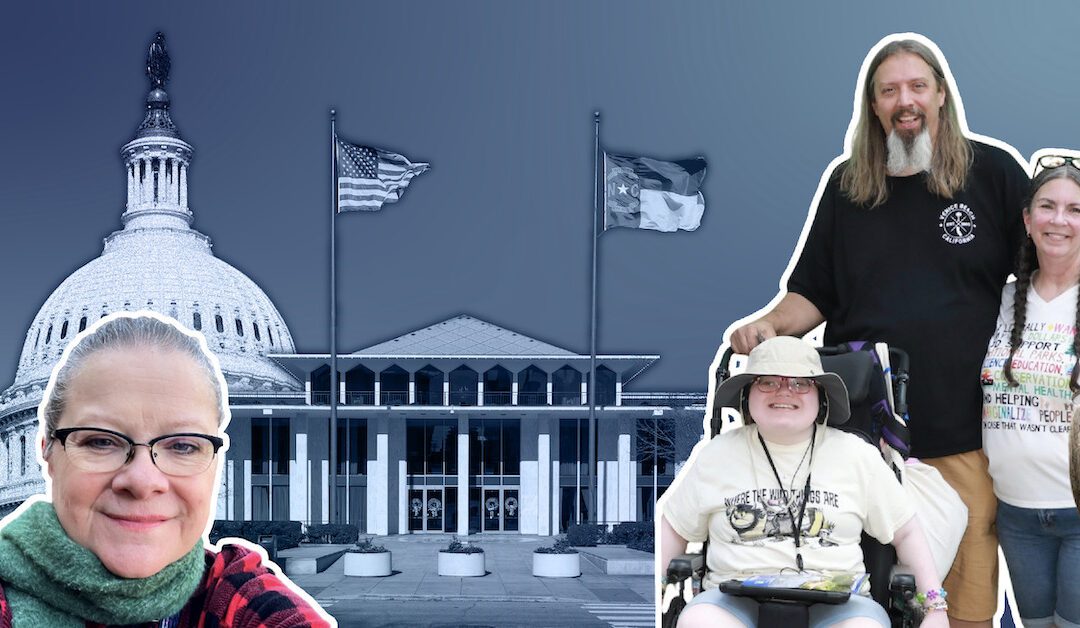
Medicaid helps keep this NC teen alive and at home. Trump’s health care cuts will put her at risk.
With $1 trillion in federal cuts to Medicaid looming and further cuts expected at the state level, the families of North Carolinians who rely on the...