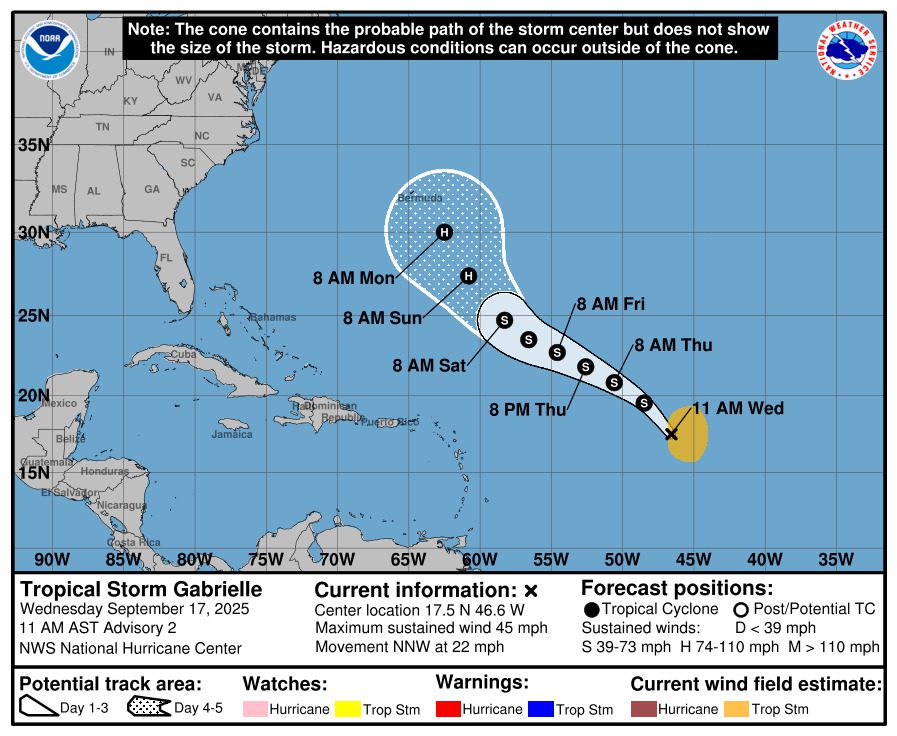
Here's the latest forecast from the National Hurricane Center on Tropical Storm Gabrielle. (National Hurricane Center)
Here’s the latest on Tropical Storm Gabrielle and whether it will have any potential impact on North Carolina.
Tropical Storm Gabrielle has developed in the central Atlantic out of what had been Invest 92L, according to the latest advisory from the National Hurricane Center.
The tropical storm is expected to develop into a hurricane over the weekend.
If it does become a hurricane, it’ll be only the second of the Atlantic hurricane season, following Erin, which became a hurricane in the central Atlantic just over a month ago, on Aug. 15.
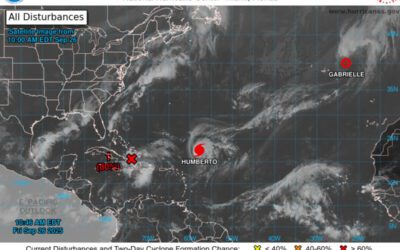
Gabrielle is one of two systems currently being tracked by the National Hurricane Center. A tropical wave off the coast of Africa currently has a low chance for development.
So far, this season has produced six named storms, none of which have made U.S. landfall, though Erin brought some serious impacts to North Carolina’s Outer Banks. The next named storm is Gabrielle.
Here’s the latest advisory from the National Hurricane Center as of Sept. 17:
Are there any hurricanes in the Atlantic?
As of Tuesday morning, Sept. 17, Gabrielle is the only named storm in the Atlantic.
- Location: Central tropical Atlantic
- Movement: West at 13 mph
Tropical Storm Gabrielle path
Spaghetti models for Tropical Storm Gabrielle:
Special note about spaghetti models: Spaghetti model illustrations include an array of forecast tools and models, and not all are created equal. The Hurricane Center uses only the top four or five highest performing models to help make its forecasts.
What tropical waves, disturbances are in Atlantic basin now?
Tropical wave in eastern Atlantic: A tropical wave located a couple of hundred miles east-southeast of the Cabo Verde Islands is producing an area of disorganized showers and thunderstorms.
Environmental conditions are only marginally conducive, and any development of this system should be slow tooccur while it moves westward at 15 to 20 mph across the eastern and central portion of the tropical Atlantic.
Regardless of development, this system will likely bring areas of heavy rain across the Cabo Verde Islands later today and Thursday.
- Formation chance through 48 hours: low, 10 percent.
- Formation chance through 7 days: low, 20 percent.
Other tropical waves being monitored by National Hurricane Center:
A western Caribbean tropical wave is near 83W and S of 20N, moving west at 17 mph. Scattered moderate to strong convection prevails along the wave axis, with activity approaching the coasts of Nicaragua and Honduras.
An eastern Caribbean tropical wave is analyzed with axis near 63W from 21N, moving west at 11 to 17 mph. Scattered moderate convection is noted across the northern half of the wave, affecting the Lesser Antilles and Puerto Rico.
Hurricane season set to ramp up by late September
While the basin has been quiet — even through the climatological peak — officials warn that activity is likely to increase as suppressing factors like dry air and wind shear begin to fade.
Of particular concern are storms that form close to the United States. Unlike tropical waves that roll off Africa and give forecasters days to track, systems that develop in the Gulf, Caribbean or off the Southeast coast can catch residents with little time to prepare.
These “homegrown” storms can also rapidly intensify in the Gulf’s extremely warm waters, AccuWeather forecasters said.
Are any hurricanes coming to North Carolina?
No. A tropical depression is currently in the central Atlantic, but it is not expected to reach the U.S. or North Carolina.
Conditions can change rapidly, though, and forecasters warn residents to not become complacent and to always be prepared.
How does the 2025 Atlantic hurricane season compare to last year in North Carolina?
For North Carolina, the season has been quiet so far, following a similar pattern to 2024, although Hurricane Erin brought some significant impacts to the Outer Banks.
In early August of last year, Tropical Storm Debby brought heavy rain, flash flooding, tropical storm–force wind gusts, minor coastal flooding and three weak tornadoes to southeastern North Carolina after making landfall in Florida’s Big Bend region on Aug. 5, 2024, and then a second landfall in South Carolina‘s Bulls Bay between Charleston and Georgetown early on Aug. 8, 2024.
By late September, the state tracked Tropical Storm Helene, which caused flash floods, landslides and hundreds of fatalities after moving through the Appalachians.
So far, no storms have directly affected the state, but Colorado State researchers say North Carolina has one of the highest odds of seeing impacts from a hurricane or named storm this season — second only to Florida.
When does the Atlantic hurricane season end in North Carolina?
The Atlantic hurricane season runs from June 1 through Nov. 30.
Ninety-seven percent of tropical cyclone activity occurs during this time period, NOAA said.
The Atlantic basin includes the northern Atlantic Ocean, Caribbean Sea and Gulf of America, as the Gulf of Mexico is now known in the U.S. per an order from President Donald Trump. NOAA and the National Hurricane Center are now using Gulf of America on its maps and in its advisories.
The peak of the season is Sept. 10, with the most activity happening between mid-August and mid-October, according to the Hurricane Center.
Prepare now for hurricanes
Delaying potentially life-saving preparations could mean waiting until it’s too late. “Get your disaster supplies while the shelves are still stocked, and get that insurance checkup early, as flood insurance requires a 30-day waiting period,” NOAA recommends.
- Develop an evacuation plan: If you are at risk from hurricanes, you need an evacuation plan. Now is the time to begin planning where you would go and how you would get there.
- Assemble disaster supplies: Whether you’re evacuating or sheltering-in-place, you’re going to need supplies not just to get through the storm but for the potentially lengthy aftermath, NOAA said.
- Get an insurance checkup and document your possessions: Contact your insurance company or agent now and ask for an insurance check-up to make sure you have enough insurance to repair or even replace your home and/or belongings. Remember, home and renters insurance doesn’t cover flooding, so you’ll need a separate policy for it. Flood insurance is available through your company, agent, or the National Flood Insurance Program. Act now, as flood insurance requires a 30-day waiting period.
- Create a family communication plan: NOAA says to take the time now to write down your hurricane plan and share it with your family. Determine family meeting places, and make sure to include an out-of-town location in case of evacuation.
- Strengthen your home: Now is the time to improve your home’s ability to withstand hurricane impacts. Trim trees; install storm shutters, accordion shutters, and/or impact glass; seal outside wall openings.
Reporting by Brandi D. Addison, USA TODAY NETWORK / Asheville Citizen Times
USA TODAY Network via Reuters Connect
Author

Will it be a warm spring in NC? See NOAA 2026 long-range forecast
Just over a month before the official start of spring, here's what weather forecasters are predicting for NC. As we head into February, the National...
Arctic blast incoming to North Carolina. Will there be snow or ice?
North Carolina will experience a deep shot of Arctic air this weekend, bringing frigid temperatures, gusty winds, and pockets of snow across the...
What a bomb cyclone is—and why North Carolina keeps seeing extreme weather
Back-to-back winter storms are testing North Carolina’s power grid. Across North Carolina, the signs of another winter storm were hard to miss: snow...
What a bomb cyclone is—and why North Carolina keeps seeing extreme weather
Back-to-back winter storms are testing North Carolina’s power grid. Across North Carolina, the signs of another winter storm were hard to miss: snow...
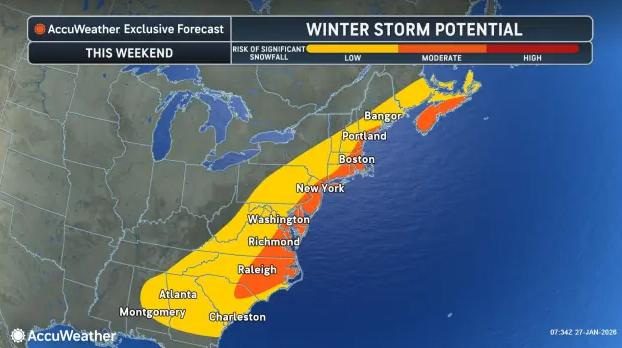
A ‘bomb cyclone’ could drop snow on North Carolina this weekend
These storms can produce heavy snow, strong winds, and coastal flooding, making them a major winter weather threat for areas along the Atlantic...