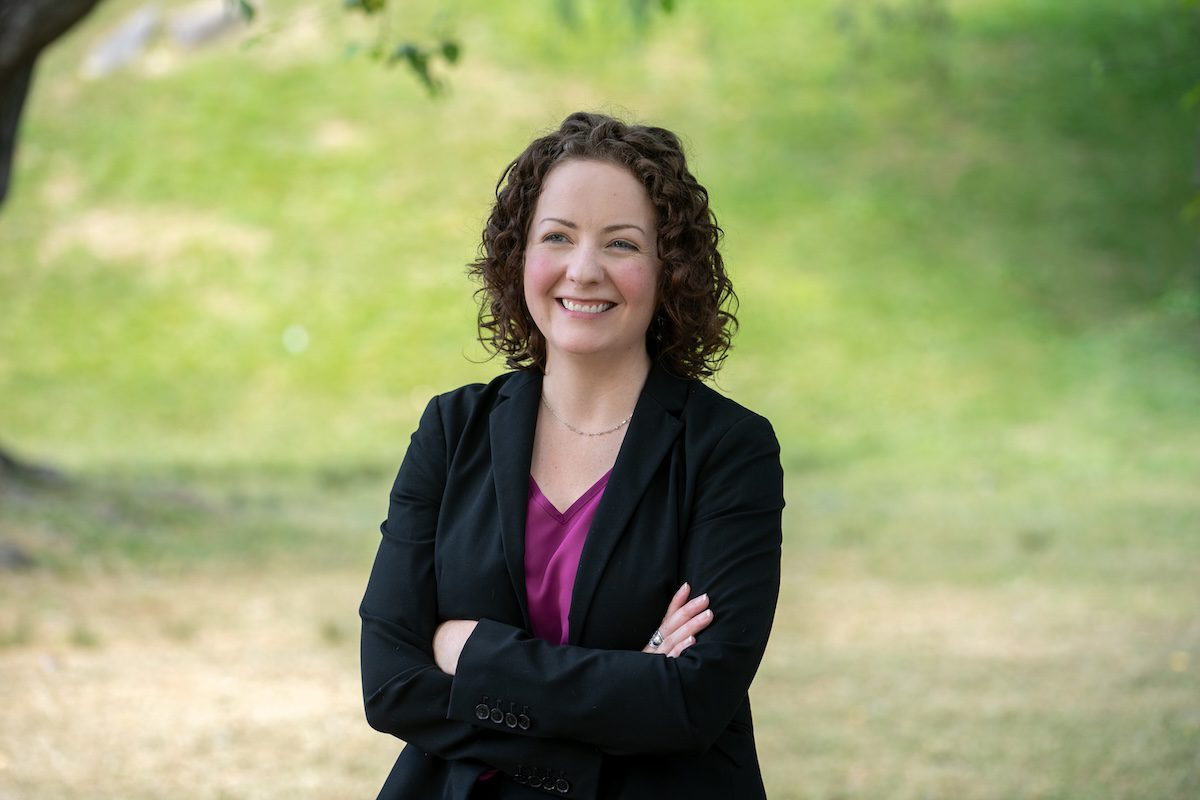
Rep. Lindsey Prather. Photo credit: Prather campaign
North Carolina teachers are among the worst paid in the country, a reality that drives more and more teachers out of the classroom.
It was at Cary High School that Lindsey Prather first realized she wanted to be a teacher.
Growing up in Wake County, Prather was inspired by her teachers and her experiences in the classroom. One teacher in particular, a history teacher with conservative views, helped her grow as a student.
“We butted heads a lot, but I really, really respected him. And he challenged the way that I thought. I really appreciated that,” Prather told Cardinal & Pine.
It was teachers like him that made Prather want to do the same for the next generation of students.
“I had so much opportunity in my life because of what I learned in school, and I wanted to be a part of giving that opportunity to other kids,” she said.
After graduating from UNC Asheville, Prather taught special education and high school civics in Buncombe County Schools.
“I loved teaching civics to high school students because those are the years where they’re separating their parents’ ideas and their friends’ ideas from what their own ideas might be and they’re discovering who they are and how they want to fit into the world,” she said.
What Prather didn’t love was the take home pay. She earned roughly $28,000 her first year as a teacher, she said.
“In Asheville, Buncombe County, there’s not really a whole lot of places you can rent with that amount of money. I found it difficult to live on my own as a first year teacher in North Carolina,” she said.
After six years in the classroom, Prather ultimately chose to give up classroom teaching. She felt the lack of state support for public schools and the low pay for teachers prevented her from giving her students the opportunities she’d been afforded.
“I was not able to provide my students the educational opportunity that I had received,” she said. “There was only so much that I could do with 90 minutes in the day and dwindling purchasing power with my paycheck, and more and more stories in the paper about how the schools are failing.”
Prather still wanted to have an impact on the community and public education, but from a “wider lens,” so she pursued a Master’s of Public Administration from Western Carolina University. Prather then began a job serving as the Assistant Director of Admissions at UNC Asheville, where she is still employed.
As part of her continued desire to serve the public, Prather ran for the North Carolina House in 2022 as a Democrat in a competitive district in Buncombe County. She won, and now in her second term, Prather has made public education one of her major issues of focus in the General Assembly, and with good reason: North Carolina ranks 39th in the nation for average starting teacher pay at just $42,542 per year.
Working multiple jobs and long commutes to make ends meet
As a state legislator, Prather often hears from her constituents and current teachers who have to find second jobs outside of the classroom to make ends meet.
“My friends and my constituents, they’re really struggling. Some of them have had to get a second job. Some of them are picking up extra money, doing dog sitting or babysitting or driving Uber. There’s all kinds of ways that they’re having to pick up a little bit of extra money just to pay the bills,” she said.
A 2025 survey from the North Carolina Association of Educators (NCAE) found that 30% of teachers in the state have either a second job or an extra income stream. A recent Gallup poll found that just 28% of teachers nationwide are living comfortably on their salary, while just over half say they’re “only getting by.”
Studies also show that on average, teachers earn 27% less than people with a similar level of education, which is the highest gap on record.
Taylor Cordes taught special education in Wake County for two years before making the same choice Prather made to leave the profession, and for the same reason—the pay. She says current teachers have to take on multiple income sources just to stay afloat.
“I know teachers who have three to four side gigs, and that includes a part-time job, dogsitting, tutoring. They’ll have up to four alternate sources of income just to try and make ends meet,” Cordes told Cardinal & Pine.
In Wake County, starting teachers are paid roughly $48,000, more than the statewide average, but still well below what’s needed to comfortably live in a high cost-of-living region. When accounting for cost of living, Cordes says some of her former colleagues can’t afford to live in the capital county and face long commutes to work.
“When you take into account the cost of living in Raleigh and places like that, I know teachers who are moving further and further out. Trying to stay in the county, but still having to drive and commute 45 minutes to an hour,” she said.
Teachers spend thousands out of pocket for their own classrooms
Cordes’ passion was teaching special education and helping her students. But in her two years as a classroom teacher, she found herself spending a lot of money out of pocket to provide her students with the learning environment they deserved.
“I was spending $1,000 out of pocket a year easy, just to try to get the supplies I knew my students needed, but wasn’t going to be covered by the school,” Cordes said.
Teachers can deduct up to $300 in unpaid reimbursements on their federal income taxes, but that is a fraction of what Cordes and most teachers spend out of pocket.
A 2025 report found that North Carolina teachers spend on average $1,600 a year out of pocket, the second highest amount in the nation, behind only teachers in Pennsylvania.
On one occasion, Cordes learned that one of her students would benefit from having a special cushion to sit on in class. The cushion only cost $15, but when she approached her school about covering the cost, she was told to ask if the student’s parent would purchase it.
She opted to pay for it herself.
“I was not about to ask the mom to pay for that based on her financial situation. It was a $15 cushion. It’s not that expensive, so I bought it because I want my student to have this cushion. I’m not going to put that burden on the parent. But I was also rolling my eyes that I couldn’t get a $15 cushion paid for by the district or the state,” she said.
The pressure on teachers to spend more out of pocket has only grown in recent years, as inflation and growing financial struggles among families makes it harder for low- and middle-income parents to pay for their child’s educational needs.
“A lot of the stuff that teachers now pay for is stuff that we maybe used to ask students or families to contribute, but we recognize that a lot of families aren’t in a place where they can contribute that anymore,” Prather said.
Leaving the state and the profession for better pay
The four states that border North Carolina—Georgia, Virginia, South Carolina, and Tennessee—all pay their teachers a higher starting salary. Prather says these states are also recruiting prospective teachers from the Tar Heel State.
“I’ve seen billboards in the triangle area from Virginia school districts, advertising to recruit teachers to go work in Virginia,” she said.
A 2022 advertisement in the Raleigh area, for instance, offered teachers $10,000 to relocate to Virginia to teach.
Prather’s district is just a short drive away from the Tennessee, Georgia, and South Carolina state lines. She says teachers who live in her district are choosing to work in those states for better pay.
“We are seeing teachers leave North Carolina. Sometimes they even still live in North Carolina, but they change so that they’re working in another state, they’re driving just across the border and they’re making $10,000 more just for that little bit of an extra drive,” she said.
Data shows that new teachers are most likely to leave the profession in North Carolina. In 2024, teachers with a year or less of experience had an attrition rate of 26.5%.
Cordes left the classroom after two years, despite loving her job. She currently works in the nonprofit sector and makes far more than if she had remained a teacher.
“I’m making almost the top of the teacher pay-scale in North Carolina in my first year. If I had been teaching, I would have to stay for 20 years to make a comparable salary,” she said.
Prather says the General Assembly simply hasn’t increased teacher pay enough to keep educators like Codres in the classroom.
Republicans have held a majority in both chambers of the legislature for over 15 years, but when adjusting for inflation, starting teacher salaries have barely increased in the time since Prather made $28,000 as a first-year teacher.
“Republicans will tell you that they’ve given teachers raises. They’ll say ‘we give teachers raises every year’, but if you look at the numbers, if the raise is less than the rate of inflation from that year, if what you’re able to buy with that paycheck is less than what you were able to buy last year, that’s not a real raise,” Prather said.
Prather worries that low teacher salaries are ultimately preventing would-be educators from entering the profession, and causing teacher shortages across the state.
“Going into teaching means that you’re going into a life where you’re going to struggle paying your bills. It’s hard to have that conversation, and I really worry about recruiting more people to come into the classroom,” she said. “Every year, the state continues, you look at the numbers, every year there’s more and more shortages in the classroom, across the board.”
Editor’s note: Taylor Cordes is a former contributor to Cardinal & Pine
Author

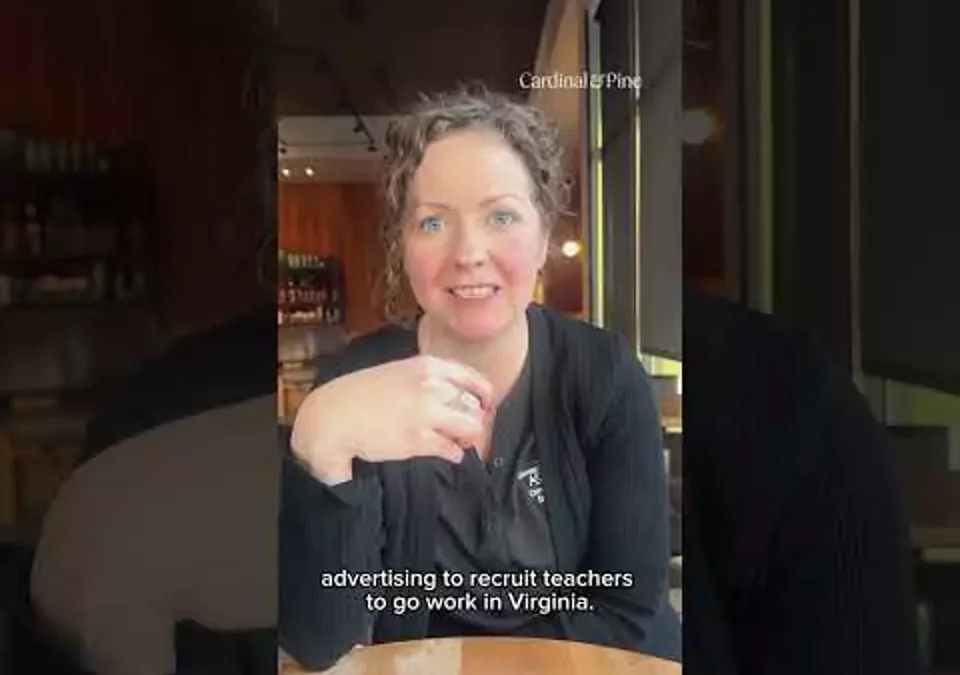
Video: North Carolina teachers getting hoodwinked on pay raises
Cardinal & Pine spoke with Rep. Lindsay Prather, a former educator, about the pay North Carolina teachers are getting. She says they're being...

Trump says millions are ‘lifted’ off SNAP. A Charlotte nonprofit says hunger hasn’t gone away in NC
More than 1.4 million North Carolinians rely on SNAP benefits to help pay for groceries. Boxes and tractor trailers loaded with donated food move...
Food insecurity is hitting thousands of NC children—and it’s following them into the classroom
More than 580,000 NC children rely on SNAP to help keep food on the table. On school mornings in North Carolina, some children arrive already...
Food insecurity is hitting thousands of NC children—and it’s following them into the classroom
More than 580,000 NC children rely on SNAP to help keep food on the table. On school mornings in North Carolina, some children arrive already...

School choice programs grow in popularity — and cost
States like NC are scrambling to meet rising demand for newly expanded school choice initiatives, pouring more money into the programs as waiting...