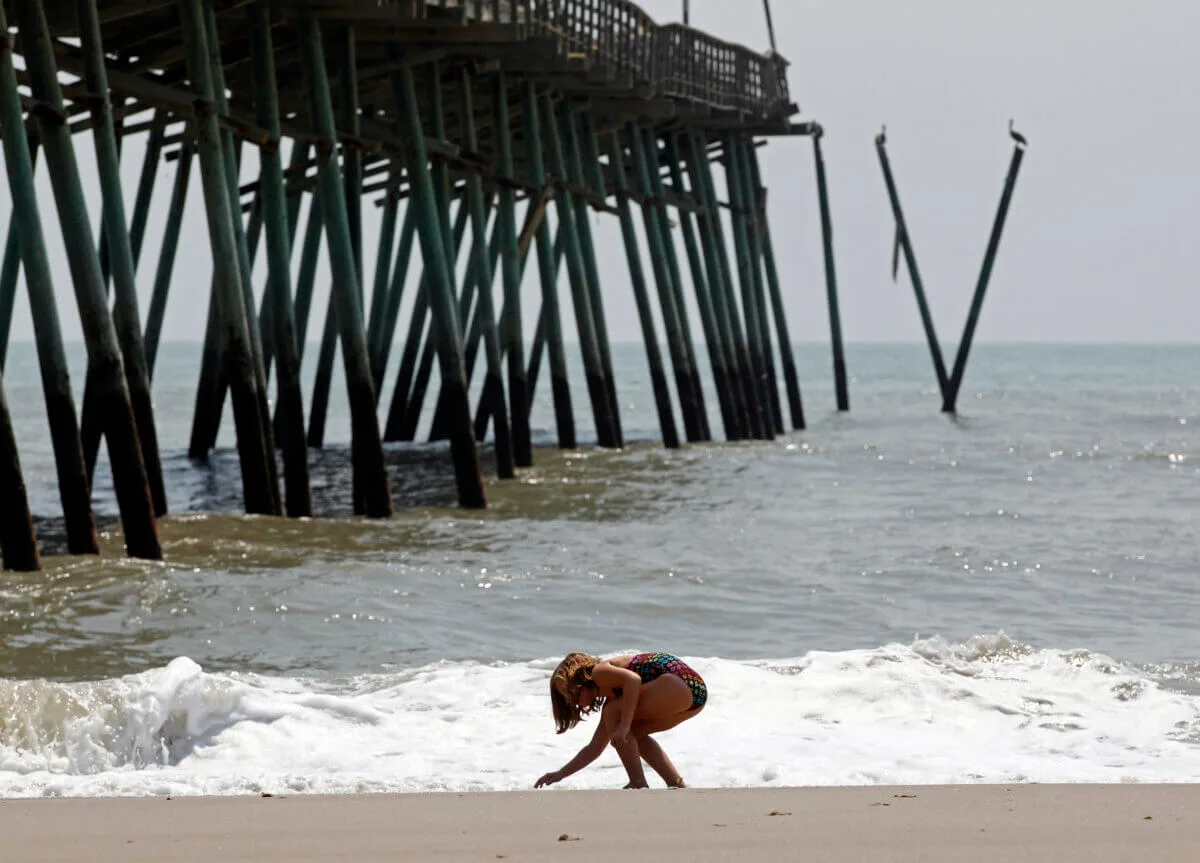
A beachgoer picks up seashells near the damaged Bogue Inlet Pier in Emerald Isle, N.C., in 2011, soon after Hurricane Irene. (AP Photo/Chuck Burton)
We’ve pulled together potentially life-saving info about making a plan and building an emergency kit. It’s too late to plan once the storm hits.
The 2022 Hurricane Season is expected to be, like the last several before it, busy.
The National Weather Service is predicting above-average hurricane activity this year, which, it says, “would make it the seventh consecutive above-average hurricane season.”
And as we saw in Miami this weekend, a storm need not be a hurricane, or even officially a tropical storm, to cause serious flooding.
The key to getting safely through hurricane season, which officially runs from June 1 to Nov. 30, is preparation, both local and federal officials say. And the best-laid hurricane plans are made on sunny days. It’s too late once the storm hits and the winds start taking down trees.
Make a Plan
But write it on paper instead of an electronic device, which you might be unable to recharge or access in an emergency.
Sit down with your family and decide where you will go if an evacuation order is given or if you don’t feel safe. Decide on a rendezvous point so that if you are not together when the storm hits, everyone knows the address and phone number of where to meet.
Staying with family or at a hotel outside the danger zone is better than staying at a shelter, especially since the pandemic is still with us.
Make a Plan for Your Pets Too
Most shelters won’t take them. Find out whether they are allowed at the hotel or spot you are going to.
If you have older adults or anyone with disabilities in your family, ensure all medications and devices are up to date and fully charged before the storm hits.
Put important documents like insurance cards, passports, wills, marriage licenses, etc. in one place so you can easily take them with you if you need to evacuate or leave your home.
You Need a Kit
Make an Emergency Kit of all the things you might need. Keep it in one place and tell everyone in the family where it is. Decide who will be responsible for packing it if you have to leave in a hurry.
The kit should include: Face coverings / masks; hand sanitizer; a gallon of water per person per day; enough non-perishable food for up to 7 days; a battery-powered radio and extra batteries; a cell phone charger; a first aid kit; flashlight and extra batteries; a manual can opener; changes of clothes and sturdy shoes; fire extinguisher; cash; all prescription medications; toothbrush and other personal care items. It’s a good idea to pack extra masks and COVID tests too.
If you have an infant or toddler, make sure you have diapers, formula, bottles and other important items.
If we didn’t answer your questions here, chances are the state’s office of emergency management did right here.
The state will help you map out evacuation routes, sign up for emergency alerts, and so much more.
Author

Politics

Opinion: My aunt died of an illegal abortion. We can’t go back.
When I was growing up, I was always closer to my mom. She was easier to talk to. Whenever I had a problem or was concerned about something, the...

Trump says he would allow red states to track pregnancies, prosecute abortion ban violators
In an interview published by Time magazine this week, former president Donald Trump detailed his plans for a potential second term and said he would...
Local News

Does NC have more serial women poisoners than anywhere else? Getting to know NC true crime writer Cathy Pickens
Charlotte's Cathy Pickens is the NC author of the Blue Ridge Mountain Mysteries, a local true crime series. We had some burning questions for her....

NASA astronaut Christina Koch receives highest NC honor
Gov. Cooper honored NASA astronaut and North Carolina native Christina Koch while highlighting the state’s strong public schools. At a recent event,...