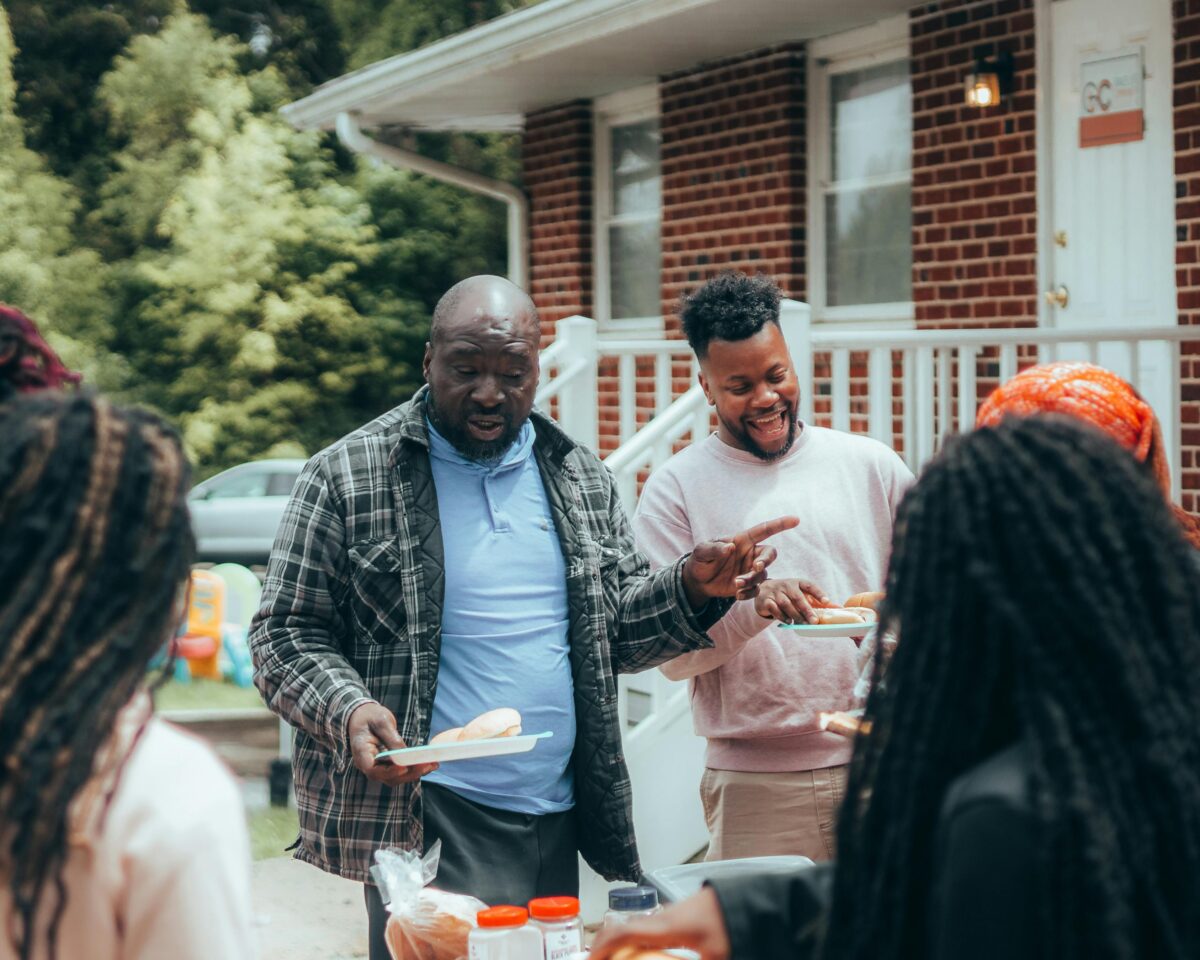
A simple backyard BBQ can go a long way. PHOTO: Pexels
Marvinna Simpson of Davenport, Iowa, works as an Amazon driver and leaves at “o’dark thirty in the morning” to hit the road.
Driving, she has plenty of time to observe what’s around her. Last year, Marvinna watched soybeans die in the fields when the tariff wars left farmers with nowhere to sell them. She’s seen small businesses around town—bakeries, restaurants, taprooms—close. And last year, John Deere—a local economic powerhouse—laid off hundreds of workers from Moline to Ankeny to Ottumwa. These layoffs continue today.
“They call this Trump country, but I’ve started to wonder what people are thinking and how they are feeling right now,” she says. Marvinna is personally feeling the strain of it all—at the local grocery store, a friendly place where people say hello to each other, the prices are going up. Are the other shoppers worrying, too?
Two hours away in Mt. Pleasant, retiree Cindy Nesbitt is also watching things shift. Mt. Pleasant is surrounded by hundreds of farms, so Cindy has also seen those crops dying in the fields. She hears farmers talk—as much as the farmer is heralded as the backbone of America, this is no golden age. Making things even harder, many people in Mt. Pleasant are self-employed and rely on the ACA for health coverage. Because of the recent premium hikes, it’s estimated that 24,000 Iowans will lose their health care coverage entirely this year, including small business owners, farmers, and older adults.
Cindy senses the concern in town but feels unsure whether people are ready to do anything about it. We don’t always connect the stressors in our everyday life to the policies being created half a country away. “There is a lot of talk about who is to blame for things going bad—immigrants, poor people, foreign countries—but my sense is that this isn’t a Democrat or Republican thing, this is a money thing. I think the people in power are laughing at the small people.”
This spring, both Marvinna and Cindy have been trying something new. They’re intentionally reaching out to people in their community, inviting them into conversation and asking their neighbors to step out of the isolating news cycles to talk about how they’re doing.
Cindy, who has lived in Mt. Pleasant for a long time and is actively engaged with local nonprofits and the church, is reaching out to people she already knows. She invited people over for a meal (“Getting together around a meal is a communal system”) to talk about what’s on their minds and what could be done. “Inviting people personally helps them feel engaged. I’m inviting them to come solve a problem together. And the small group helps people be able to engage and speak up,” she observes. “No one is just a placeholder.”
Cindy made a point of asking people to bring their children, aware that inviting teenagers in particular into the conversation will help build the civic muscle that Mt. Pleasant needs in this shifting time.
Marvinna decided to try to bring strangers together. She and her husband picked up big cartons of coffee on their way to the No Kings protest in Davenport, and set up a card table and chairs. There, instead of waving signs, they invited people to sit down and chat about what was on their minds.
“Affordability can sound like a buzzword,” she says, “But that’s what everyone was talking about. Lots of people said they couldn’t afford health care and were worried about their kids getting sick. They couldn’t afford insurance or the copay. But then I talked to a group of older women, and they lived on fixed incomes and were worried about groceries—grocery prices go up, but their income never changes.” Marvinna said having coffee, cups, and chairs was a great way to break the ice and invite people in to talk.
States away in Johnston County, North Carolina, father of five Allen Hall is trying something similar. After the One Big Beautiful Bill Act passed, he started reading it: “Yep, all 900-some pages,” he laughs.
“I grew up on food stamps and Medicaid and now have some pretty serious medical issues—I knew this bill was going to affect me personally.” Allen started writing about this on his blog and began thinking about the thousands of people around North Carolina who are just like him. “I started to have the hunch that other people were worrying and thinking about the same things.”
Allen linked up with some other North Carolinians who had just started a group they’re calling Take Back the Dream. He decided to host a conversation online so that people from across the state could participate. He called it “Medicine or Groceries?”
“I made a point of inviting people from all kinds of different places, posting the invitation in conservative Facebook groups, and community groups.”
Twenty people signed up to join the call.
“There were a lot of Independents on the call, a few Republicans,” Allen says. “We found that we had a lot of similar stories regardless of political affiliation, race, or place. Most people were concerned about health care and felt very dissatisfied with the government.”
Allen has scheduled a follow-up call, and more people have already signed up. Cindy is calling the people who have been joining her over meals. “I call and tell them I’m truly calling just to say hello,” she says. “I want to be in constant touch with them. I want to see who is ready to not just complain, but work on it.”
Marvinna says she’s focused on the upcoming elections and making sure people know how and where to vote: “My sense is that people are getting angry enough to want to do something, but need to know basic voting information. They are worried their vote doesn’t count, and that’s something we can work on next.”
What Allen, Cindy, and Marvinna are doing is simple. They are reaching out, creating space for conversation, and being curious about their neighbors’ lives. But in that simplicity lies something profound: They sense that what we are facing should not be faced alone. When we are counting pennies, fearing layoffs or looking for work, watching crops die, or bills pile up, we often retreat and retrench, close others out. But to stare this down, to build the change we need, there’s no way we can do this but together.
There may be more of us concerned about what is happening than we think. We tend to default to blaming others for “not caring.” But that’s not what Allen, Cindy, and Marvinna are seeing. In my conversations with them, each expressed the sense that politics in their hometowns are shifting, and that the moment to reach out and connect is now. People want “change,” but aren’t sure what that can look like. Allen says it seems helpful to “go local and go personal” to cut through the noise; Cindy says “bringing it back home allows people to talk differently.”
Marvinna says, “I think it helps for people just to be together, see and hear that other people are also struggling and wondering what to do. Once we put all that on the table, then we can say: Okay, what now?”
Author

Working-class Americans don’t have room for one more thing. They’re leading anyway
I used to work in a daycare and I remember how the building would start to bustle with activity right at 5:30 p.m. As parents filed in, I’d dig...
6 ‘good Samaritan’ acts in NC done by regular people
Read six heartwarming stories of "good Samaritans" doing kind deeds in NC. Now that the days are getting shorter, roughly 10 million Americans will...
Opinion: How former Gov. Jim Hunt transformed North Carolina
A lot of people have come to North Carolina since Gov. Jim Hunt left office 25 years ago. They may not know it, but he’s a big reason they came...
Opinion: How former Gov. Jim Hunt transformed North Carolina
A lot of people have come to North Carolina since Gov. Jim Hunt left office 25 years ago. They may not know it, but he’s a big reason they came...

North Carolina’s Lumbee Tribe hoping for a long-awaited federal recognition
North Carolina's Lumbee have been waiting for generations for the federal government to fully recognize them, bringing with it financial benefits...