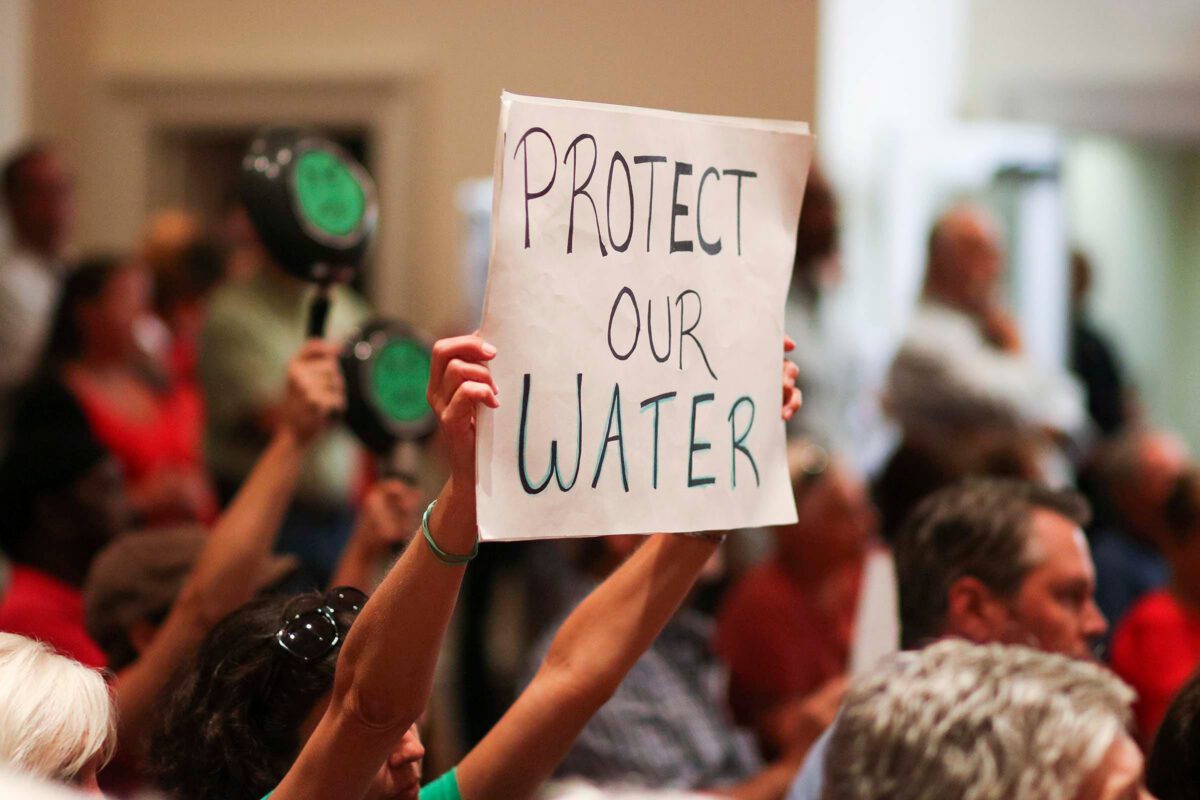
A protester holds a sign at a Wilmington City Council meeting in 2017 after it became public that DuPont and Chemours had been dumping "forever chemicals" into the Cape Fear River for decades. (USA Today via Reuters)
North Carolina leaders say the Wilmington Harbor deepening project raises environmental concerns, including worries about ‘forever chemicals,’ habitat loss, and more.
North Carolina regulators have objected to plans by the Army Corps of Engineers to deepen the Cape Fear River shipping channel that serves the Port of Wilmington.
Reasons listed by the state for its objection to the corps’ preliminary green light for the work included future impacts from sea-level rise, contamination from “forever chemicals,” effects on wetlands and marine habitats, and a lack of mitigation proposals to environmental degradation tied to the deepening.
“The (Army Corps) has not fully demonstrated how these adverse impacts will be avoided, minimized or mitigated,” Tancred Miller, head of the N.C. Division of Coastal Management, stated in his Feb. 24 objection letter to the corps.
The corps’ Wilmington District said it was “disappointed” by the state’s decision, especially since the agency said it felt it had been proceeding “hand in hand” with all of its state and federal partners since work started on the proposed project more than three years ago.
“Since receipt of this determination, we, along with our partner in the (N.C. Ports), are in the process of reviewing the content of their letter to determine how we will proceed,” corps’ spokesperson David Connolly said in an email.
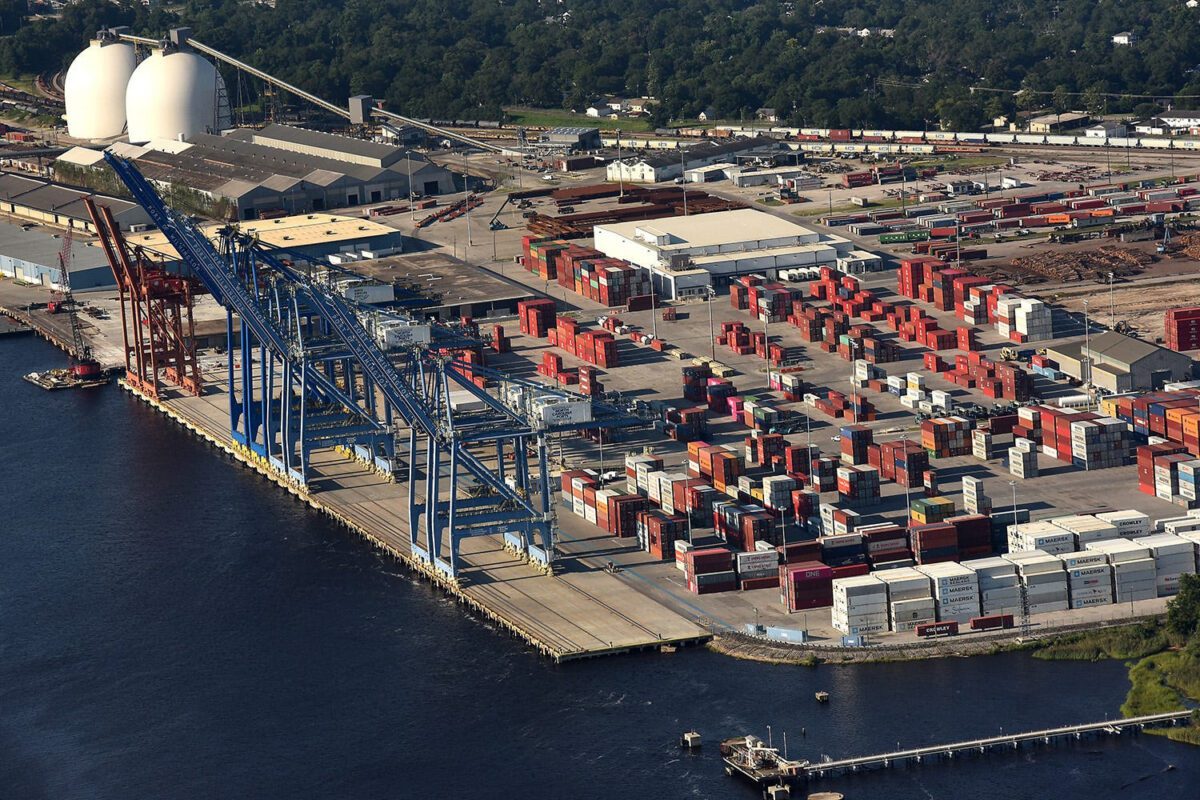
Aerial view of the N.C. State Port along the Cape Fear River winding through downtown Wilmington, N.C. Aug. 9, 2018.
What is the proposed project?
The roughly 26-mile-long project calls for deepening the Cape Fear River shipping channel from its current 42 feet to 47 feet. Other actions involved in the six-year, estimated $1.35 billion project would see the shipping entrance channel at the mouth of the Cape Fear widened and deepened, along with other parts of the channel also widened approaching Wilmington.
The N.C. Ports says a deeper shipping channel in the Cape Fear River is needed to allow the Port of Wilmington to stay competitive with neighboring Southeastern ports that already have deeper – in some cases much deeper – shipping channels to handle the newest generation of giant container ships now that the locks serving the Panama Canal have been enlarged to handle them.
Currently, the latest-generation of container ships often have to make earlier port stops to lighten their loads before coming up the Cape Fear River and docking in Wilmington.
Work to deepen the channel would include substantial amounts of dredging and, where required, blasting. Compatible dredged sand would be placed on nearby beaches, particularly Bald Head Island, Caswell Beach and Oak Island. Those Brunswick County beach towns have complained for years that the Cape Fear shipping channel, particularly when it was deepened from 38 feet to 42 feet more than two decades ago, has robbed their beaches of sand.
What concerns have been raised by opponents of the project?
Opponents of the proposed river deepening say Wilmington is a niche port when compared to its larger port neighbors, handling a fraction of the cargo they do, and is already highly efficient and has enough access to meet the needs of its shipping clients.
Widening and deepening the river channel also would come with environmental impacts.
According to the draft environmental study, up to 1,071 acres of freshwater wetlands would be adversely impacted by more salt water pushing up into the river and some adjacent tributaries. Although there would not be a net loss of wetlands, some would be expected to transform from freshwater forested and marsh wetlands to saltwater wetlands.
Marine habitats also would be impacted by the deepening work, likely requiring mitigation further upstream north of Wilmington.
Several Brunswick County communities also have spoken out against the proposed deepening, joining together to issue a regional statement questioning the economics underpinning the financial benefits of the project and the potential extent of environmental impacts. The federal government would pay for 75% of the deepening project’s costs, with North Carolina taxpayers on the hook for the remaining 25% – about $350 million.
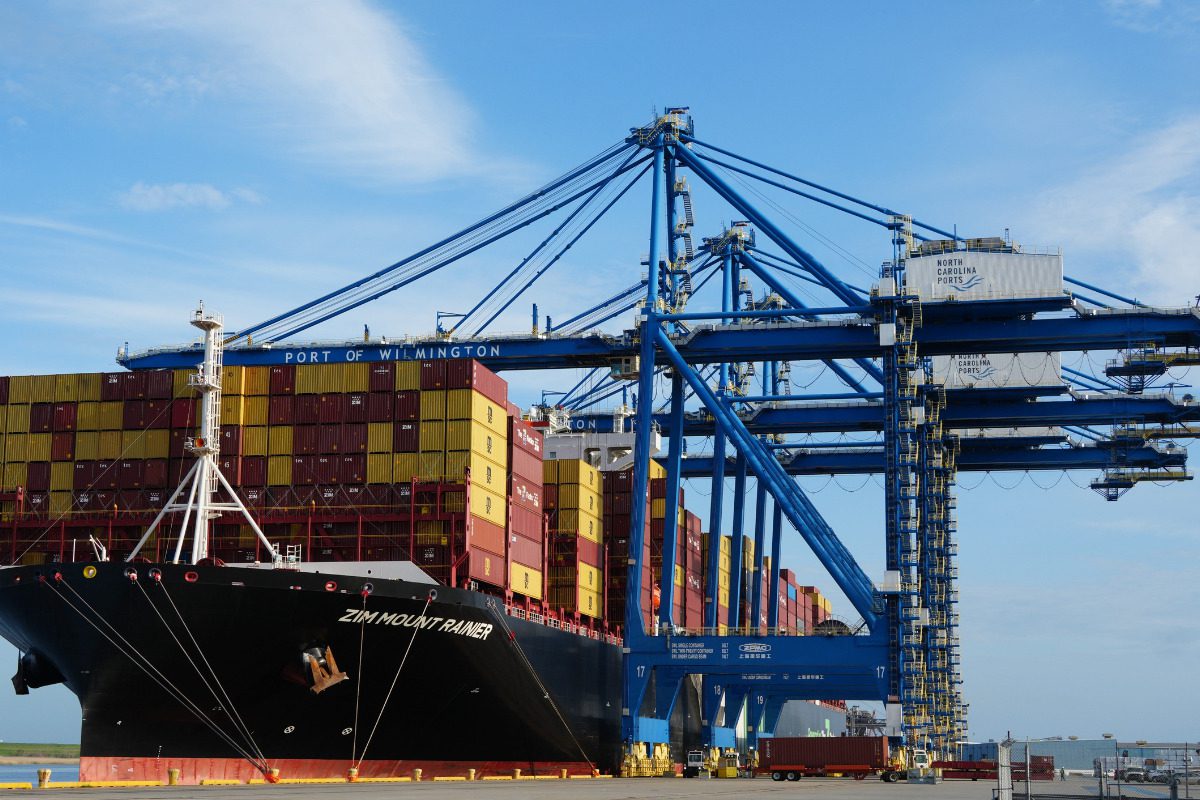
The ZIM Mount Ranier is nearly 1,200 feet long and can carry up to 15,500 containers. It is the largest vessel every to dock at the Port of Wilmington. (USA Today via Reuters)
How can N.C. object to the deepening proposal?
The federal Coastal Zone Management Act aims to balance coastal development with environmental protection.
A key feature of the 1972 law is “federal consistency,” which requires federal actions to align with approved state plans. In this case, it allows Coastal Management to review and potentially object to any federal action that could − in the agency’s finding − adversely impact the environment or be inconsistent with existing state policies in the state’s 20 coastal counties.
According to Coastal Management’s objection letter, a major reason for the agency raising red flags about the deepening project was in large part tied to “data gaps, modeling limitations and unresolved questions” in the corps’ draft environmental review.
Why are ‘forever chemicals’ coming up?
Among the concerns raised by state regulators included the cumulative impacts from flooding events and future sea-level rise; what impacts the placement of dredged material could have on wetlands and other habitats; efforts to mitigate impacts to wetlands; and what a deeper channel could mean for increased erosion along the river and nearby beaches.
According to the objection letter, another item “of particular concern” was the “lack of information” regarding the project’s potential impact on “forever chemicals” that had settled out of the water column and into the river bottom’s sediment during the decades DuPont and more recently Chemours were dumping per-and poly-fluoroalkyl substances (PFAS), like GenX, into the river from the Fayetteville Works plant upstream from Wilmington.
The fear is those manmade toxic chemicals could be stirred back up and again threaten human health and the environment if the river bottom is disturbed by dredging or blasting.
But the corps has pushed back against the lack of information about PFAS in its draft environmental study, noting that there are no federal and state testing standards and regulations for forever chemical concentrations in sediment and that drinking water supplies − the primary health concern over PFAS − wouldn’t be impacted by the deepening project.
What happens now?
According to Connolly, the corps’ spokesperson, the federal agency is working with the N.C. Ports to review the state’s objections and develop a path for moving forward and eventually developing a final project plan that addresses the concerns raised by Coastal Management and others.
“Since we are very early in this review, we cannot yet give a specific date for completion,” he said.
Discussions with federal, state and other agencies over their concerns also are ongoing.
“The North Carolina State Ports Authority values the work of the North Carolina Department of Environmental Quality and respects the concerns raised in this objection,” a N.C. Ports spokesperson said in an email. “We also appreciate the continued support of the U.S. Army Corps of Engineers as we review the content of this letter and determine next steps.”
For its part, Coastal Management said it is committed to working with the corps to try and resolve the concerns the agency has raised about the deepening project.
Reporting by Gareth McGrath, USA TODAY NETWORK / Wilmington StarNews
USA TODAY Network via Reuters Connect
Author

NC forestry officials worry about growing threat of wildfires, fewer workers
Nearly 18 months after Helene, forestry officials and the state fire marshal warned legislators Thursday that North Carolina needs to be much better...

What to know about the 2026 spring equinox in North Carolina
Will it be a warm spring or a cool one? Here's what to know about spring in North Carolina. Residents of North Carolina ― and most of the rest of...
Controversial Wilmington Harbor deepening project paused by feds
A billion-dollar deepening of Wilmington Harbor is necessary to keep the port competitive, but it comes with economic and environmental concerns for...
Controversial Wilmington Harbor deepening project paused by feds
A billion-dollar deepening of Wilmington Harbor is necessary to keep the port competitive, but it comes with economic and environmental concerns for...
Opinion: It’s time to consider who pays for climate damage in North Carolina
North Carolina is already paying for climate change, a state lawmaker says. It's time to make fossil fuel companies pay their share. When I meet...