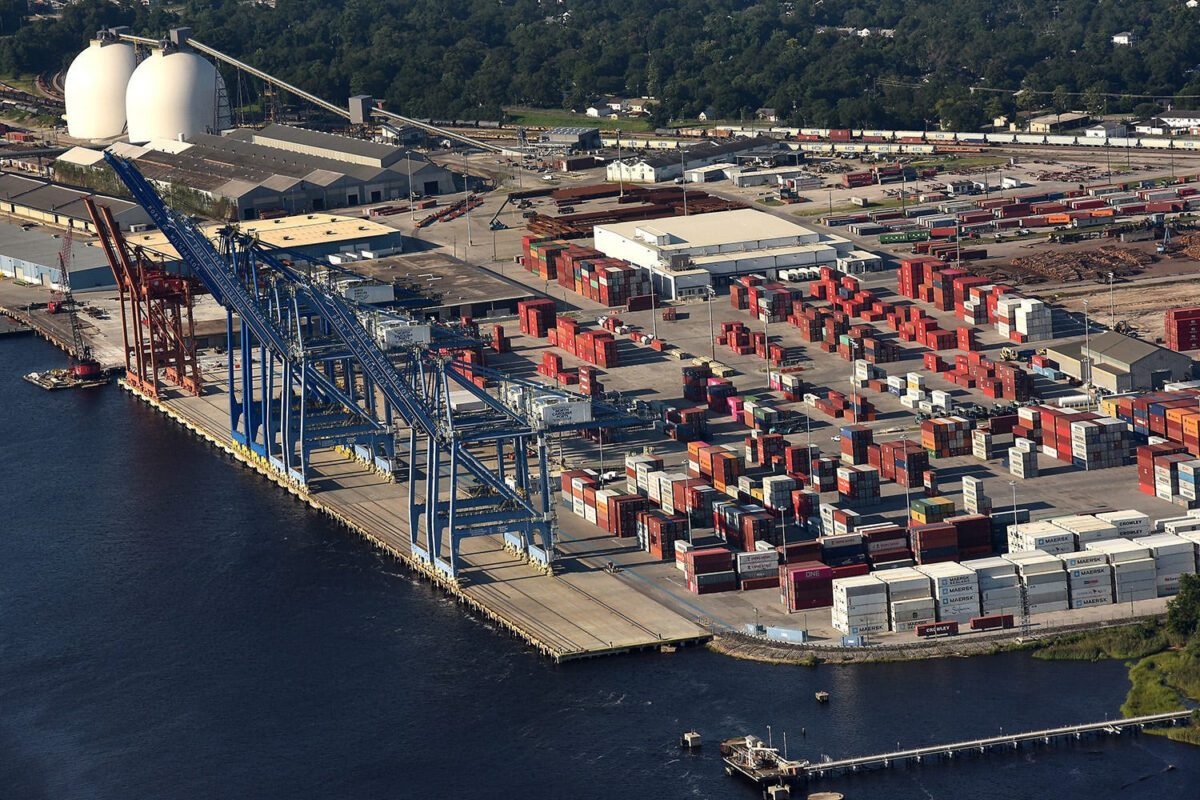
Aerial view of the N.C. State Port along the Cape Fear River winding through downtown Wilmington, N.C. Aug. 9, 2018. (USA Today via Reuters)
A billion-dollar deepening of Wilmington Harbor is necessary to keep the port competitive, but it comes with economic and environmental concerns for North Carolina’s wetlands.
With a length of roughly 26 miles and a projected price tag of more than $1.3 billion, the proposed Wilmington Harbor deepening project would be a big and expensive undertaking.
It also is proving to be a controversial one, based upon the pushback from several towns and environmental groups.
In January, the Army Corps of Engineers asked the N.C. Division of Coastal Management to pause its review of the corps’ preliminary approval of the proposed channel deepening.
While the corps had found the proposed project to be consistent with North Carolina‘s environmental and other rules and regulations, the state also has to sign off on that conclusion.
“The decision to pause allows time for the corps to review and consider issues raised by (Division of Coastal Management) and the public before (Coastal Management) completes its review,” stated Coastal Management in a release announcing the review pause. “A timeline has not been established for when the pause may be lifted.”
What would the proposed deepening involve?
The project calls for deepening the Cape Fear River shipping channel from its current 42 feet to 47 feet. Other actions involved in the six-year, estimated $1.35 billion project would see the shipping entrance channel at the mouth of the Cape Fear widened and deepened, along with other parts of the channel also widened approaching Wilmington.
Work to deepen the channel would include substantial amounts of dredging and, where required, blasting. Compatible dredged sand would be placed on nearby beaches, particularly Bald Head Island, Caswell Beach and Oak Island. Those Brunswick County beach towns have complained for years that the Cape Fear shipping channel, particularly when it was deepened from 38 feet to 42 feet more than two decades ago, has robbed their beaches of sand.
Dredged material also could be placed on Carolina Beach and Masonboro Island if it’s economically feasible, according to the draft study.
The draft planning document also calls for dredged sediment to help build and restore mudflats near wetlands along the Cape Fear. Areas that could see fresh material include the shoreline of Brunswick Town / Fort Anderson, Southport Island, and several spoil islands managed as bird sanctuaries by Audubon N.C.
The corps’ draft report, officially called the Wilmington Harbor 403 Letter Report and Environmental Impact Statement, was released in mid-September.
Why is it needed?
The N.C. Ports says a deeper shipping channel in the Cape Fear River is needed to allow the Port of Wilmington to stay competitive with neighboring Southeastern ports that already have deeper – in some cases much deeper – shipping channels to handle the newest generation of giant container ships now that the locks serving the Panama Canal have been enlarged to handle them.
Currently, the latest-generation of container ships often have to make earlier port stops to lighten their loads before coming up the Cape Fear River and docking in Wilmington.
According to a N.C. State study commissioned by the N.C. Ports, the Port of Wilmington and the smaller Port of Morehead City 100 miles up the coast contribute more than $16.1 billion to the state’s economy and support nearly 88,000 jobs.
“A project of this magnitude deserves close scrutiny,” a ports’ spokesperson said in a statement following the announcement of the review pause. “We appreciate the due diligence of both the N.C. Department of Environmental Quality and the U.S. Army Corps of Engineers as they work to examine and address concerns raised during the public comment period.”
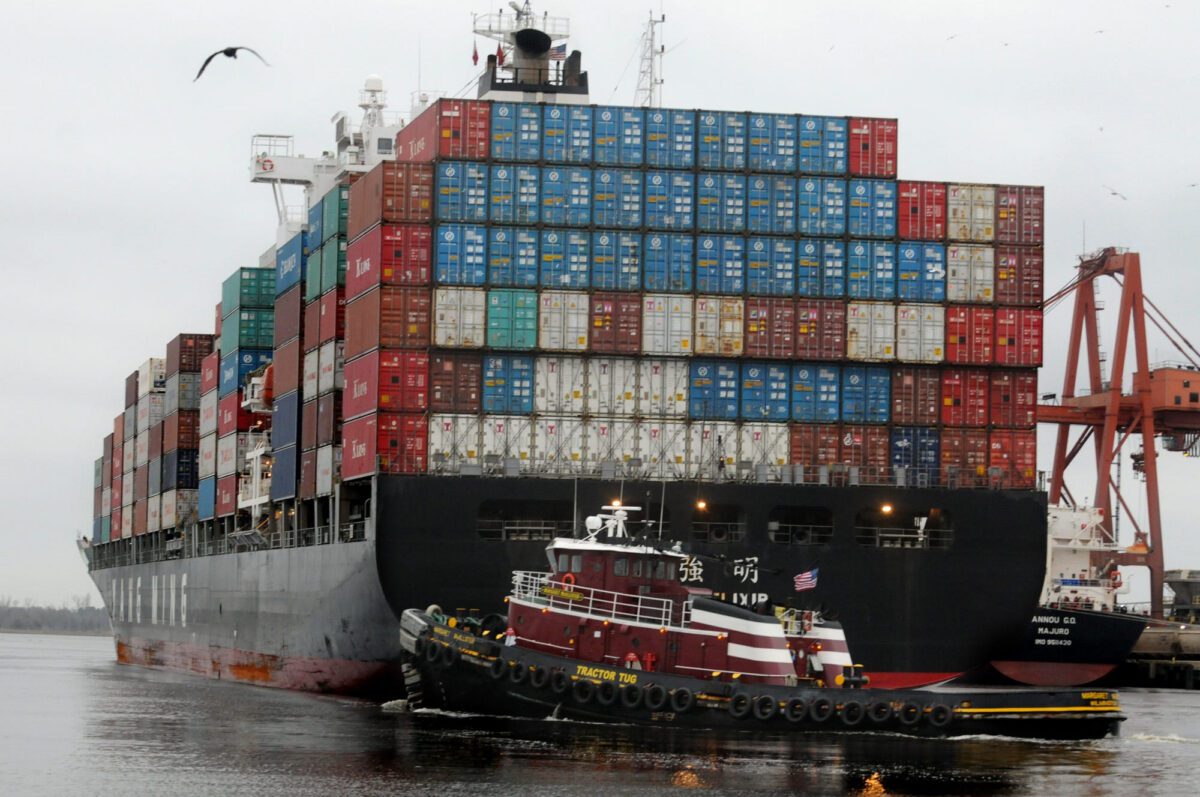
Capt. Randy Bussey in 2013 pilots the Margaret McAllister along side the YM Elixir, an 882-foot long container ship with approximately 2,000 cargo containers at the Port at Wilmington. (USA Today via Reuters)
Economic, environmental concerns
But not everyone thinks the proposed deepening project would be good for taxpayers, with the federal government picking up 75% of the project’s cost and North Carolina the remaining 25%, or the environment.
Opponents of the project say Wilmington is a niche port when compared to its larger port neighbors, handling a fraction of the cargo they do, and is already highly efficient and has enough access to meet the needs of its shipping clients.
Savannah, Georgia, for example, handled nearly 5.25 million containers in the 2023-24 fiscal year. Charleston, S.C., handled 2.5 million, while Wilmington handled 320,000 containers.
Widening and deepening the river channel also would come with environmental impacts.
According to the draft environmental study, up to 1,071 acres of freshwater wetlands would be adversely impacted by more salt water pushing up into the river and some adjacent tributaries. Although there would not be a net loss of wetlands, some would be expected to transform from freshwater forested and marsh wetlands to saltwater wetlands.
Marine habitats also would be impacted by the deepening work, likely requiring mitigation further upstream north of Wilmington.
Several Brunswick County communities also have spoken out against the proposed deepening, joining together to issue a regional statement questioning the economics underpinning the financial benefits of the project and the potential extent of environmental impacts.
“We support responsible maritime infrastructure that strengthens our state’s economy,” the statement says. “But we cannot accept a project that lacks accurate economic data to determine feasibility and ignores the long-term financial commitment to provide environmental safeguards necessary to protect our shorelines, habitats, riverfronts, infrastructure, and citizens.”
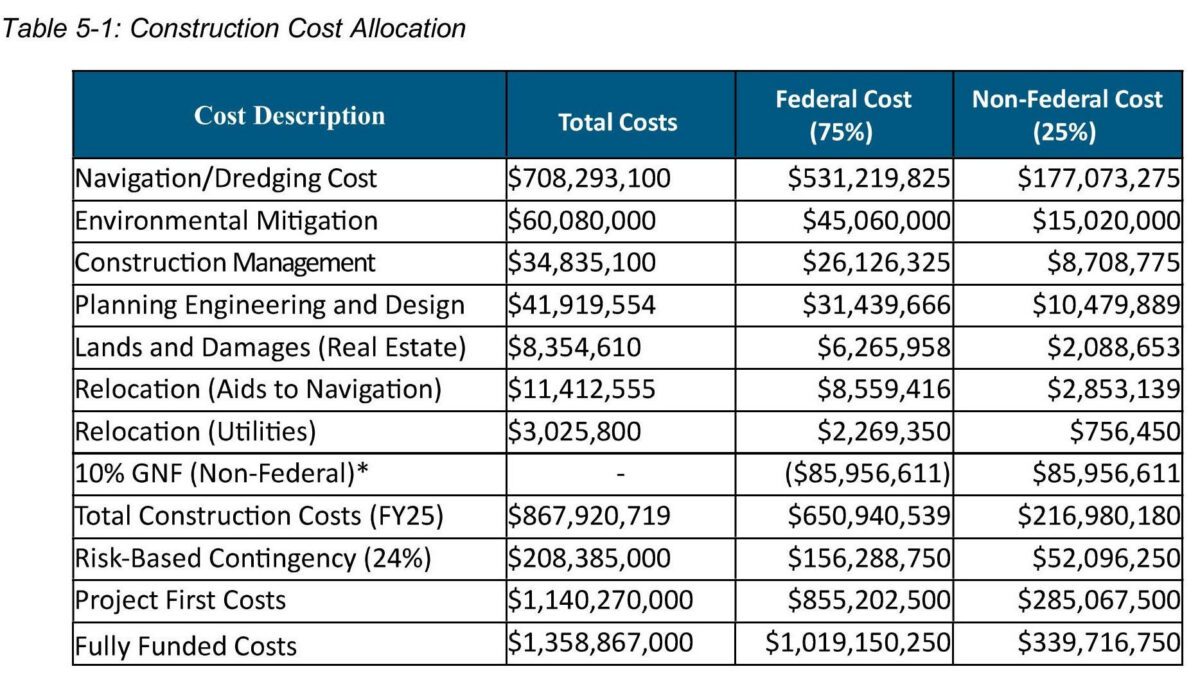
The proposed deepening of the Cape Fear River shipping channel to 47 feet would cost an estimated $1.35 billion, with the federal government picking up 75% of the cost.
What happens now?
The N.C. Division of Coastal Management had initially planned to close the comment period Dec. 5. But after a public hearing in Wilmington on Nov. 17 that attracted nearly 50 people, the agency decided to extend the comment window until Dec. 20.
The corps then extended the time state regulators had to reach a decision on the proposed deepening project from Jan. 5 to Jan. 19 before asking Jan. 16 that North Carolina pause its review.
Once the review process restarts, Coastal Management will decide whether to concur or object to the corps’ decision that the proposed project is in line with state rules and regulations.
If state regulators object, they can offer alternatives or conditions that would allow the project to proceed.
Reporting by Gareth McGrath, USA TODAY NETWORK / Wilmington StarNews
USA TODAY Network via Reuters Connect
Author


NC forestry officials worry about growing threat of wildfires, fewer workers
Nearly 18 months after Helene, forestry officials and the state fire marshal warned legislators Thursday that North Carolina needs to be much better...

What to know about the 2026 spring equinox in North Carolina
Will it be a warm spring or a cool one? Here's what to know about spring in North Carolina. Residents of North Carolina ― and most of the rest of...

NC regulators object to Wilmington Harbor deepening project. Here’s why
North Carolina leaders say the Wilmington Harbor deepening project raises environmental concerns, including worries about 'forever chemicals,'...
NC regulators object to Wilmington Harbor deepening project. Here’s why
North Carolina leaders say the Wilmington Harbor deepening project raises environmental concerns, including worries about 'forever chemicals,'...
Opinion: It’s time to consider who pays for climate damage in North Carolina
North Carolina is already paying for climate change, a state lawmaker says. It's time to make fossil fuel companies pay their share. When I meet...