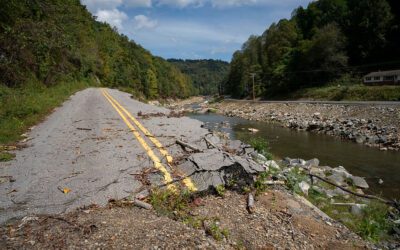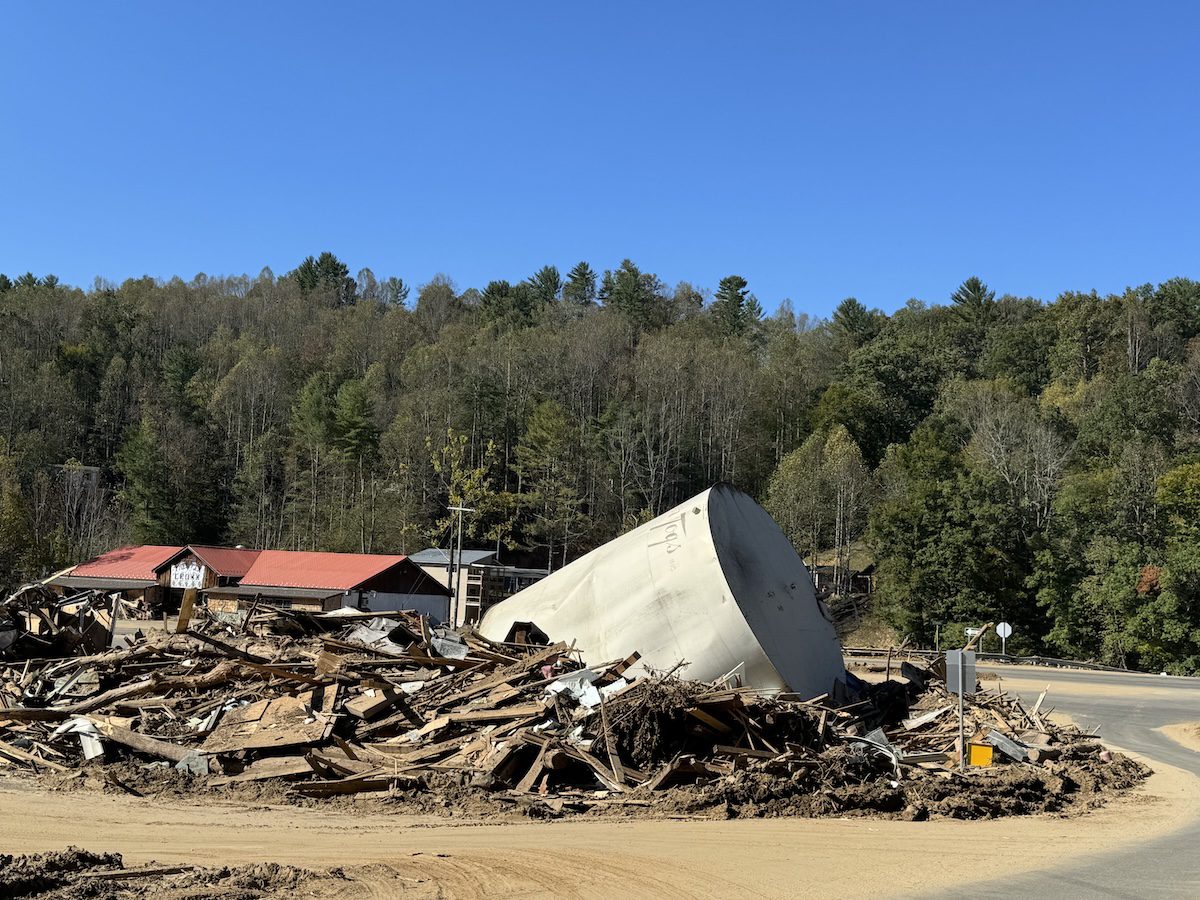
Damage from Hurricane Helene in Burnsville, NC. A North Carolina lawmaker says the wrong people are paying the cost for climate change. (Dylan Rhoney/Cardinal & Pine)
North Carolina is already paying for climate change, a state lawmaker says. It’s time to make fossil fuel companies pay their share.
When I meet with families in my district, they’re not usually talking about “climate change.” They’re talking about insurance bills that jumped again this year. They’re talking about flooded roads that seem to wash out every time it rains hard. They’re talking about school closures, power outages, mold, and repairs that keep getting pushed to next season because the money isn’t there yet.
All of that is climate, whether we call it that or not. And the reality is that the bill for this kind of damage is already here, and North Carolinians are paying it.
Hurricane Helene made that painfully clear.
Communities across the western part of our state are still rebuilding more than a year later. Roads failed, homes flooded, small businesses lost months of income, and schools and hospitals stretched to stay open under extraordinary strain. People lost their lives. And even after the emergency response ended, the bills kept coming—for repairs, for infrastructure, and for the quieter, long-term damage that rarely makes headlines.
Good News Friday: Signs of life in Asheville’s River Arts District after Helene
Meanwhile, the support families expect from the federal government has been uneven at best. FEMA has been slowed, cut back, and constrained. And here in North Carolina, we are trying to manage this recovery while facing a fiscal cliff and operating without a full state budget – the only state in the country in that position, I should add.
So we ask local governments to do more with less, we ask families to wait. And we pretend the cost of all this can somehow be absorbed without consequences.
It’s not that there is no money. It’s that the wrong people are paying.
Right now, taxpayers and state budgets are footing the bill for climate disasters while the largest fossil fuel companies who caused this crisis continue to post enormous profits. These are the same companies that spent decades understanding the risks their products posed and, in many cases, working to downplay them. And as global attention turns again to securing access to oil—including renewed focus on Venezuela—the discussion remains about supply, leverage, and massive profits for the fossil fuel industry, not about the communities left to pay for the consequences.
Billy Ball Explains NC: The GOP’s war on voting in North Carolina
Most people instinctively understand that this doesn’t add up. When a company contaminates land with toxic waste, the cleanup isn’t billed to nearby families. When there’s a major spill, the responsible party helps pay to fix it. The principle is simple: if you helped cause the harm, you should help repair it. I think that same principle should apply to climate.
Other states have started moving in that direction. New York and Vermont passed laws requiring the biggest polluters to contribute to climate recovery and resilience, and more states are exploring similar approaches. These efforts aren’t about punishment. They’re about fairness and basic fiscal responsibility. Every dollar collected from polluters is a dollar that doesn’t have to come from families already stretched thin or the public services we all rely on.
This isn’t only about big storms. Helene didn’t hit my district the way it hit the western part of the state, but climate costs still show up in our daily lives. We feel it in higher insurance premiums, utility bills that rise as the grid needs constant repairs, schools closing because of heat or flooding, and local taxes creeping up as the same roads and bridges are rebuilt again and again. As federal support retreats, states are left exposed, and families are the ones absorbing the cost.
North Carolina doesn’t yet have a climate superfund, but we do have a choice. We can continue pretending families can carry this burden on their own, or we can adopt the same common-sense rule we already use for toxic spills and industrial pollution: if you cause the harm, you help pay to repair it.
I believe we owe it to North Carolinians to choose the second path.
Author

Controversial Wilmington Harbor deepening project paused by feds
A billion-dollar deepening of Wilmington Harbor is necessary to keep the port competitive, but it comes with economic and environmental concerns for...
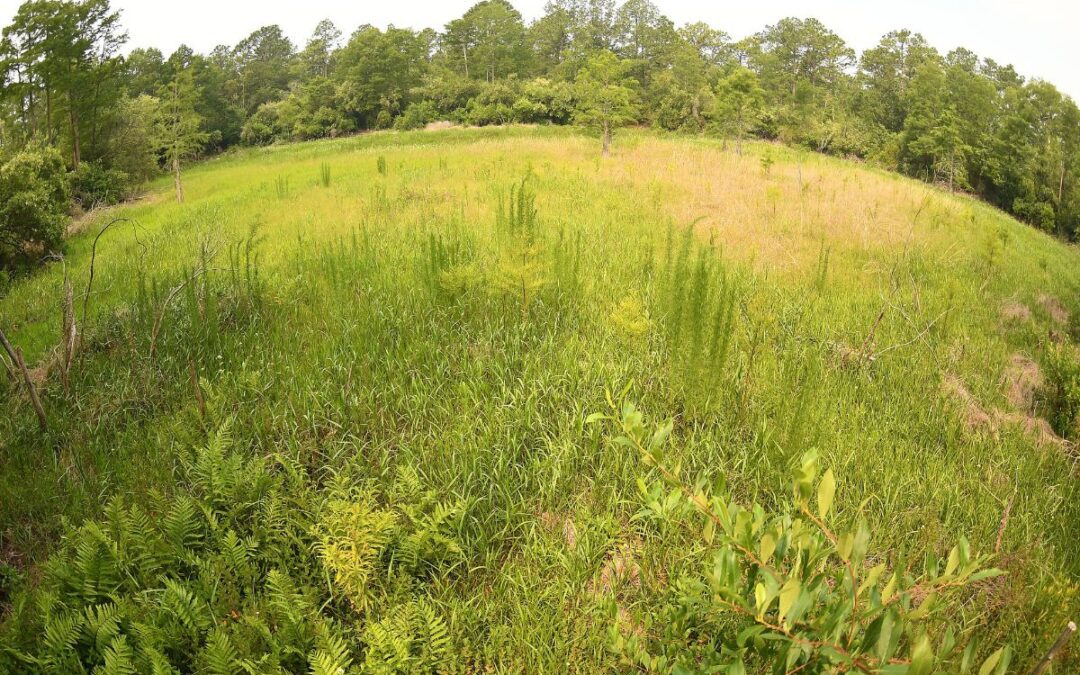
New Trump EPA rule would drastically curb protections for NC wetlands
If a new Trump EPA rule goes into effect, NC wetlands would be in more jeopardy, increasing the risk of flooding during major storms, environmental...
Hidden PFAS pollution uncovered in NC as EPA proposes reporting rollback
As researchers uncover even more PFAS contamination in NC, the Trump administration wants to loosen PFAS regulations. by Will Atwater, North...
Hidden PFAS pollution uncovered in NC as EPA proposes reporting rollback
As researchers uncover even more PFAS contamination in NC, the Trump administration wants to loosen PFAS regulations. by Will Atwater, North...
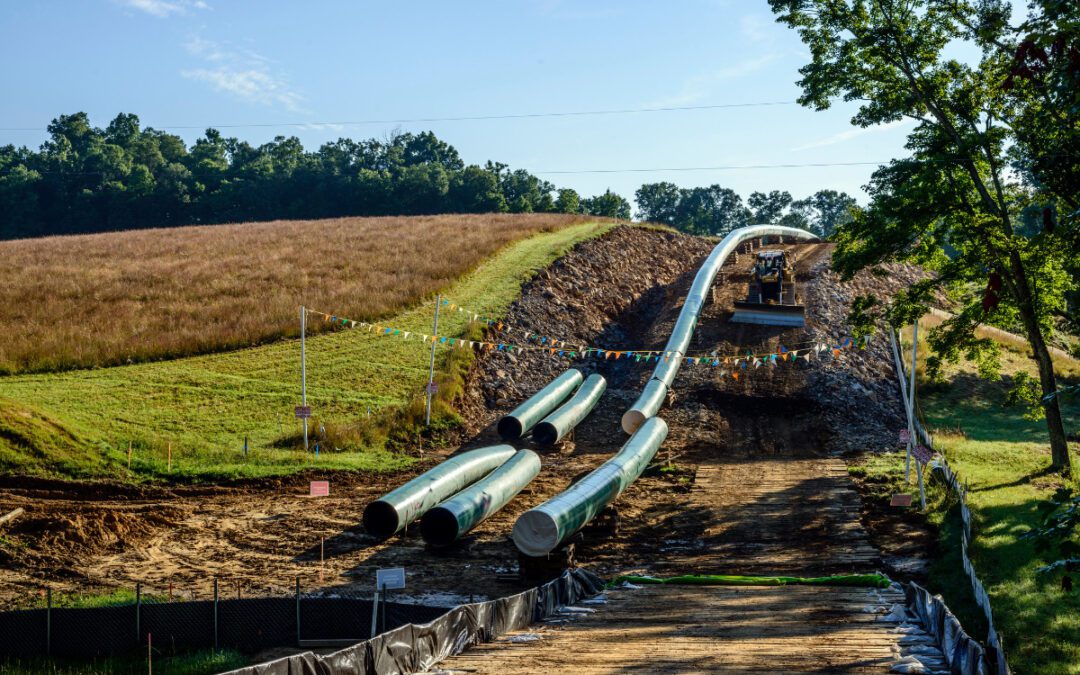
Gas pipeline proposals in Virginia and NC worry community activists
MVP’s Southgate Extension pipeline and Williams Companies’ Southeast Supply Enhancement Project are proposed in close proximity within a single NC...