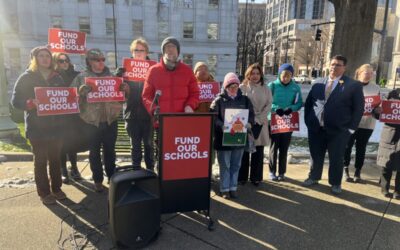
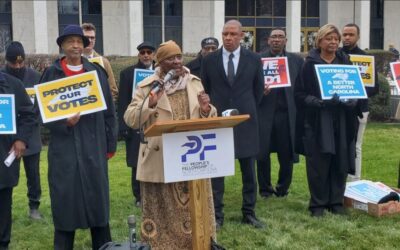
NC Attorney General Jeff Jackson speaks during a press conference on the steps of the Haywood County Courthouse, April 14, 2025. NC is suing the Trump administration over $50 million in cuts to rural education grants. (USA Today via Reuters)
North Carolina Attorney General Jeff Jackson says the decision to end the funding mid-stream violates federal law and threatens critical rural education services for more than 23,000 students statewide.
In rural North Carolina, thousands of students rely on their schools for more than classes. They rely on after-school programs, counselors for mental health support, and staff who can help their families find food and transportation. Now, many of those support networks could disappear with just weeks’ notice.
Programs like these are funded through a federal rural education grant that the Trump administration has moved to abruptly terminate. In response, state Attorney General Jeff Jackson has filed a lawsuit against the US Department of Education, arguing that the decision to cut nearly $50 million in funding for rural and low-income schools across the state is “unlawful” and “harmful” to students already facing barriers to learning.
The funding comes from the federal Full-Service Community Schools program (FSCS). The grant was created in 2008 to help schools serving children and families, “particularly for children attending high-poverty schools, including high-poverty rural schools,” according to the Education Department’s website. In North Carolina, the grants were awarded to the North Carolina Community Schools Coalition in 2024 and were expected to run for five years.
“NC Community Schools exist at the intersection of grassroots community engagement and evidence-based school improvement strategy,” said Dan Kimberg and Dr. Kanecia Zimmerman, co-directors of the NC Community Schools Coalition. “NCCSC’s work in communities across NC has demonstrated what is possible when schools, staff, students, families, and community members are empowered to lead transformational change to meet their local needs.”
On Dec. 12, 2025, the Department of Education notified recipients that the grants would be terminated effective Dec. 31, giving schools just weeks’ notice. If the decision stands, the state Department of Justice says it will shut down rural education programs and potentially lay off staff midyear.
“Our kids deserve better. A surprise cut of nearly $50 million from rural schools, with virtually no notice and no allegation of misuse, is unlawful and harmful,” Jackson said. “The Department of Education approved these programs, allowed schools to build them, and now it’s trying to pull the rug out from under dozens of rural communities.”
What the grant does
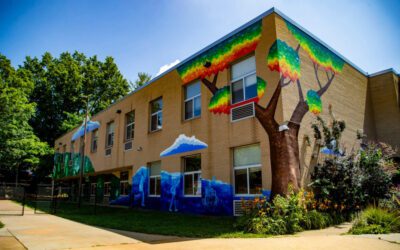
The FSCS grants support 55 public schools across 18 North Carolina districts, serving an estimated 23,000 students, most of them in rural and under-resourced areas. Schools receiving the grants have used the funding in flexible ways, including expanding learning opportunities, providing health care services, and offering college and career exposure like visits to college campuses and trade programs.

Image source: NC Department of Justice
That flexibility proved critical after Hurricane Helene, when schools also used the funds to help families secure temporary housing, transportation, and basic necessities that would allow students to remain connected to school during a period of extreme disruption.
“The Community School infrastructure was a key reason United Way of Asheville and Buncombe County was able to step into a central role in relief and recovery following Hurricane Helene,” said Dan Leroy, CEO of the United Way of Asheville City and Buncombe County. “Community School Coordinators helped organize donations from across the state, and connected families to vital resources like food, clothing, household goods, cash, and temporary housing. Family Resource Centers—designed to respond to community-identified needs—did exactly that, serving as trusted hubs of support in the immediate aftermath of the disaster.”
Why NC is suing for rural education funding
In the lawsuit, North Carolina, joined by Maryland and Washington D.C., argues that the Department of Education violated federal law by terminating multi-year grants for rural education programs like FSCS without citing performance problems or misuse of funds. The complaint claims that the states involved in the FSCS projects, like North Carolina, received continuation awards in both 2023 and 2024.
But despite these successes, the department and Education Secretary Linda McMahon decided to discontinue the grants “based on a purported conflict with the current administration’s ‘priorities.’”
“Our students shouldn’t be treated like that,” Jackson said. “And we’re going to court to protect them.”
Author

Support Our Cause
Thank you for taking the time to read our work. Before you go, we hope you'll consider supporting our values-driven journalism, which has always strived to make clear what's really at stake for North Carolinians and our future.
Since day one, our goal here at Cardinal & Pine has always been to empower people across the state with fact-based news and information. We believe that when people are armed with knowledge about what's happening in their local, state, and federal governments—including who is working on their behalf and who is actively trying to block efforts aimed at improving the daily lives of North Carolina families—they will be inspired to become civically engaged.

NC Supreme Court throws out Leandro school funding orders
The GOP-dominated NC Supreme Court decision vacates a 2023 trial court order requiring the state to transfer hundreds of millions of dollars for...
Video: North Carolina teachers getting hoodwinked on pay raises
Cardinal & Pine spoke with Rep. Lindsay Prather, a former educator, about the pay North Carolina teachers are getting. She says they're being...

Trump says millions are ‘lifted’ off SNAP. A Charlotte nonprofit says hunger hasn’t gone away in NC
More than 1.4 million North Carolinians rely on SNAP benefits to help pay for groceries. Boxes and tractor trailers loaded with donated food move...
Trump says millions are ‘lifted’ off SNAP. A Charlotte nonprofit says hunger hasn’t gone away in NC
More than 1.4 million North Carolinians rely on SNAP benefits to help pay for groceries. Boxes and tractor trailers loaded with donated food move...

Food insecurity is hitting thousands of NC children—and it’s following them into the classroom
More than 580,000 NC children rely on SNAP to help keep food on the table. On school mornings in North Carolina, some children arrive already...