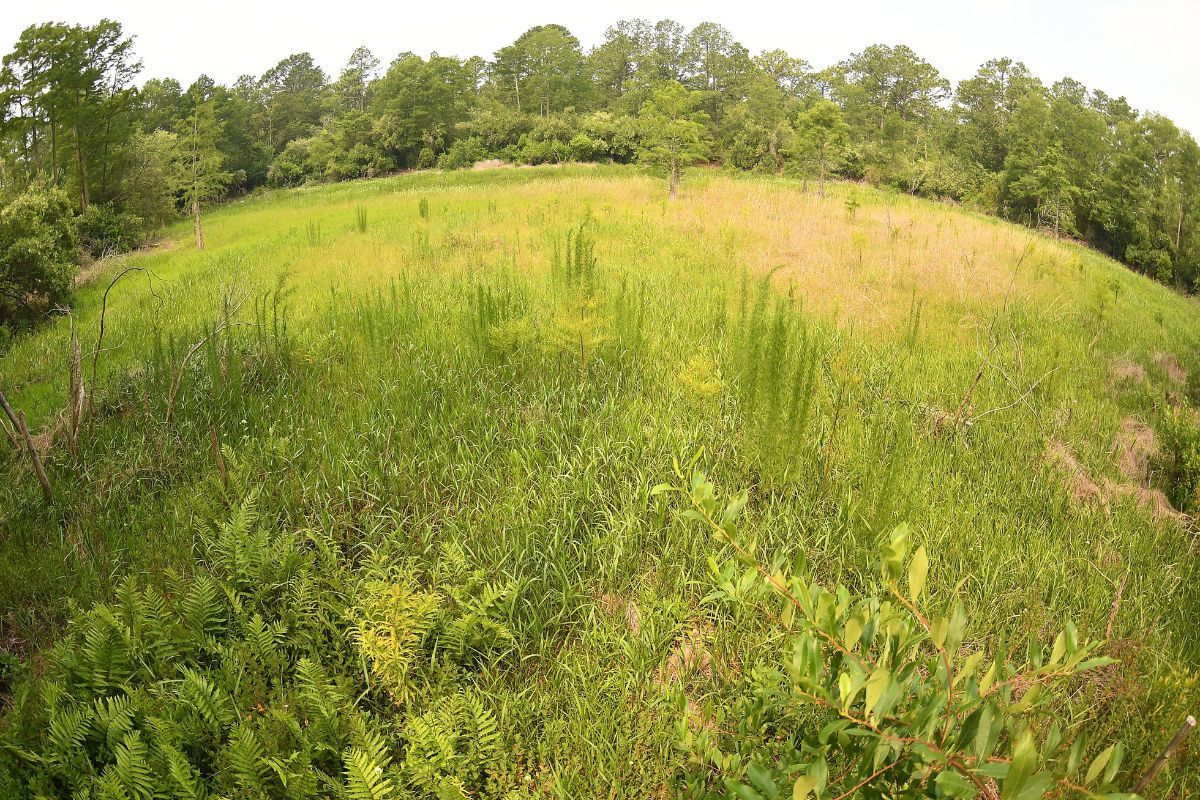
The ephemeral pond at Wilmington's Halyburton Park often dries up during drought and other dry periods. North Carolina's isolated wetlands and areas that are wet only part of the year could lose protections under proposed new interpretations of what are considered "waters of the United States." (USA Today via Reuters)
If a new Trump EPA rule goes into effect, NC wetlands would be in more jeopardy, increasing the risk of flooding during major storms, environmental groups say.
Following a trend that started in 2023 with a U.S. Supreme Court decision, it’s been a rough few years for North Carolina‘s wetlands and their supporters.
Now an announcement by the Trump administration that it could further water down federal protections for certain types of wetlands has raised more red flags among environmentalists, emergency managers, and local officials. They are worried about what losing even more marsh areas could mean in a state that’s shown itself to be vulnerable to flooding from heavy storm events like 2016’s Hurricane Matthew and 2018’s Hurricane Florence − weather events that are expected to increase in coming years and decades thanks to climate change.
Some officials also fear the removal of wetland protections will see development allowed in these historically “wet” areas, putting additional people and properties in harm’s way.
“Wetlands are an important line of defense in North Carolina’s flood-prone communities,” said Will McDow, associate vice president with Environmental Defense Fund, in a news release. “With this ruling, we may see significant decline in healthy wetlands and watch developers build unsafe housing that either floods or increases flooding to neighbors.”
What’s new?
Two years ago the Supreme Court released a decision that dramatically reduced the protections offered to wetlands under the federal Clean Water Act. The court said only wetlands that have a “continuous surface connection” that make it “indistinguishable” from a federally protected waterway should be protected by the law. That meant isolated wetlands or areas that are only “wet” during certain times of year could lose their protections.
Prior to the ruling, isolated wetlands and wetlands that are only wet for part of the year, like pocosin wetlands that are common in many areas of Eastern N.C., had been protected in many states, including North Carolina, through a broad interpretation of what constitutes a federally protected wetland.
While the Supreme Court said what the requirement for federal protections of wetlands should be, it didn’t define what constitutes a surface connection or what makes one wetland indistinguishable from another.
On Nov. 17, the U.S. Environmental Protection Agency announced plans to float a new rule that “would establish a clear, durable, common-sense definition of “waters of the United States” (WOTUS) under the Clean Water Act.”
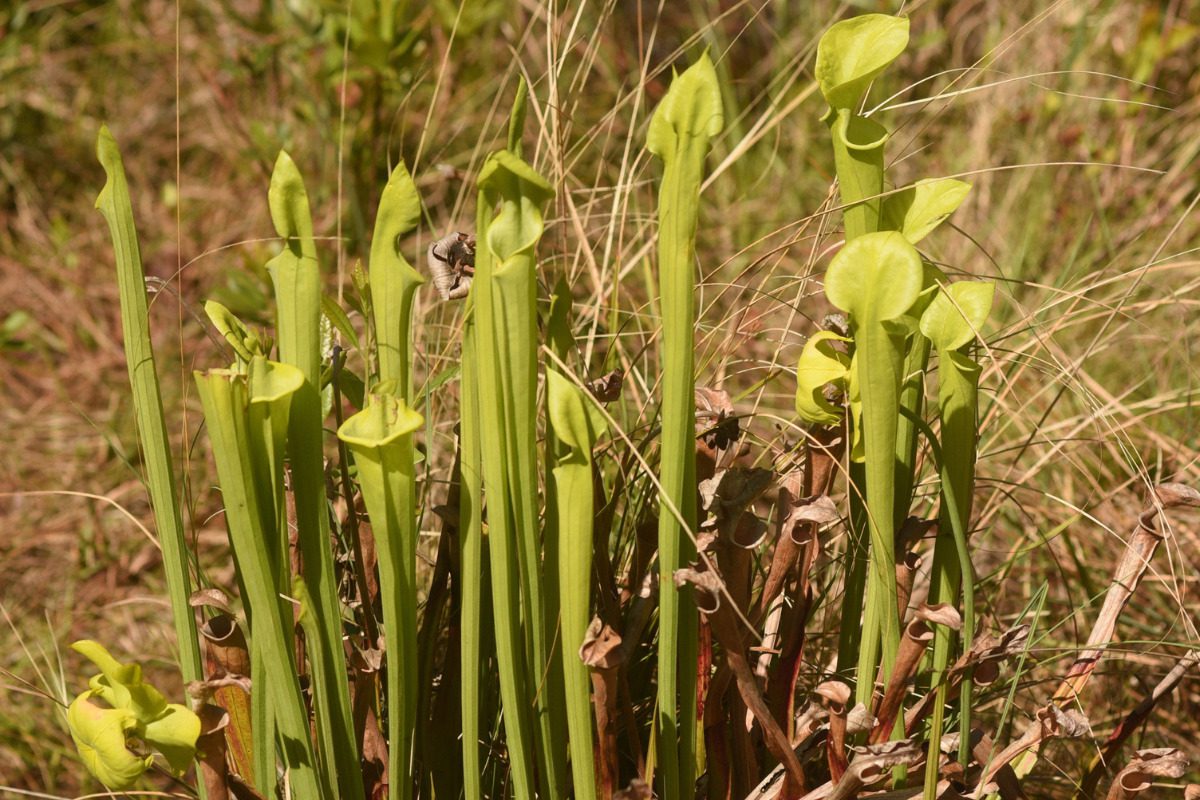
Pitcher plants and other carnivorous plants can often be found on the edges of pocosins, wetlands that are dry for much of the year. KEN BLEVINS/STARNEWS
What would be the impact of the proposed rule on NC wetlands?
The EPA’s proposed new definition would exclude wetlands that abut or touch streams that do not flow during dry periods. It also could exclude ephemeral streams and ponds, which sit dry for much of the year and only fill up only after rains. The National Resources Defense Council has estimated up to 55 million acres of wetlands nationwide could lose federal protections under the new language.
According to an EPA release, the proposal “will cut red tape and provide predictability, consistency, and clarity for American industry, energy producers, the technology sector, farmers, ranchers, developers, businesses, and landowners for permitting under the Clean Water Act.”
Lee Zedlin, head of the EPA, said the new rule would return control of private property back to landowners and out of the hands of bureaucrats and regulators.
“We heard from Americans across the country who want clean water and a clear rule,” he said. “No longer should America’s landowners be forced to spend precious money hiring an attorney or consultant just to tell them whether a Water of the United States is on their property.”
For years, farmers and developers have claimed the environmental community has overstated the economic, wildlife, water quality, and flood-control benefits of isolated and “pocket” wetlands that aren’t part of larger natural systems.
They also said the old interpretation of which wetlands, like manmade drainage ditches, should receive federal protection made life difficult for farmers and limited what property owners could do with their land, hampering economic development opportunities in many communities.
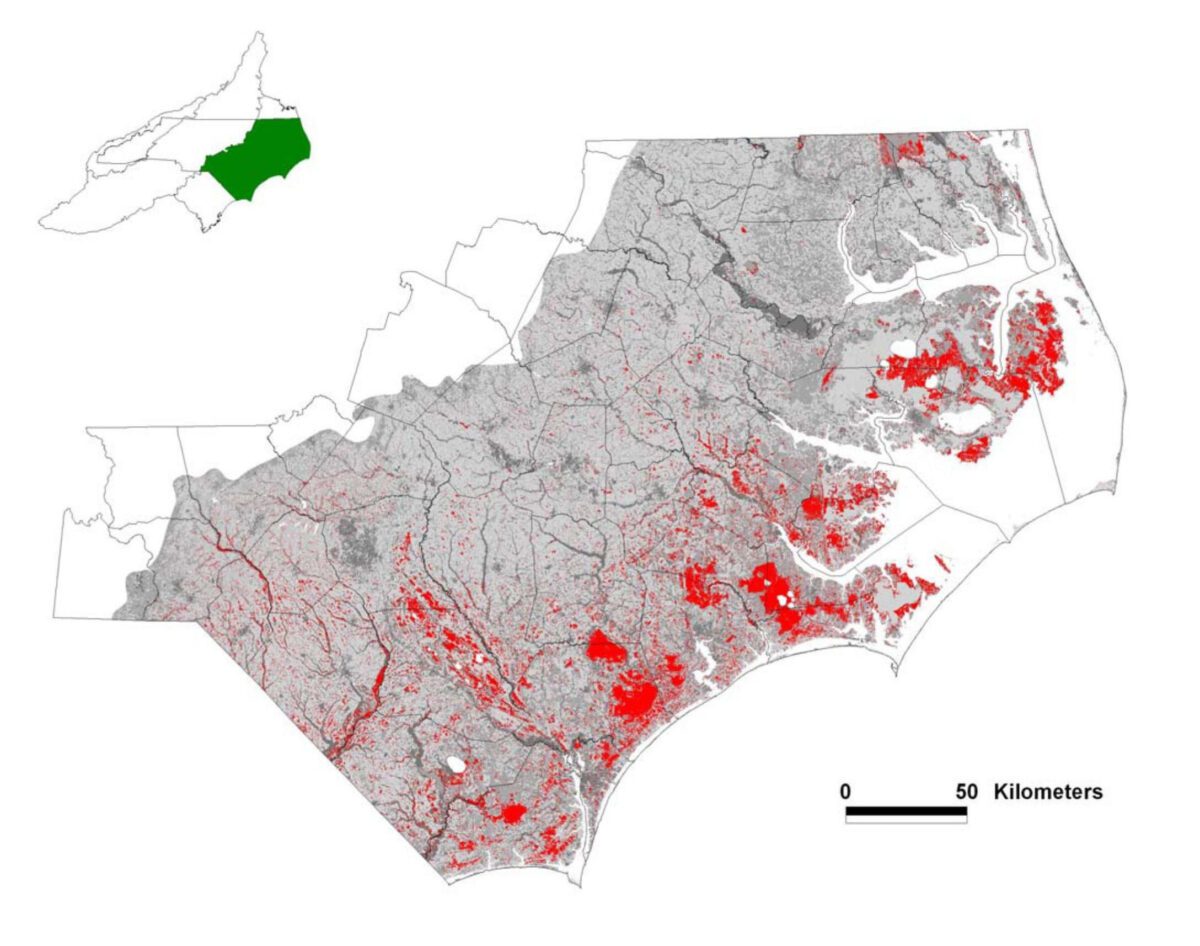
Pocosin habitats in the state’s coastal plain are shown in red. Environmentalists and others are worried that many of these wetlands, which often are dry, could lose protections under new rules coming out of Washington and Raleigh.
What about flooding?
But environmentalists and others say stripping protections from many inland wetlands will worsen an already worrisome situation.
They say North Carolina has millions of acres of isolated and semi-dry wetlands that will see their protections watered down According to the Southern Environmental Law Center, that includes an estimated 527,000 acres of wetlands in the Cape Fear River watershed. But that number could increase even more if the EPA’s narrow interpretation of what wetlands deserve protection becomes law.
From an environmental point of view, scientists say non-tidal wetlands are among Mother Nature’s most valuable natural resources. They act like sponges, absorbing floodwaters and allowing the water to seep back into the ground, recharging groundwater supplies and eventually deep aquifers. Wetlands also provide vital habitat for a wide swathe of flora and fauna species.
Because they slow down water flows, wetlands also are very effective in removing contaminants. They also help store carbon in their soils, something that’s seen as increasingly important as the world continues to pump more and more greenhouse gases into the atmosphere, exacerbating climate change.
“Water moves in ways we can’t always see, and wetlands that look isolated can still be connected to other bodies of water,” said Dr. Stacy Woods, a research director with the Union of Concerned Scientists, in a release. “The revised definition will leave these wetlands at risk of further degradation, which could harm the rivers and streams that people in the United States depend on daily for clean water.”
Opponents of the pared-down definition of wetlands said there’s also an economic component involved in the EPA’s proposal.
McDow with Environmental Defense Fund said the U.S. already spends billions annually responding to disasters created by allowing development in risky areas. This new proposal could see that figure increase exponentially.
Weren’t N.C.’s semi-dry and isolated wetlands previously protected?
While federal rules are the minimum requirements, states have the option of adopting additional protections and requirements, something California often does with its environmental regulations.
For years, North Carolina did this, taking a broad view on whether isolated and semi-dry wetlands deserved additional protections.
But the N.C. Farm Act of 2023 limits state protections of “wetlands” to essentially those enshrined in the federal Clean Water Act, and thus now mirrors the watered-down federal protections. Thus if the proposed EPA rule becomes law, it would strip protections from North Carolina wetlands that previously had to meet more stringent state regulations.
After a public comment period and some public hearings, the proposed EPA rule could become law early next year.
Reporting by Gareth McGrath, USA TODAY NETWORK / Wilmington StarNews
USA TODAY Network via Reuters Connect
Author

NC forestry officials worry about growing threat of wildfires, fewer workers
Nearly 18 months after Helene, forestry officials and the state fire marshal warned legislators Thursday that North Carolina needs to be much better...

What to know about the 2026 spring equinox in North Carolina
Will it be a warm spring or a cool one? Here's what to know about spring in North Carolina. Residents of North Carolina ― and most of the rest of...

NC regulators object to Wilmington Harbor deepening project. Here’s why
North Carolina leaders say the Wilmington Harbor deepening project raises environmental concerns, including worries about 'forever chemicals,'...
NC regulators object to Wilmington Harbor deepening project. Here’s why
North Carolina leaders say the Wilmington Harbor deepening project raises environmental concerns, including worries about 'forever chemicals,'...
Controversial Wilmington Harbor deepening project paused by feds
A billion-dollar deepening of Wilmington Harbor is necessary to keep the port competitive, but it comes with economic and environmental concerns for...