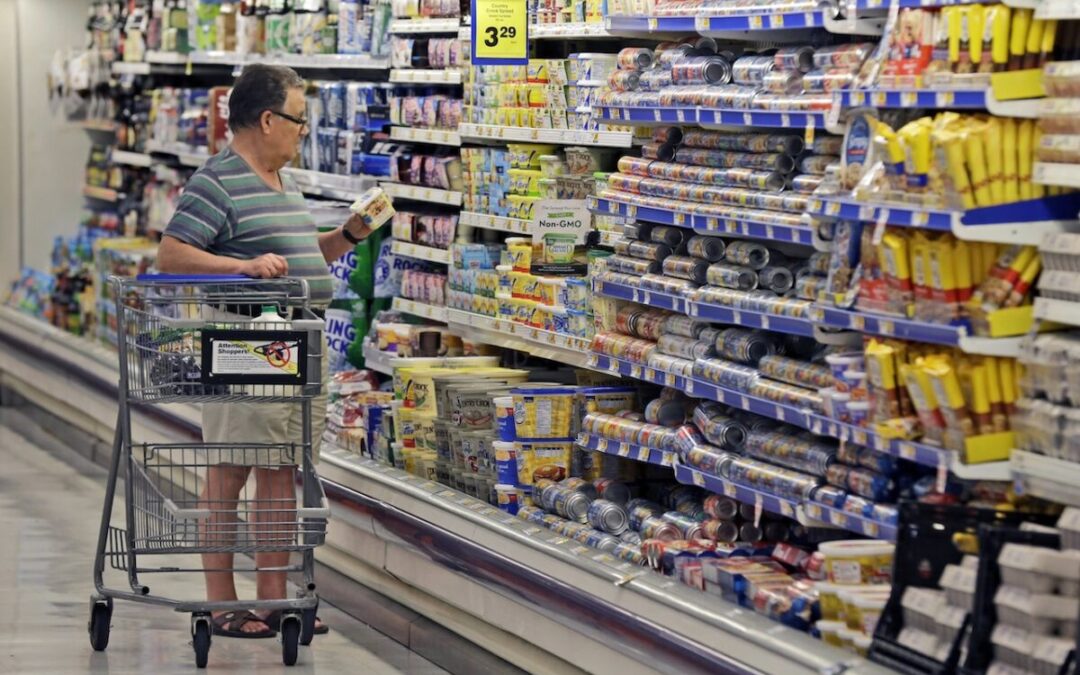
Shoppers shop at a grocery store in Wheeling, Ill., Friday, Jan. 19, 2024. (AP Photo/Nam Y. Huh)
Independent grocery stores have always offered more than just milk and eggs. In Greensboro, these shops play a critical role in local food accessibility. They offer an alternative to big-box chains, prioritizing relationships over profit margins and providing a space where customers can find local and regionally sourced products.
In our current era, where food prices are rising, supply chains are strained, and national retailers are consolidating and monopolizing, independent groceries serve as local stabilizers. These places that are rooted in the neighborhood are responsive to the real needs of the people who live there.
The impact of independent grocery stores reaches far beyond the checkout line. These markets and food co-ops keep dollars circulating locally, support regional farmers and small-batch producers, and diversify the foods available on Greensboro shelves. They champion fresh, culturally relevant ingredients that large chains often overlook, and they’re more likely to participate in community initiatives and give to local charities. These stores strengthen the region’s food landscape by reducing food deserts and ensuring that access to nutritious food isn’t controlled solely by corporate decision-makers hundreds of miles away.
As more shoppers choose to “vote with their wallet,” independent grocery stores and co-ops have become essential pillars of an equitable, sustainable food system. They protect variety, celebrate local identity, and remind us that feeding a community is centered on building relationships.
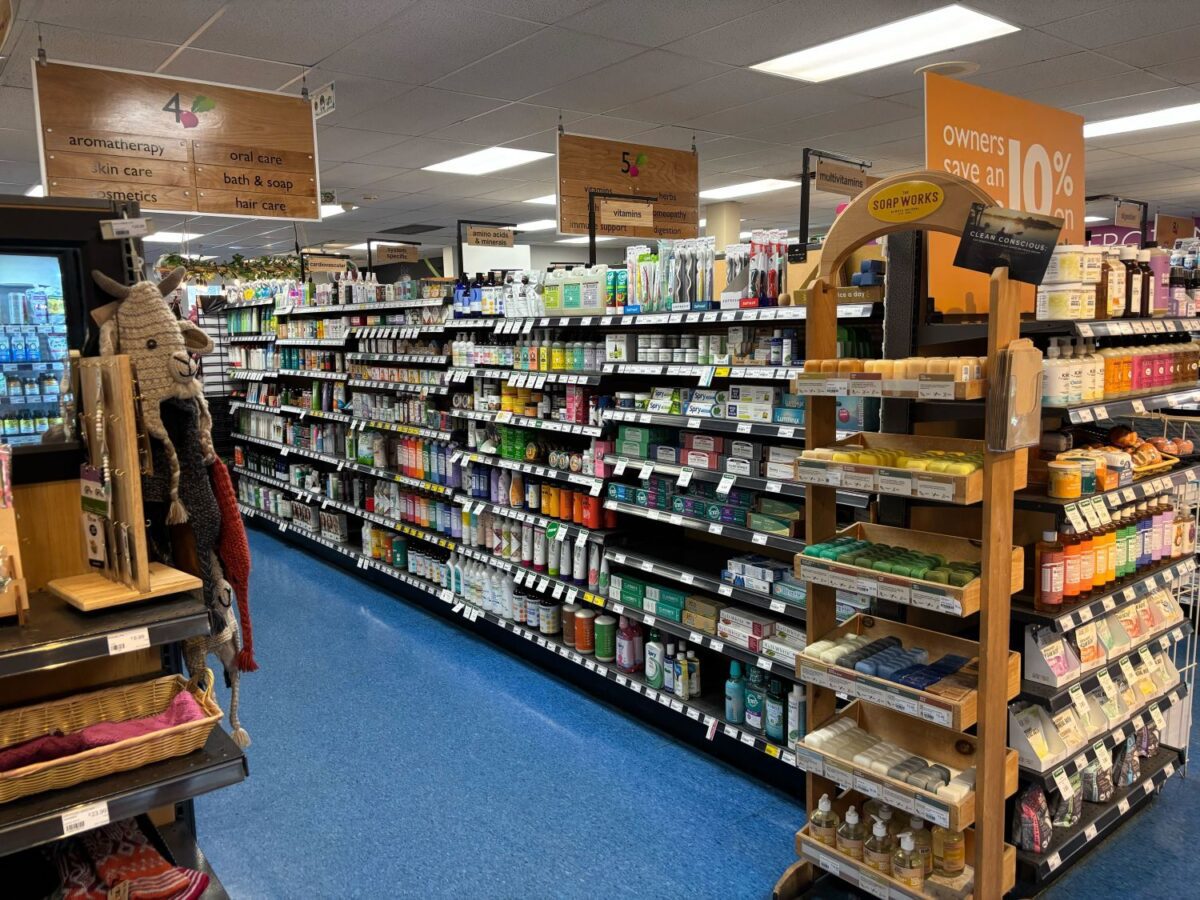
Inside an independent grocery store. Photo by Stacy Rounds
Deep Roots Market – An independent grocery store and co-op
The grocery-cooperative Deep Roots Market in Greensboro, North Carolina, has an interesting origin and ownership structure, on top of their unique sourcing philosophy and community outreach approach.
Deep Roots began in the 1960s as a small vegetarian buying club operating out of the basement of Mary Hobbs’ dorm at Guilford College. The organization incorporated as a storefront in 1976. Today, it is not owned by a single corporate entity, but is instead a community-owned cooperative. Shoppers and interested community members purchase an ownership share and, through that, become “owners” of the co-op. The store is also a member of the umbrella purchasing and services cooperative National Co+op Grocers (NCG). Because of this structure, the store emphasizes that its purpose is to serve the community rather than maximizing returns for external investors.
Deep Roots Market has a clearly articulated food-commitment statement. When possible, they choose organic first, stock antibiotic- and hormone-free meats, and aim to avoid artificial colors/flavors, high-fructose corn syrup, hydrogenated oils, and other processed additives. Their produce section emphasizes farmer-direct items and a selection of organic or naturally grown foods, though they also carry conventional items at customers’ request.
In addition to these standards, they feature many local vendors. For example, a Greensboro micro-bakery, Breadservice, supplies loaves; a local farm, Congolina Farm, supplies vegetables grown organically, non-GMO, with composting and minimal chemicals; another local producer, Firsthand Foods, provides pasture-raised meat from independent NC farmers. Their “Specialty Meat and Seafood” department states that meats are “locally sourced, farm-to-store … almost exclusively sourced from and processed in the Carolinas.”
Deep Roots Market also runs several outreach and donation programs as part of its community mission. They maintain what they call the LIMe Program (“Low-Income Membership”), a discount (15%) offered to qualifying shoppers (for example, EBT card holders) to support food accessibility. The fund for this comes from customer round-ups at the register or donations. They also list a community-outreach page featuring local nonprofits that are supported via register round-ups, donations, providing a meeting space, and partnering with organizations such as the YWCA of Greensboro, Mustard Seed Community Health, and others. The request-a-donation form states that they fund organizations aligned with their mission, such as food issues, environmental sustainability, cooperative values, and health care, and give priority to local North Carolina groups.
Deep Roots Market’s cooperative model means that anyone may shop there, but by purchasing an ownership share, you become a co-op Owner. Ownership gives you certain benefits: voting rights in board elections, eligibility to run for the board of directors, monthly owner discounts, special offers, and potentially patronage dividends in profitable years.
The Board of Directors is elected by the Owners, and is tasked with governance but not day-to-day operations. Profits are reinvested into the store and the community rather than distributed to external shareholders. At the operational level, the store maintains its departments and builds its vendor network with many local producers.
Deep Roots maintains a fairly extensive “Local Vendors” directory and purchases, on average, around $64,000 per month from local farmers and producers within the state. They work with dozens of North Carolina-based producers, including Big Spoon Roasters, Counter Culture Coffee, Pete’s Extraordinary Granola, Congolina Farm (which grows organic / non-GMO vegetables and partners with immigrant farmers), Kendall’s Garden, and Firsthand Foods—a women-owned company sourcing from ~35 independent farmers who raise livestock with no antibiotics or added hormones. Their local vendor list also spans many other categories, including wellness and personal care, specialty foods, beer and wine, and more.
Bestway Grocery – An independent grocery store with specialty beer and local offerings
Bestway Grocery is a beloved, old-school neighborhood market in Greensboro’s Lindley Park, sitting at the corner of Walker and Elam and serving the community since 1947. The building started life as an A&P supermarket and has operated as a grocery in one form or another ever since, which makes it one of the city’s longest-running food stores. Locals know it today as a compact, seven-aisle market with everyday staples, a retro, slightly scruffy charm, and its famous “Wall of Beer,” a refrigerated stretch that now holds well over a thousand craft beers from North Carolina, across the United States, and around the world.
The store is independently owned, not part of a national chain, and not a co-op. Longtime retail professional Nancy Kimbrough and her husband, Roger, bought the store after Nancy left her corporate career, taking over what had been a tired convenience-style operation and slowly transforming it into a specialty neighborhood grocer. They cleaned and re-merchandised the space, swapped out things like an old endcap of motor oil for wine, and leaned into local flavor. Over time, Bestway’s reputation spread well beyond Lindley Park, drawing in craft beer fans who travel specifically for the Wall of Beer and shoppers who prefer giving their money to a locally owned store rather than a big box.
When it comes to sourcing, Bestway is a hybrid. You can do a normal grocery run there, but you’ll notice an emphasis on local and regional products. The store markets itself as “Greensboro’s Lindley Park Craft Beer & Wine + Groceries” and highlights “local meat and produce” alongside its 2,000-plus beers and wines. Bestway stocks conventional brands and value-priced private-label items that delight shoppers with their affordability, but layer in regional specialties, local products, and a surprisingly curated wine selection that Roger is known for hand-picking. Bestway also participates in EBT/SNAP.
To deepen their commitment to local sourcing, the Kimbroughs have launched their own wholesale bakery, French Artisan Bread (FAB), which bakes baguettes, sourdough loaves, and pastries for both Bestway locations, local restaurants, and a farmers’ market. Much of the bakery bread you see on Bestway’s shelves is coming from a Greensboro-based operation they created themselves.
Over the years, Bestway has been a host site and partner for community fundraisers and food drives, including serving as a collection point for WXII-TV’s July food drive benefiting Second Harvest Food Bank, where donations were gathered at the Walker Avenue store to help fight hunger in the region. Bestway has also been involved with local efforts ranging from youth fundraisers and Cub Scout events held on-site to collaborations with nearby breweries and restaurants for charity markets and drives.
Structurally, Bestway is an independent grocer through and through. There is no member-owner model, no board elected by shoppers, and no co-op umbrella organization; instead, the Kimbroughs own and operate the business, and have even expanded the concept with a separate Bestway Marketplace at UNCG’s Spartan Village that focuses on prepared foods, coffee, and student-friendly offerings.
Author

8 highly anticipated NC restaurants opening in 2026
New year, new restaurants! From barbecue joints to sushi spots, discover the most exciting North Carolina restaurant openings of 2026. North...

Dry January: The top 17 mocktail spots in Charlotte
From alcohol-free twists on classic cocktails to innovative, zero-proof drinks starring specialty ingredients, discover the best mocktails in...
The complete guide to grocery shopping in Greensboro
Grocery shopping in Greensboro looks different for everyone because we all have different needs depending on where we live, our transportation...
The complete guide to grocery shopping in Greensboro
Grocery shopping in Greensboro looks different for everyone because we all have different needs depending on where we live, our transportation...

Greensboro Farmers Curb Market nears its 152nd year in operation
For more than 150 years, the Greensboro Farmers Curb Market has brought local farmers and families together, making it the oldest and most enduring...