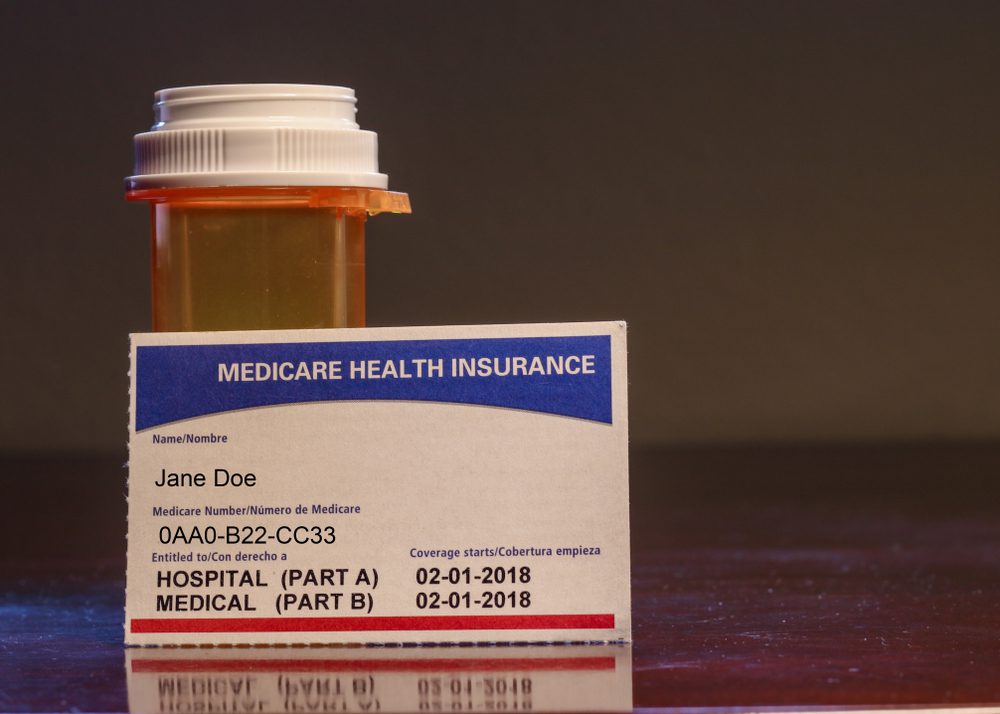
Medicare Advantage and traditional Medicare enrollees could see increases in premiums, deductibles and out-of-pocket expenses in 2026, according to data from the Centers for Medicare & Medicaid Services.(Arne Beruldsen via Shutterstock)
Medicare Advantage and traditional Medicare enrollees could see increases in premiums, deductibles and out-of-pocket expenses in 2026.
As this year’s Medicare open enrollment period proceeds, Medicare beneficiaries in North Carolina are facing a year of higher costs.
Medicare Advantage and traditional Medicare enrollees could see increases in premiums, deductibles and out-of-pocket expenses in 2026, according to data from the Centers for Medicare & Medicaid Services.
The open enrollment period — when beneficiaries can review and change their existing coverage — started on Oct. 15 and will end on Dec. 7. Yet less than 30 percent of Medicare beneficiaries nationwide do a thorough review each year.
These increases could mean hundreds — even thousands — of dollars more in annual health care spending if enrollees don’t review their plans carefully.
READ MORE: Why health insurance is so expensive this year — and what you can do about it
Medicare Part B
Medicare Part B covers physician services, diagnostic tests, outpatient care, preventive care, some medical equipment and supplies, and some medications administered at a doctor’s office. Under traditional Medicare plans, Part B has out-of-pocket costs when enrollees receive covered care — an annual deductible and 20 percent coinsurance and a monthly premium.
The standard Part B monthly premium is projected to rise from $185 in 2025 to $206.50 in 2026, an increase of nearly 12 percent. The annual Part B deductible will also climb from $257 to approximately $288. (The premium and deductible increases are estimated projections by this year’s annual Medicare Trustees Report.)
For most Part B enrollees under traditional Medicare plans, premiums are automatically deducted from their Social Security benefits. The cost of living adjustment provided by Social Security this year will add approximately $56 a month to the average Social Security retirement check, which could help offset some costs.
However, the higher premium would consume nearly 40 percent of the average COLA increase — leaving retirees with only about 60 percent of their raise to cover other rising costs, from housing to food and prescriptions.
Medicare Advantage plans are seeing lots of change this year too.
Medicare Advantage
The moving parts of a traditional Medicare plan, from supplemental policies and prescription plans, can make a Medicare Advantage plan alluring. That’s likely why more than 55 percent of North Carolina’s Medicare beneficiaries are enrolled in an Advantage plan.
“It’s the path of least resistance,” David Lipschutz, co-director of law and policy for the Center for Medicare Advocacy, said in a panel discussion. “They generally offer lower premiums, which they’re able to do due to the excessive payment they get from the federal government. They often or always offer extra supplemental benefits, which is a huge draw for people — often dental, vision and hearing benefits. But they are not standardized.”
Epstein email says Trump ‘knew about the girls,’ but White House says release is a Democratic smear
That lack of standardization can be confusing and may seem functionally misleading. Recent regulatory changes no longer require insurers to notify members about benefits they aren’t using. While enrollees should receive a Medicare Annual Notice of Change (ANOC) by Sept. 30 informing them about changes in the plan, it can be easy to miss.
The notice will outline changes to your provider network, drug formulary, supplemental benefits and out-of-pocket costs. Some of the supplemental benefits that drew enrollees to the Medicare Advantage plans may be reduced or eliminated entirely between years, making it essential for beneficiaries to check carefully before just renewing from one year to the next.
Additionally, some benefits previously offered to the underserved or chronically ill will no longer be available with the sunset of an experimental program that paid providers for value-based care.
Enrollees should also carefully consider network restrictions and prior authorization rules in the Medicare Advantage plans.
“More and more provider health systems are walking away from Medicare Advantage plans because of frustrations with wasted time and denied care due to prior authorization and lower reimbursement rates,” Lipschutz said. “Just because your key provider or providers currently contract with your Medicare Advantage plan is no guarantee that it will continue to be.”
“There was a plan last year that was $28, this year it’s going to be $78.” — Melissa Munden, Deputy Commissioner, NC Seniors Health Insurance Information Program
That holds true in North Carolina. For example, UNC Health recently informed providers that the system will no longer be in network for Medicare Advantage plans from WellCare, Health Care Service Corporation (formerly Cigna) and Humana, except for State Health Plan retirees who are signed up through the SHP’s Humana plan.
“If you’re in a Medicare Advantage plan, make sure that your doctors, your providers, including your hospital are going to be in the network next year,” said Melissa Munden, deputy commissioner of the North Carolina Seniors’ Health Insurance Information Program, or SHIIP. “There’s a lot of changes in terms of contract negotiations that are occurring. I can speak primarily in the Triangle, that some hospital systems are not accepting some Medicare Advantage plans next year.
“This is the time to really look at your coverage, make sure that your providers are in network.”
Beyond network coverage and providers, advocates encourage enrollees to consider all aspects of the future — especially when enrolling in a Medicare Advantage plan.
“It seems like a monthly fixed cost, but it’s fixed as long as you’re well,” said Gina Upchurch, executive director of Durham’s Senior PharmAssist. “It’s unfixed when you become unwell.”
She said there can be surprise costs for seniors on Medicare Advantage if they become unwell, especially if someone needs to have an extended stay in a long-term facility.
“We mean a rehab facility, the skilled nursing facility, the home health agency,” Upchurch said. “A lot of them will not contract with these Medicare Advantage plans.”
That means that people in this situation may end up with large out of pocket costs.
Formulary changes and prescription cost changes
Beyond Part B, changes to prescription drug coverage are compounding the financial pressure on traditional Medicare beneficiaries.
There are two fewer standalone prescription drug plans (known as Part D plans) available in North Carolina in 2026, and several of the remaining plans have raised premiums, according to Munden.

In addition to premium increases, the Part D cap on prescription costs is expected to increase from $2,000 to $2,100 in the coming year.
“While that doesn’t seem significant, it can be because 12 of the plans have remained, two in particular have seen premium increases of $50 each. So for example, there was a plan last year that was $28, this year it’s going to be $78,” Munden said. “There’s another one that was $40.20 and that is rising to $90.20 — and that’s just the premium difference.”
Part of the premium increases may be due to the Trump administration’s scaling back of a program designed to stabilize Part D premiums in the wake of President Joe Biden’s Inflation Reduction Act. The IRA did things like eliminate the “donut hole” where patients bore the total cost of their medications after they’d hit a certain threshold. The scale-back means that insurers facing higher drug costs can once again pass these costs on to patients in the form of higher premiums.
Even small changes in co-pays or formulary coverage can add hundreds of dollars to the annual cost for seniors with chronic conditions who take multiple medications.
Munden says that makes reviewing your plan essential.
“Nothing can be worse than going to the pharmacy after the first of the year and finding out that a drug that you so desperately need is not covered or it has gone up exponentially in price, or the pharmacy that you have a trusted relationship with is no longer in network,” she said.
Munden shared the example of a woman she recently helped review and weigh plans based on health needs. If the woman had remained in her current plan, all her prescriptions would be covered, but her pharmacy would become out of network. While that may seem minor, the local pharmacy had delivered her medication to her because she was “incapable of physically getting to the pharmacy,” Munden said. Remaining in the plan would have cost her an estimated $19,000.
Stay informed about your Medicare
One of the most challenging things about Medicare open enrollment is that there are a lot of moving parts, and this year, there seem to be even more changes than usual.
The recently passed One Big Beautiful Bill Act made some changes that make eligibility harder for some who might have also qualified for Medicaid. An analysis from the Congressional Budget Office indicated that more than 1.3 million people who might have qualified for “dual eligibility” between now and 2034 will not be eligible.
The OBBBA also cuts off eligibility for legal permanent residents (people with a green card) and asylees who previously have qualified for coverage. Undocumented immigrants have never qualified for Medicare.
One of the best ways to learn about the available options is to tap into North Carolina’s Seniors’ Health Insurance Information Program. There are volunteers in each county who are trained by SHIIP to advise people, and there are also counselors at SHIIP’s main number in the Department of Insurance at 1-855-408-1212. Email inquiries to [email protected].
Those who attempt to leave Medicare Advantage and go back to traditional Medicare may have a hard time accessing a Medigap plan, which helps to pay for the parts of medical bills that Medicare doesn’t cover. That’s because if you do not sign up for a Medigap plan when you turn 65, you are penalized for each year that you did not carry such a plan. There’s also no guarantee that a Medigap plan will cover you past that initial signup period.
“It’s hard for people that come in here to get help to think about the future,” Senior PharmAssist’s Upchurch said. “They’re thinking about what I need now. How healthy am I now?”
Additional Resources
- Medicare – Call 800-633-4227 or visit www.medicare.gov
- Medicare provides information 24 hours a day, seven days a week about eligibility, enrollment, and coverage
- Social Security Administration – Call 800-772-1213 or visit www.socialsecurity.gov
- Contact the Social Security Administration to enroll in Medicare or to request a replacement Medicare card.
- Your local Department of Social Services (DSS)
- County DSS offices have information about Medicaid, Extra Help, and Medicare Savings Program eligibility and applications.
- North Carolina Seniors Health Insurance Information Program (SHIIP) – https://www.ncdoi.gov/consumers/medicare-and-seniors-health-insurance-information-program-shiip
Or call SHIIP: 855-408-1212 - There are trained SHIIP volunteers in all 100 North Carolina counties. Find one here: https://www.ncdoi.gov/consumers/contact-seniors-health-insurance-information-program-shiip#InNorthCarolina-392
This article first appeared on North Carolina Health News and is republished here under a Creative Commons Attribution-NoDerivatives 4.0 International License.
Author


Mission Hospital nurses detail the ‘moral distress’ of working understaffed
Mission Hospital in Asheville, like many across the country, is severely understaffed, posing a risk to patients who seek care there. If Trump’s...

Your zip code can determine your fate in North Carolina’s medical deserts
Seventy of North Carolina’s 78 rural counties are considered “medical deserts.” That means patients often can’t get the care they need, and in many...

Potential measles exposure in Wake County, health officials say
A person with measles visited several public locations in Wake County on Feb. 5 and 6, including a gym and supermarket. A person with measles...
Potential measles exposure in Wake County, health officials say
A person with measles visited several public locations in Wake County on Feb. 5 and 6, including a gym and supermarket. A person with measles...

Most Americans disapprove of RFK Jr.’s changes to vaccine policy, new poll says
A Kaiser Family Foundation poll found that adults who had heard of federal changes to the childhood vaccine schedule were twice as likely to say it...