President Donald Trump speaks to reporters aboard Air Force One en route from Miami to Joint Base Andrews, Md., Monday, Jan. 27, 2025, as White House press secretary Karoline Leavitt listens. (AP Photo/Mark Schiefelbein)
PFAS, or “forever chemicals,” are linked to cancer, birth abnormalities, and other health ailments. But Trump is pushing back a long-awaited plan to set federal limits on them.
In March 2023, the head of the Environmental Protection Agency called PFAS “one of the most pressing environmental and public health concerns in the modern world.”
Now, President Trump has pulled back a long-awaited plan to set federal limits on how much of the toxic compounds can be discharged into drinking water.
PFAS — which stands for per- and polyfluoroalkyl substances — are ubiquitous and appear in items like nonstick pans, firefighter foam, cosmetics, fast food packaging, and other products. They have been linked to cancers, birth abnormalities, thyroid and liver problems, immune system deficiencies, high cholesterol and other ailments.
Wherever you live in North Carolina, Trump’s action matters. Hundreds of water systems in the state were found to have elevated levels of PFAS in 2024. It’s estimated that nearly half of the nation’s tap water has PFAS in it.
Read More: How to test your water for PFAS and other harmful things
Former President Biden’s administration created a plan to set a federal limit on PFAS in drinking water beginning in 2027. Trump’s move to pull back that plan creates uncertainty about whether the new president’s administration plans to address them at all, even if Trump’s pick to lead the Environmental Protection Agency, Lee Zeldin, told the Senate this month that PFAS was a “top priority.”
“This is really a tragic setback for water protection throughout America,” Adrienne Esposito, with Citizens Campaign for the Environment, told CBS News about Trump’s decision. “And this rule would have caused industry to participate in reducing PFAS, and instead, it sends a signal to industry, you can poison us as much as you want.”
Read More: ‘You can’t win for losing’: Inside Sampson County, NC’s environmental nightmare
For a really thorough accounting of the long struggle to regulate PFAS in North Carolina, check this out from Clean Water for NC, an environmental advocacy group.
View this post on Instagram
Author

Support Our Cause
Thank you for taking the time to read our work. Before you go, we hope you'll consider supporting our values-driven journalism, which has always strived to make clear what's really at stake for North Carolinians and our future.
Since day one, our goal here at Cardinal & Pine has always been to empower people across the state with fact-based news and information. We believe that when people are armed with knowledge about what's happening in their local, state, and federal governments—including who is working on their behalf and who is actively trying to block efforts aimed at improving the daily lives of North Carolina families—they will be inspired to become civically engaged.


Mission Hospital nurses detail the ‘moral distress’ of working understaffed
Mission Hospital, like many across the country, is severely understaffed, posing a risk to patients who seek care there. If Trump’s Medicaid cuts go...

Your zip code can determine your fate in North Carolina’s medical deserts
Seventy of North Carolina’s 78 rural counties are considered “medical deserts.” That means patients often can’t get the care they need, and in many...
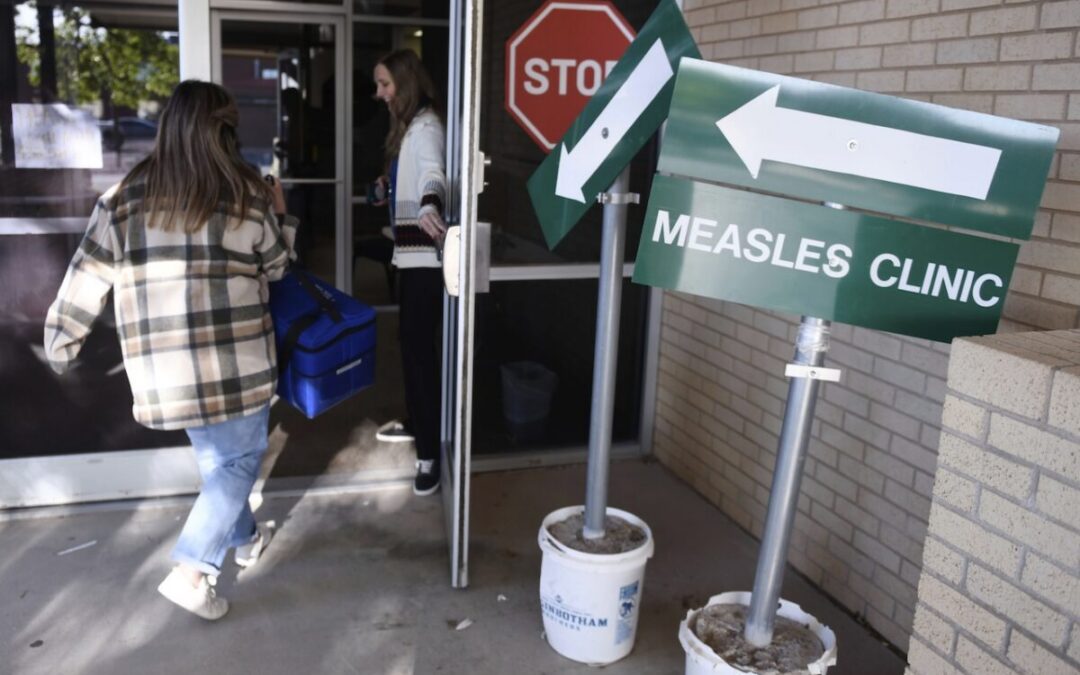
Potential measles exposure in Wake County, health officials say
A person with measles visited several public locations in Wake County on Feb. 5 and 6, including a gym and supermarket. A person with measles...
Potential measles exposure in Wake County, health officials say
A person with measles visited several public locations in Wake County on Feb. 5 and 6, including a gym and supermarket. A person with measles...

Most Americans disapprove of RFK Jr.’s changes to vaccine policy, new poll says
A Kaiser Family Foundation poll found that adults who had heard of federal changes to the childhood vaccine schedule were twice as likely to say it...